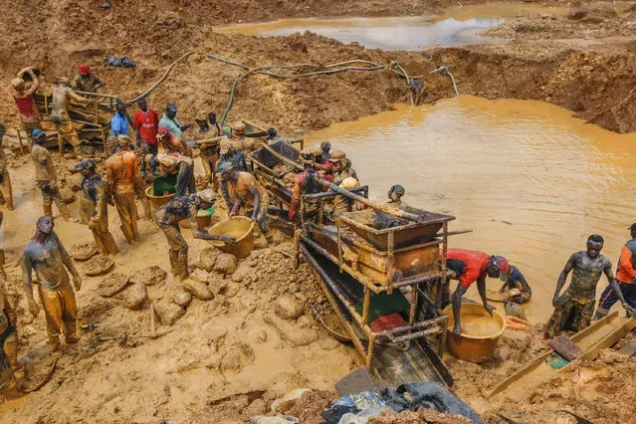

The Ghana Association of Radiologists (GAR) has called on the government to intensify the fight against illegal mining, warning that pollution from galamsey operations is driving a growing burden of kidney disease that has become a public health emergency.
Speaking at the opening of the Association’s 14th Annual General and Scientific Meeting in Accra, GAR President Dr Francis Ofei said the indiscriminate use of mercury and cyanide in artisanal gold mining had catastrophically contaminated major water bodies, including the Pra, Birim, Ankobra, and Offin rivers, exposing millions of Ghanaians to substances capable of destroying the kidneys and other organs.
“This situation is not merely an environmental issue. It is a public health catastrophe,” he said. “With repeated exposure, the kidneys give up eventually.”
He explained that mercury and cyanide enter the body through contaminated water and food, placing excessive strain on the kidneys, which filter waste from the bloodstream. The burden, he said, falls hardest on communities living near illegal mining sites.
The scale of the problem is significant. A recent Ghana News Agency report cited estimates that about 13 percent of Ghana’s adult population — roughly four million people — are living with chronic kidney disease, with many patients falling between the ages of 20 and 50, the country’s most economically productive group.
Dr Ofei noted that chronic kidney disease often develops silently, making early diagnosis critical, but said many patients only seek help after the disease has advanced. He attributed this to low public awareness and limited access to diagnostic services in parts of the country, and urged the public to make routine medical check-ups a habit.
“You do check-ups not because you have issues per se. It becomes routine,” he said.
He also called for greater investment in diagnostic imaging equipment, including ultrasound machines, CT scanners, and MRI machines, to improve early detection, noting that ultrasound remains the most accessible tool for diagnosing kidney and urinary tract conditions.
The GAR President further stressed the need for a multidisciplinary approach to healthcare, arguing that radiologists, clinicians, nephrologists, and urologists must work together rather than in silos.
“Gone are the days when the radiologist wrote a report and figuratively handed it over a wall. Today, radiologists sit at the table,” he said.
The conference was held on the theme: “From Kidneys to Urethra: Imaging the Genitourinary System in the Era of Multidisciplinary Care.”
ALSO READ:
Six-year-old girl drowns in uncovered septic tank at Gbetsile
Give credit to Akufo-Addo for starting E-Visa system — Minority tells gov’t