
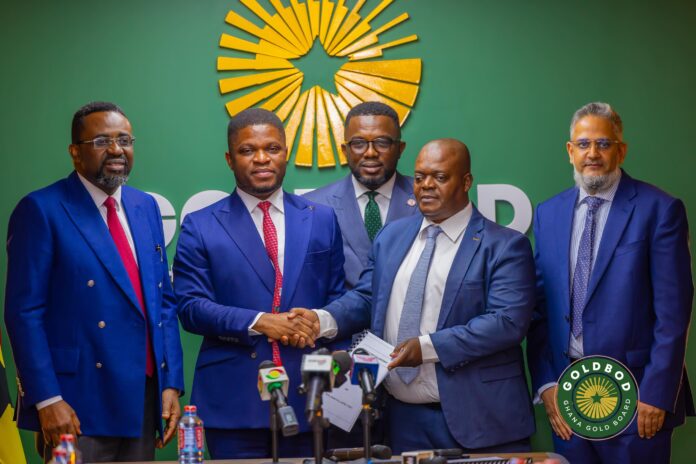

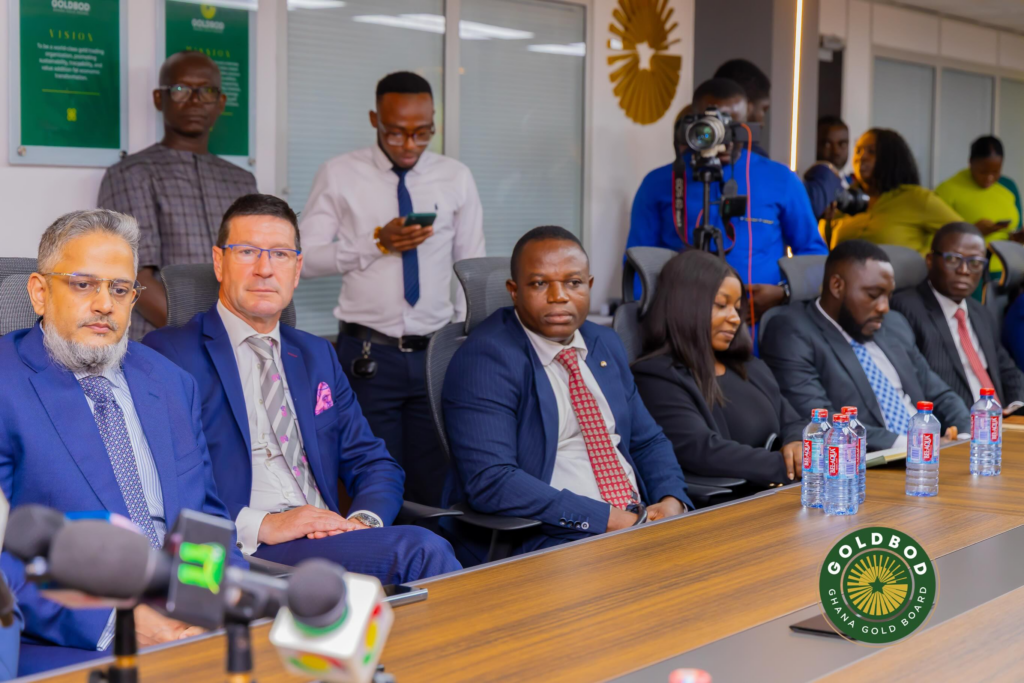
The Ghana Gold Board (Ghana Gold Board) has signed a gold refinery agreement with Royal Ghana Gold Limited as part of efforts to deepen value addition in the country’s mining sector.
Under the agreement, GoldBod will supply up to one metric tonne of gold weekly to Royal Ghana Gold Limited for refining. The partnership marks the second major refinery deal by the board, following an earlier arrangement with Gold Coast Refinery.
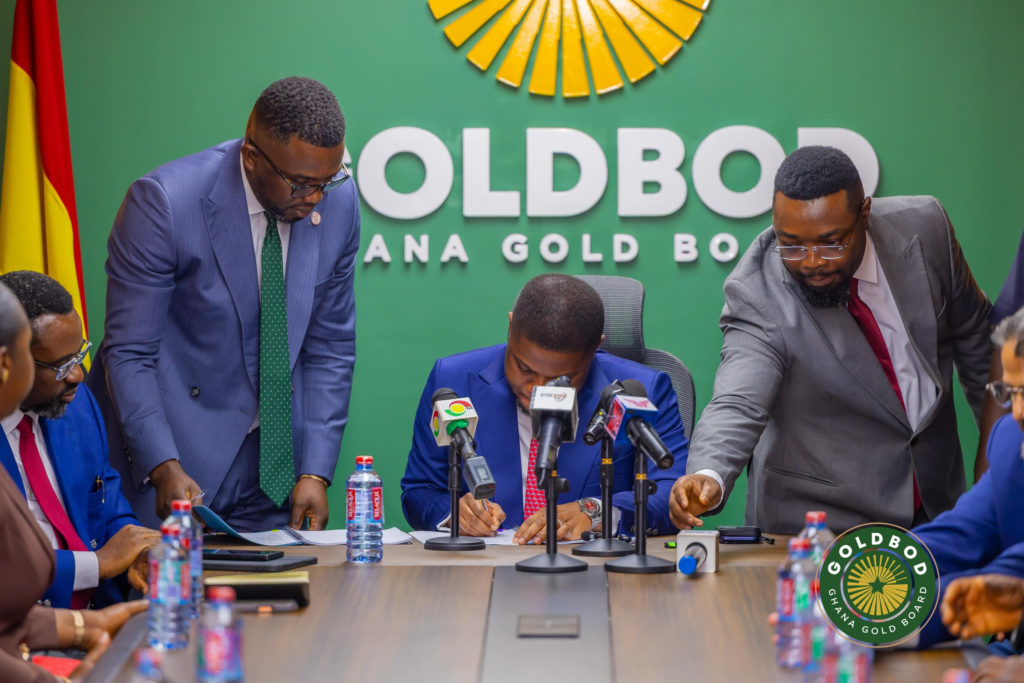
Speaking at the signing ceremony on Monday, May 25, 2026, GoldBod CEO Sammy Gyamfi said the long-term goal is to ensure that by 2030, all minerals mined in Ghana are refined locally before export.
He said the directive from government is clear, stressing the need to shift away from raw mineral exports.
“Our marching orders from the President have been very clear from day one: we must change the narrative of Ghana’s continuous export of raw minerals,” he said.
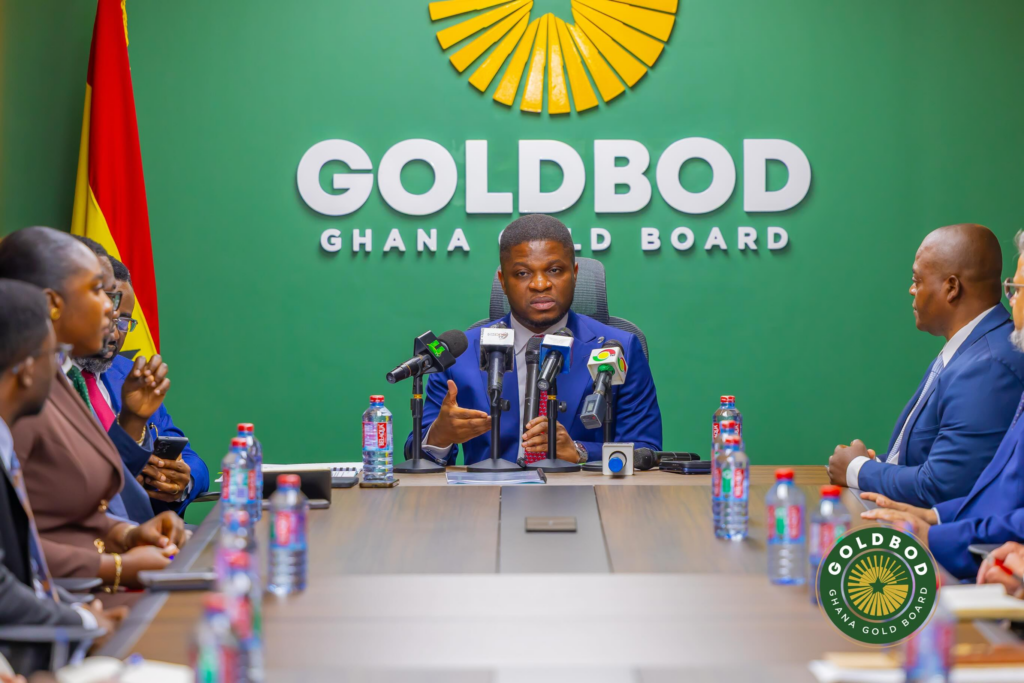
Mr. Gyamfi added that when the current administration took office in January 2025, Ghana did not have sufficient capacity for local gold refining.
“When we took office on January 7, 2025, Ghana did not have the capacity to refine gold locally. All gold produced from both the large-scale and small-scale sectors was exported in its raw state,” he said.
He described the situation as unacceptable for a major gold-producing country, saying more value should be retained locally.
“It is a tragedy that as a mining nation, we did not possess the capacity to refine the minerals we produce locally to ensure value addition and local value retention,” he added.
Governor of the Bank of Ghana, Johnson Asiama, said the initiative would significantly improve Ghana’s balance of payments if natural resources are processed locally.
He noted that value addition should not be limited to gold but extended to other key sectors such as oil and cocoa, adding that it would create jobs and boost national revenue.

Dr. Asiama also welcomed the partnership, reaffirming the central bank’s support and noting that it holds a minority stake in Royal Ghana Gold Refinery Limited to strengthen oversight and support Ghana’s gold value addition agenda.
Chief Executive Officer of Royal Ghana Gold Refinery Limited, Eric Frimpong, said the refinery is positioned to support government’s 24-hour economy programme by creating jobs and expanding production capacity.
He assured that the refinery has the technical expertise, modern equipment, and manpower to operate continuously and support Ghana’s industrial transformation.
According to him, the long-term goal is to secure London Bullion Market Association (LBMA) accreditation and position Ghana more competitively in the global gold refining industry.
ALSO READ:
