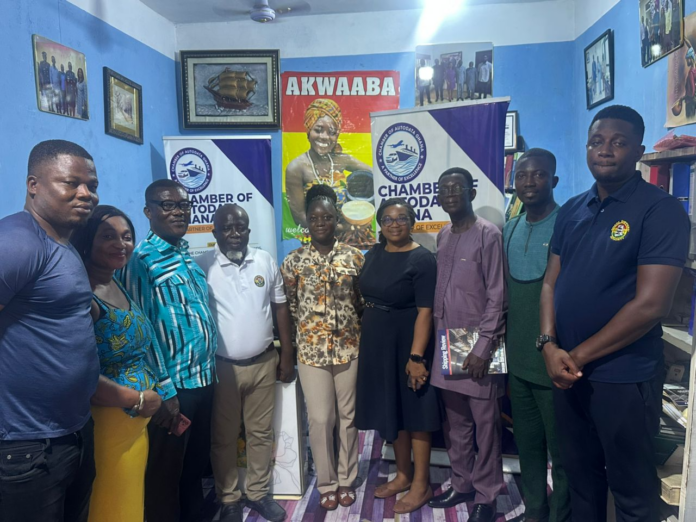

The Chamber of Auto Data Ghana has called for urgent institutional collaboration to address the growing problem of chassis number cloning within Ghana’s vehicle registration system, warning that the practice is becoming increasingly sophisticated and is harming legitimate vehicle importers.
The concerns were raised during a meeting between executives of the Chamber and representatives of the Ghana Shippers Authority, where discussions focused on improving conditions within the vehicle importation and registration space.
Leading the Chamber’s delegation, Executive Secretary George Dumenu said the group has observed a worrying shift in fraudulent vehicle registration practices over the years.
According to him, previous schemes largely involved the use of documents from accident vehicles or vehicles that were no longer in use to fraudulently register other vehicles. However, he noted that the trend has now evolved into the cloning of chassis numbers, also known as Vehicle Identification Numbers (VINs).
Mr. Dumenu explained that the Chamber has gathered considerable data backing its claims and believes the issue is affecting confidence within the vehicle importation sector while exposing genuine importers and buyers to unnecessary risk.
He appealed to the Ghana Shippers Authority to engage the Driver and Vehicle Licensing Authority (DVLA) on behalf of industry stakeholders to help tighten verification systems and clamp down on fraudulent registrations.
Representatives of the Ghana Shippers Authority acknowledged the concerns raised by the Chamber and assured the delegation that the matter would be escalated to management for further engagement. They further indicated that the Authority remains committed to working with relevant institutions to support efforts aimed at resolving the issue.
Industry observers say the growing use of cloned chassis numbers poses wider risks to customs compliance, revenue assurance and vehicle traceability, particularly at major entry points such as Tema Port, where large volumes of imported vehicles are processed each year.
For the Chamber of Auto Data Ghana, closer cooperation between regulators and industry players remains key to protecting legitimate businesses and restoring trust within the sector.
read statement below:
Last Wednesday, a delegation from the Ghana Shippers Authority paid a courtesy call on the Executives of the Chamber of Auto Data as part of efforts to engage industry stakeholders and better understand the concerns within Ghana’s automotive and vehicle data sector.
The meeting created an important platform for members of the Chamber to openly discuss key operational challenges, industry concerns, and pressing questions affecting vehicle registration, documentation, and data management in Ghana. Among the major issues raised was the growing problem of double registration of vehicle chassis numbers.
Double registration occurs when the same Vehicle Identification Number (VIN) or registration details are assigned to more than one vehicle. This has become a significant concern for the Driver and Vehicle Licensing Authority, security agencies, vehicle owners, and stakeholders within the automotive industry.
Participants highlighted that the issue is largely driven by weak verification systems, fraudulent activities, corruption, fake documentation processes, and the illegal production of number plates. In many cases, duplicated registrations are used to conceal stolen, cloned, or smuggled vehicles, posing serious security and administrative risks to the country.
The Chamber’s Executive Secretary in the person of Mr. George Dumenu further noted that the effects of double registration continue to impact the nation negatively through increased vehicle theft, financial losses to legitimate vehicle owners, reduced public confidence in the registration system, difficulties in police investigations, threats to national security, and loss of government revenue.
Stakeholders emphasized the urgent need for stronger digital verification systems, enhanced inter-agency collaboration, the introduction of smart number plates, stricter enforcement measures, and public education on proper vehicle verification procedures.
The delegation from the Ghana Shippers Authority includes Marul Musah, Kofi Poku Sumpene and Mabel Tagoe assured Chamber members that all concerns and issues raised during the engagement would be directed to the appropriate authorities and relevant institutions for the necessary attention and action.
The Chamber of Auto Data remains committed to supporting initiatives that promote transparency, accountability, and integrity within Ghana’s vehicle registration and automotive data ecosystem.
Fire guts Sonnie Badu’s parents’ house
Ghana’s favourite sausages might be costing your kids more than you…