
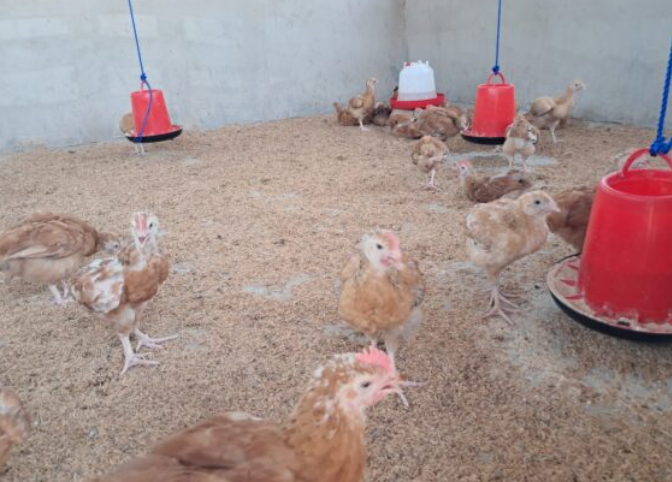

The European Union (EU) has thrown its weight behind Ghana’s flagship Feed Ghana programme, donating 150,000 fully vaccinated birds to 3,000 poultry farmers across six districts in the Upper East, Savannah and North East regions.
The support was announced at the launch of the government’s ‘Nkoko Nkitinkiti’ initiative in Kpalbe, in the North East Gonja District of the Savannah Region.
The intervention, delivered through the EU-funded Food Security Response Northern Ghana Project, is being implemented by the UN Food and Agriculture Organisation (FAO) in partnership with the Ministry of Food and Agriculture (MoFA).
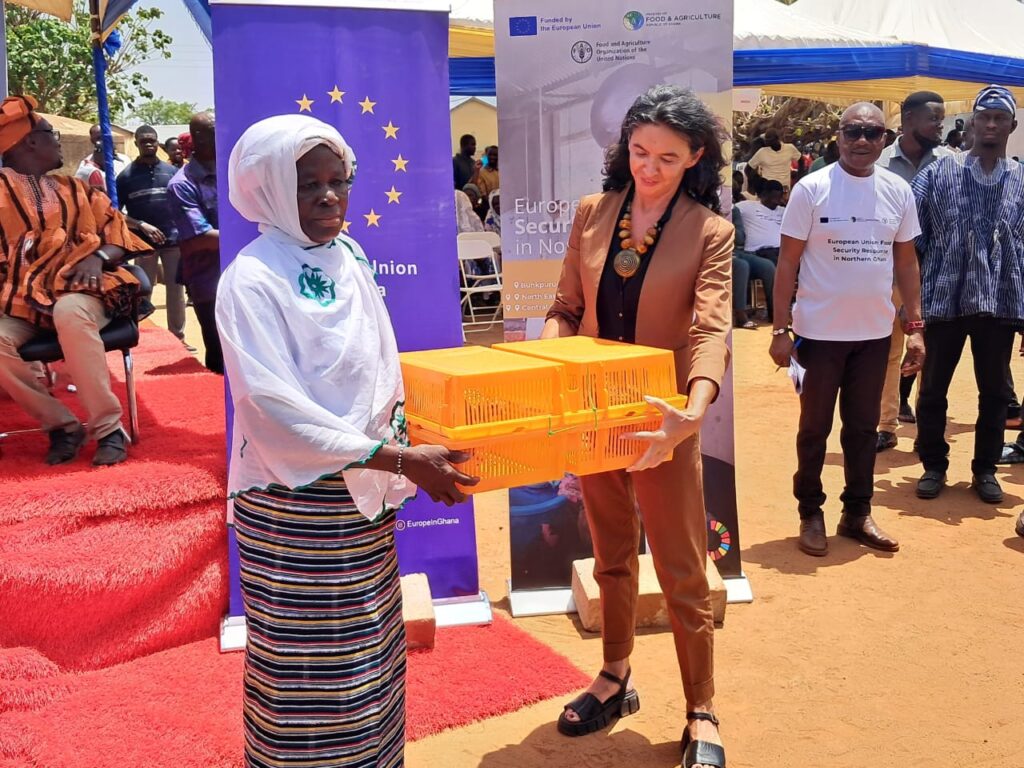
It aims to cut the country’s reliance on poultry imports, bolster food and nutrition security, and create jobs.
Each beneficiary will also receive feed and essential veterinary services.
Ghana currently spends between $300m and $400m annually on chicken imports. The government says the scheme is part of a wider push to achieve self-sufficiency in poultry within three years.
Speaking at the launch, Food and Agriculture Minister Eric Opoku urged farmers not to treat the birds as a short-term handout.
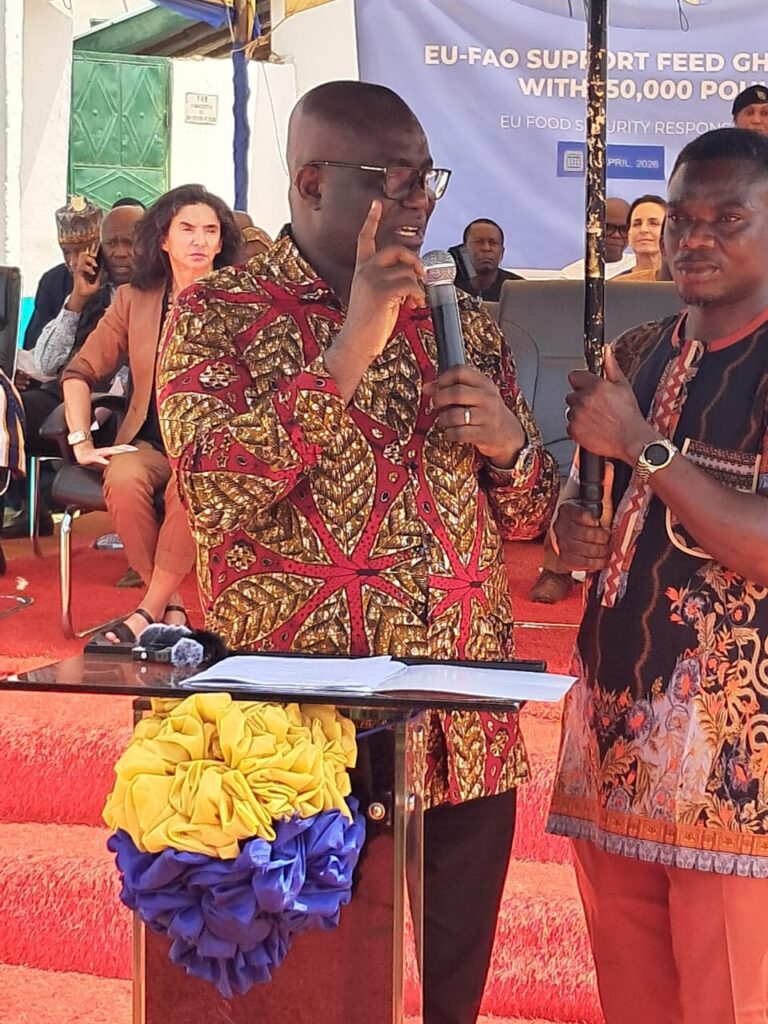
“The birds are layers. So, after a month, they will start laying eggs for you and the layers are also for you,” Mr Opoku said.
“You can sell the eggs, keep some in the house to improve your nutrition, and make some money from the sales. But we – the EU and Ghana – don’t expect you to go and consume the birds in the first month.”
He added: “This is an investment and we want you to make income from it and use it as an opportunity to enhance your livelihoods. It’s not meant for everybody but the vulnerable, and we want to bridge the gap between the poor and the rich in society.”
Mr Opoku said boosting local production would reduce import costs and make poultry more affordable for Ghanaians.
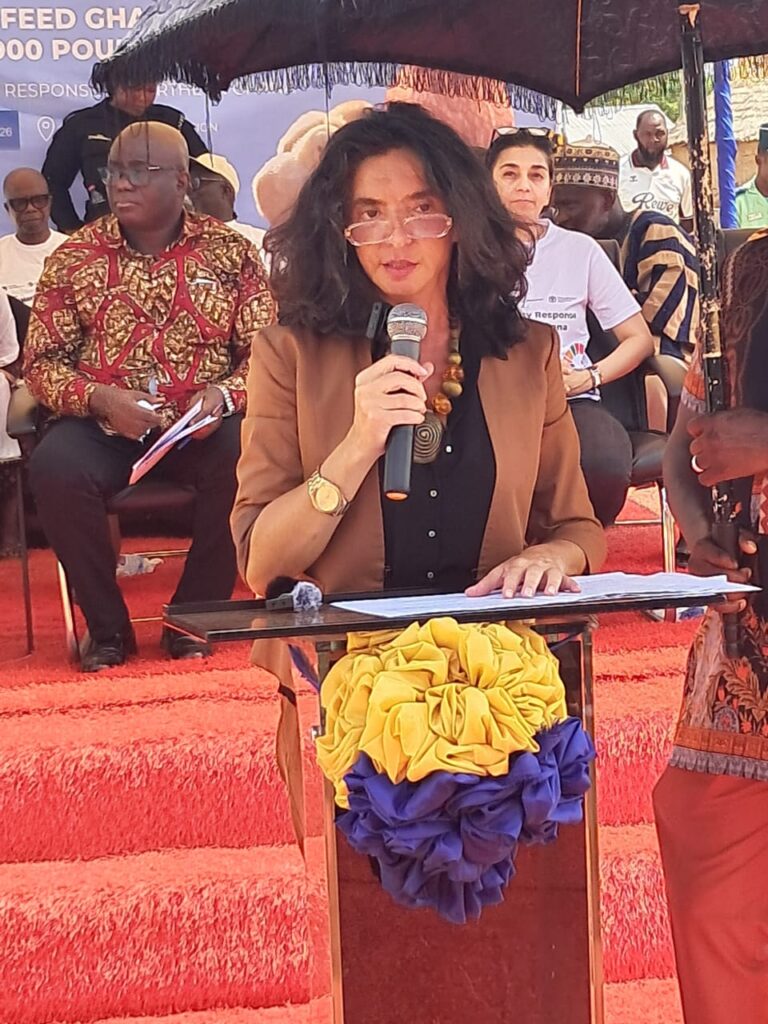
EU Ambassador to Ghana, Rune Skinnebach, said agriculture and food security remained central to the EU’s support for Ghana.
“Through this delivery, the EU works with the government and our partners at FAO to reduce Ghana’s dependence on imported poultry, boost farmers’ incomes sustainably and create jobs across the value chain with all inputs sourced locally,” Mr Skinnebach said.
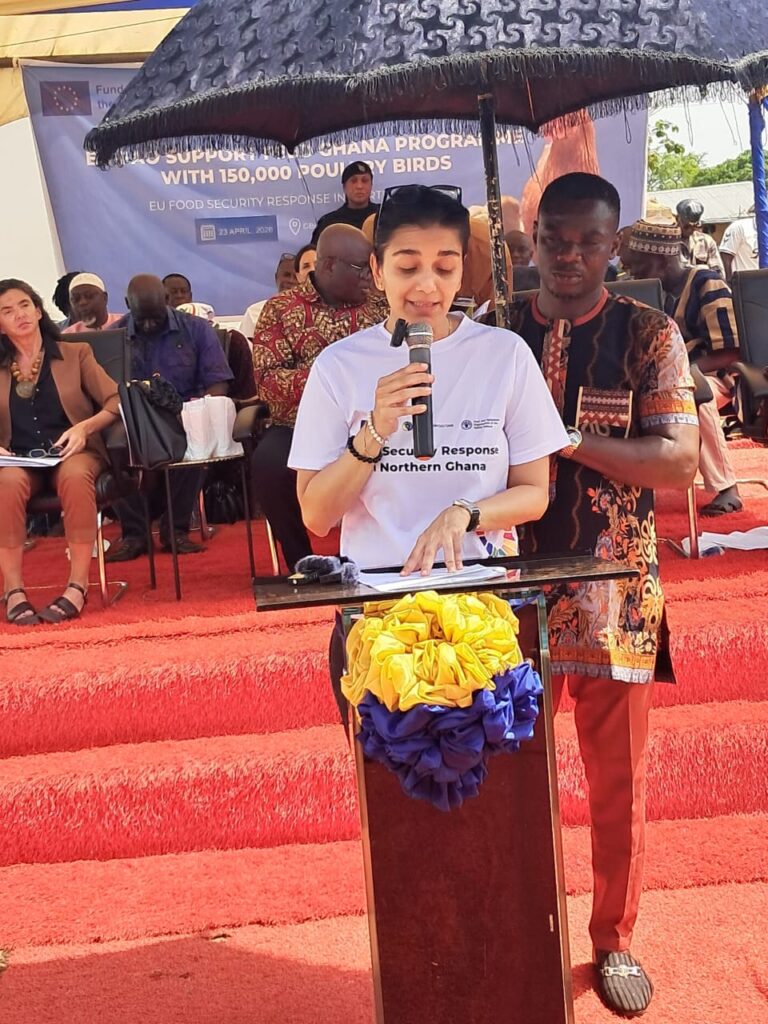
FAO Representative to Ghana, Priya Gujadhur, said beneficiaries had already been equipped with practical skills.
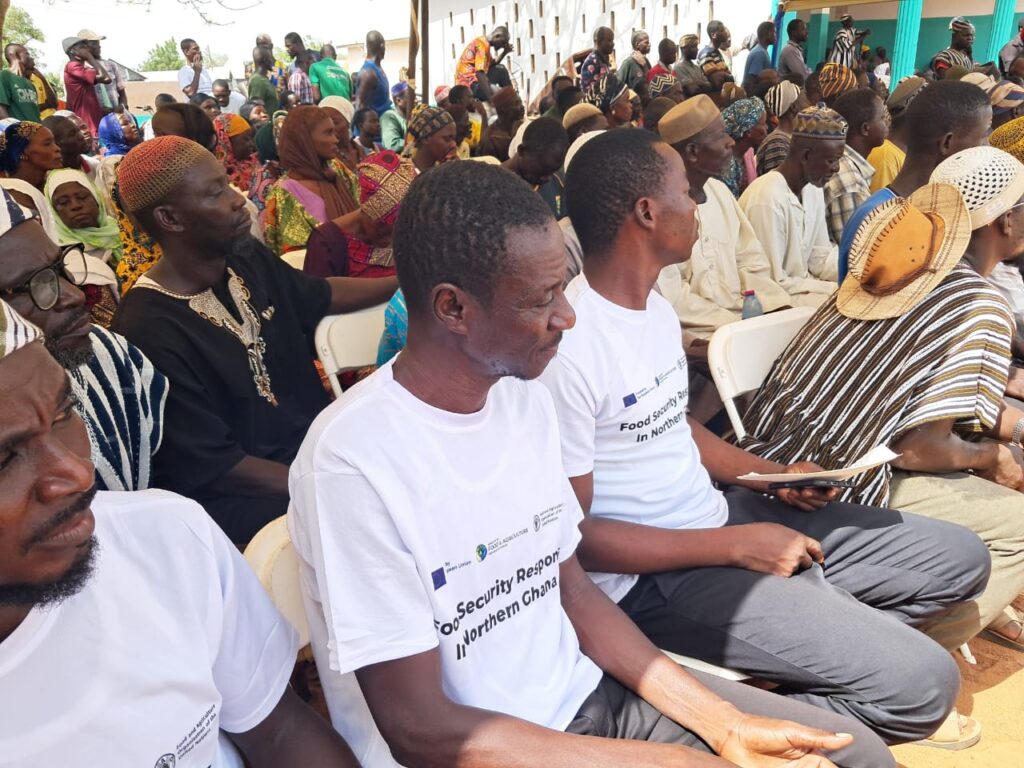
“Beneficiaries of the project have been given hands-on poultry management and business skills to succeed,” she said.
“Empowering the farmers to produce their own eggs and chicken promotes both sustainability and practical training.”
The community leaders have welcomed the move. The Chief of Kakpande, Kakpandewura Kayiti, described the initiative as timely, citing poor harvests and rising food prices.
“Because the recent drought and current low food prices are making crop farming unattractive compared to animal farming, this initiative is timely,” he said.
“I encourage all farmers to take advantage of rearing a small number, especially the poultry, to supplement our livelihoods.”
The Food Security Response Northern Ghana Project was launched in September 2023 with €10m in EU funding.
It aims to support more than 50,000 farmers affected by the fallout from Russia’s war against Ukraine while building climate resilience in northern Ghana.
READ ALSO:
Nzema Youth deny “illegal miners” tag by Adamus Resources Limited
