
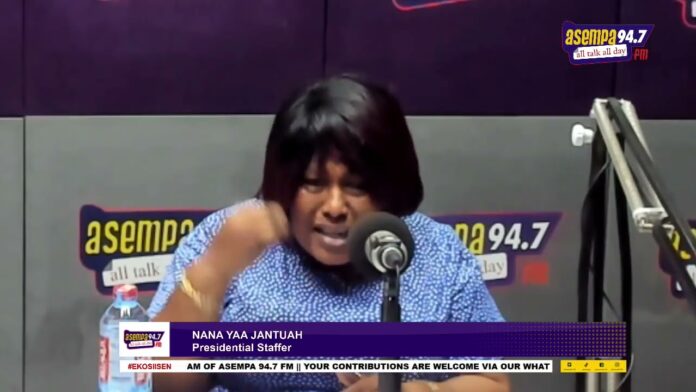

Presidential Staffer Nana Yaa Jantuah has expressed optimism about Ghana’s exit from the International Monetary Fund (IMF) programme, describing it as a step toward stronger economic independence.
Speaking on Adom FM’s Dwaso Nsem morning show, she thanked Ghanaians for their patience during the difficult period under the programme.
“We thank Ghanaians for their patience in these difficult times. We have been resilient and have gone through it,” she said.
She also commended President John Dramani Mahama and his economic team for adhering to the programme conditions and ensuring continuity despite political transitions.
“We thank President Mahama as well. Even with the IMF conditions left by his predecessor, he did not shift blame. He followed the rules and worked with his team to complete the process,” she noted.
Nana Yaa Jantuah further acknowledged the role of the Finance Minister and his team in managing the economy during the programme period.
“We also thank the Finance Minister and his team for their work,” she added.
According to her, Ghana should now focus on strengthening its economy to avoid returning to IMF support in the future.
“We don’t have to go back to the IMF,” she stated. “The resources in this country are enough. If we manage them well, there will be no need to keep borrowing.”
She stressed that Ghana has already had multiple engagements with the Fund and should aim for long-term independence.
“Eighteen times at the IMF is enough. We need to tell ourselves that we will no longer depend on external support,” she said.
Nana Yaa Jantuah added that the country must focus on developing its own resources for national growth.
“We should make up our minds that no more IMF support. Let’s use our own resources to build a better Ghana,” she said.
She concluded by expressing confidence that Ghana’s exit from the programme should mark a turning point in economic management.
“We are happy that we are out of it, and we believe we will remain out of it going forward,” she said.
Her comments follow Ghana’s announcement of the successful completion of its three-year US$3 billion IMF-supported programme, following a staff-level agreement on the final review of the arrangement.
ALSO READ:
