
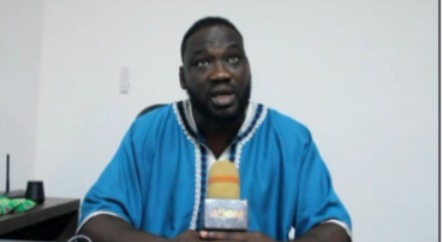

International diplomatic consultant, Farouk Al-Wahab, has argued that the arrest of Asante Akyem North Member of Parliament (MP), Ohene Kwame Frimpong, raises serious constitutional and diplomatic questions that place Parliament at the centre of the issue.
Speaking in an interview on Adom TV’s Badwam, he insisted that Parliament, as the institution that embodies the sovereignty of the Ghanaian people, cannot be treated as a secondary actor in matters involving one of its own members.
“In this matter, it is Parliament that is involved because the detainee is their member. The government stands on its own, but Parliament also stands as a sovereign institution within the Republic,” he said.
Al-Wahab stressed that while law enforcement and international cooperation are important, the handling of the case must reflect Ghana’s constitutional structure.
“Parliament makes laws for the Executive. In this regard, when a Member of Parliament is involved, it is one of their own. Parliament is not just another agency, it represents the sovereignty of Ghana,” he argued.
He further questioned public interpretations surrounding the circumstances of the arrest, particularly claims of an Interpol “Red Notice” or global security alert. According to him, available information suggests otherwise.
“People are talking about FBI Red Alert and Interpol Red Notice. That is not correct. What we are seeing is a bench warrant from a United States District Court, transmitted through legal channels,” he explained.
Al-Wahab also noted that international arrests often follow structured airline and border security procedures, rather than sensationalised narratives.
He referenced the transit route through Amsterdam, explaining that such stops are common in international travel and do not necessarily indicate a coordinated global security operation.
“At Schiphol Airport, profiling is done by airline-appointed systems and international databases. That is standard procedure, it is not evidence of a worldwide manhunt,” he said.
On the question of diplomatic response, he argued that Parliament should have immediately engaged the Ministry of Foreign Affairs and Ghana’s diplomatic missions abroad.
“If a sitting MP is arrested, Parliament should call in the Foreign Minister and activate the diplomatic corps. This is not a small matter,” he stated.
He also raised broader concerns about how international legal requests are processed, particularly those originating from U.S. district courts.
“In most of these cases, it is not Interpol-driven. It is a legal request from a district court, processed through mutual agreements. It is not automatic global policing,” he added.
Al-Wahab concluded by urging caution in public discourse, warning that misinterpretations of international legal processes can inflame tensions and mislead citizens.
“The world has protocols. We must understand them before we conclude. This is not just a legal matter, it is also a matter of sovereignty and diplomacy,” he said.
The comments come amid growing public debate over the arrest of Mr. Frimpong, who is serving his first term and its implications for Ghana’s parliamentary and diplomatic processes.
ALSO READ:
