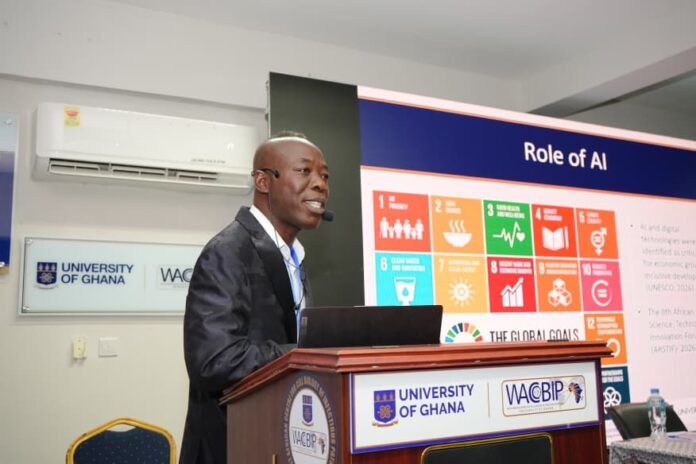

Professor Samuel Kojo Kwofie, Director of the Institute of Applied Science and Technology (IAST) at the University of Ghana, has issued a clarion call for Ghana and Africa to transform untapped data into equitable AI solutions that address the continent’s most pressing societal challenges.
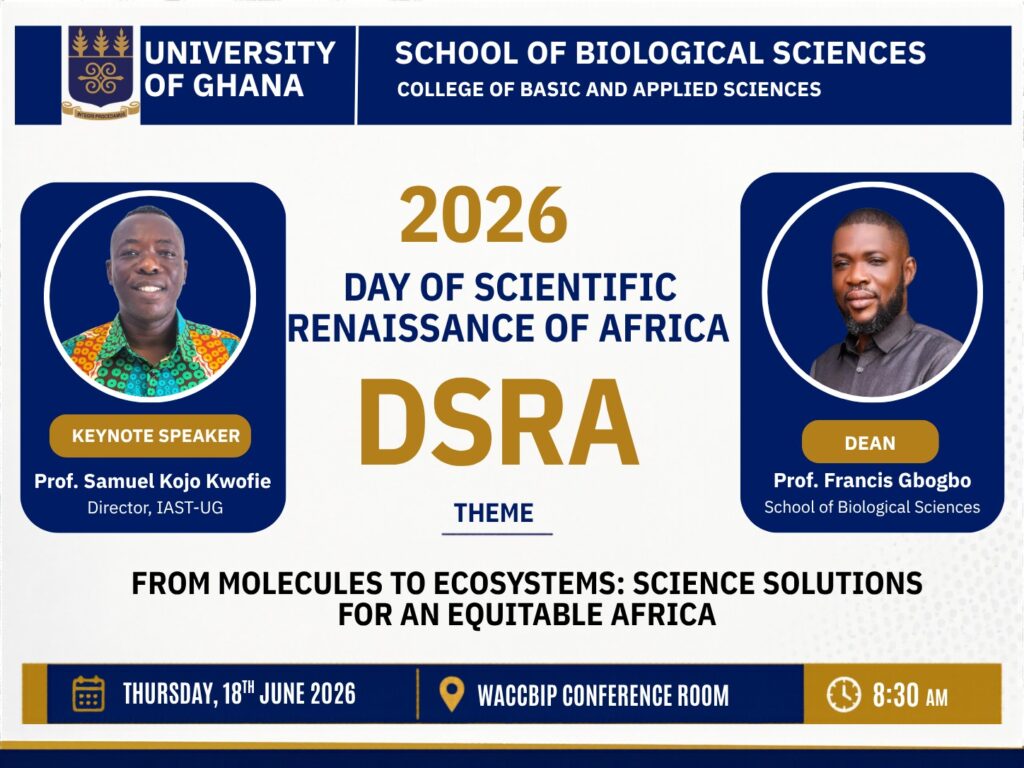
Speaking at the 2026 Day of Scientific Renaissance of Africa, organised by the School of Biological Sciences under the College of Basic and Applied Sciences at the University of Ghana, Prof. Kwofie declared that data is the new gold and Africa is sitting on a vast, largely unexploited reserve.
“Ghana and Africa at large have a wealth of data that remain unused to create solutions for health, agriculture, climate change and beyond,” he told the gathering, held under the theme “From Molecules to Ecosystems: Science Solutions for an Equitable Africa.”
“What does an equitable Africa look like?” he asked. “Access to healthcare regardless of location, quality education for all, food security, economic opportunities for women, youth, and persons with disabilities. Sustainable development that preserves resources for future generations.”
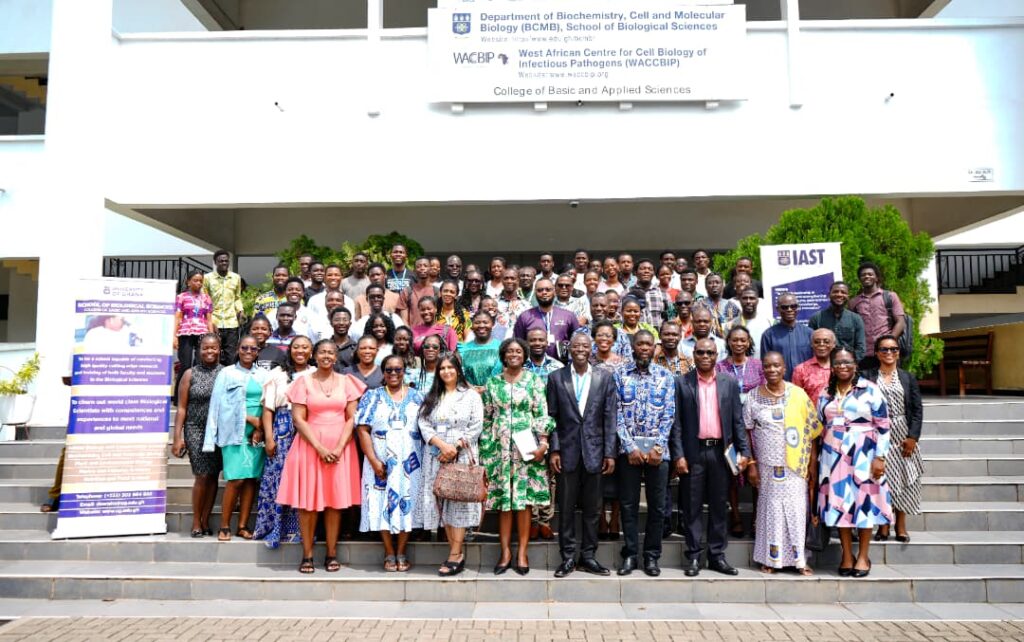
While acknowledging the innovations already taking root across the continent, Prof. Kwofie insisted that much more could be achieved if Africa deliberately invested in artificial intelligence.
The numbers make a compelling case. Over the past five years, AI investment in Africa has surged from roughly $1.2 billion to an estimated $4.1 billion, according to Prof. Kwofie.
This financial momentum, combined with a strategic push from organisations like UNESCO and the African Union, is creating fertile ground for homegrown solutions.
Ghana is not standing on the sidelines. Earlier this year, President John Dramani Mahama officially launched the National Artificial Intelligence Strategy 2025–2035, marking the beginning of what officials describe as the country’s AI revolution.
The strategy’s vision, “GHANA 2035: THE AI-POWERED SOCIETY,” envisions a transformed society where AI advances the potential of people, government, businesses and systems to achieve inclusive social and economic transformation.
The country’s Data Protection Act 2012 (Act 843) provides a regulatory framework for privacy and personal data processing, a critical foundation for responsible AI development.
“Investing in AI and data science is one of the surest ways to tap into the new gold,” he emphasised.
In a passionate appeal to academia, Prof. Kwofie challenged universities across Ghana, particularly his own institution, the University of Ghana to reposition themselves as AI-powered institutions within the next decade.
“The University of Ghana and other universities in this country must see themselves as AI-powered in the next 10 years to come,” he intimated. “We cannot afford to be spectators in this revolution. Our universities must lead in developing AI-driven solutions that address our unique African challenges.”
He stressed that universities have a dual responsibility: not only to produce graduates skilled in AI and data science but also to ensure that research outputs translate into tangible solutions for communities.
Across the continent, practical applications are already taking root and they are not all high-tech solutions requiring expensive infrastructure.
In Ghana, AI applications are revolutionising agriculture by providing weather insights, market information, and crop disease diagnosis to smallholder farmers via WhatsApp in local languages including Twi. Elsewhere in Africa, AI tools offers direct marketplace access to farmers, bypassing exploitative middlemen who have long taken advantage of rural producers.
These innovations embody what Prof. Kwofie calls “frugal innovation”, doing more with less. “Equity is not only about advanced technology,” he stressed. “It is also about ensuring innovations remain affordable and accessible.”
A powerful example is the AI-powered mobile ultrasound scan being used by traditional birth attendants in rural communities without the state-of-the-art health facilities, which eliminates the need for expert handling in low-resource settings. The University of Ghana’s own open-source ventilator design project, and another which is a voice-based conversational agent for prenatal risk monitoring, reflect this same commitment to accessible healthcare.
The Institute of Applied Science and Technology positions itself as a bridge connecting science, technology, industry, and society. Its work spans seven cross-cutting units, including an Artificial Intelligence, Data Science and Engineering platforms that trains youth in AI and has the mandate to translate research outputs into essential products for use in the communities. IAST has established the Pharmavax platform to explore the use of AI in developing new drugs and vaccines. Similarly, the Diagnostics and Medical Device platform serves to support the university and partners to develop AI-based low-cost devices to augment clinical engineering in low-resource settings.
Prof. Samuel Kojo Kwofie reiterated the work cannot stop at the university gates and the clock is ticking fast. The next decade will determine whether Africa becomes a producer of AI solutions or remains a consumer of technologies designed elsewhere.