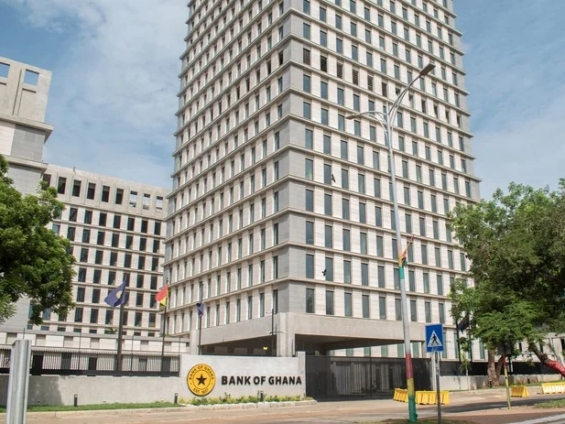

The results and antics played by one of the most important institutions in this country, which is the Bank of Ghana, an entity expected to be clothed in transparency and independence in its dealings with the general public of Ghana, in regards to the mandatory publication of its Financial Statements (FS) showing its performance over the past 12-month period, are quite concerning.
The BOG, instead of following laid down rules and regulations on how to proceed with this simple mandate, rather engaged in a PR stunt with the MPs of the ruling political party and has thereby clearly and dangerously politicised, for the first time, such an important independent state institution and its functions.
For me, these issues highlight the immense challenges and difficulties of the job of the Finance Minister. I dare say that if everything were good in the books, then there would have been no stunt, and the Governor of the BOG would have undertaken his responsibilities ordinarily and normally, without the Majority in Parliament first disclosing bits and pieces and defending issues before the actual publication.
So it may be important for us to be sincere with ourselves that the work of the Finance Minister is a Herculean task, and we must therefore appreciate occupants of that post, especially for their commitment to deliver, regardless of the posturing of the Cabinet and the President. Why do I say this? On two bases:
- The Finance Minister is a member of Cabinet, but he is not the only member, and decisions taken at Cabinet may not be in tandem with what he believes. But if the group decides contrary to his advice, he is bound by the group’s decision. If the group agrees to undertake a project for which he finds that the economy would be strained, his opinion may be overlooked, and he would have to raise the cash for that project regardless of his views.
- The colonial structure of the economy of Ghana makes it difficult to manoeuvre, as fiscal space is so tight and limiting, and yet the needs of the people are unlimited. Ghana is heavily dependent on imports, and industrialisation is very low, so there is a huge global impact whenever there is global volatility.
There are other factors, but let me limit myself to these two. So basically, the foundation is very weak, as local productivity is very low and unemployment is high. The pressure on the local currency is daunting, and the Finance Minister has very limited options in the management of the economy, supported by the Bank of Ghana and other relevant institutions like the Ghana Revenue Authority.
Who do we blame, for instance, for the GHS15.6 billion losses in the books of the BOG? Is it the BOG Governor, the Finance Minister, or Gold Board’s operations? You see, this is a complex situation because the whole idea was to protect the people and industry from maybe a harsher reality in terms of inflation and exchange rate volatility. But we notice that regardless of the noble reasons, it always comes at a heavy price, and if this continues, then the very same people that this decision aimed to protect would have to pay the price, as it happened under such programmes as the Domestic Debt Exchange Programme (DDEP). The thing is, something has to give.
These are the reasons why I believe our former Finance Minister, Ken Ofori-Atta, needs to be rather praised than condemned and blamed for our economic woes. Let us be real—this same man we blame has arguably, without question, seen Ghana through one of the best sustained GDP growth periods recorded in the last 20 years, if not more. Ghana recorded sustained growth which was policy-driven between 2017 and 2019—the best ever—and yet some would want us to believe he was the worst.
But let us take a few of his decisions and put them to the test. Some commercial banks had been terribly mismanaged—let’s forget the political twists at the time, as time has proven that this was the case—and the result was that all the depositors of those banks should have lost their money. But Cabinet, on the advice of Mr Ofori-Atta, rather saved 4 million depositors their money rather than save 3,000 workers their jobs. Are we saying that the government should have saved both, or that the 3,000 affected people should have been saved instead? The state could not apply the same solution and get a different result. We are aware that some of these banks had already been saved but continued the abuses.
Mr Ofori-Atta also, with the BOG team, decided to put some of these banks together and thereby save some jobs rather than let everyone lose their jobs. So technically, some banks were saved and some jobs were saved.
Let me hereby mention some of the other pressures that confronted him:
- President Akufo-Addo was undertaking huge developmental policies and projects which required massive financing, including FREE SHS and 1D1F.
- The state was also constructing new roads everywhere, similar to what the John Mahama government wants to achieve under the BIG PUSH.
- The man was hit by COVID—a period of supply chain disruptions and cash flow entrapment, where the government only spent without making revenue.
- Then came the Russia-Ukraine war.
How many Finance Ministers could have easily navigated these impediments? Yet, this man went through them, and when the country could no longer hold, he came up with a solution, which is today referred to as the DDEP. Even though this was painful, I want to see the positive side—the mindset of the man, Ken Ofori-Atta, and his ability to adapt and find solutions in hard times.
So next time you mention that name, maybe think about the positive and not the political propaganda.