
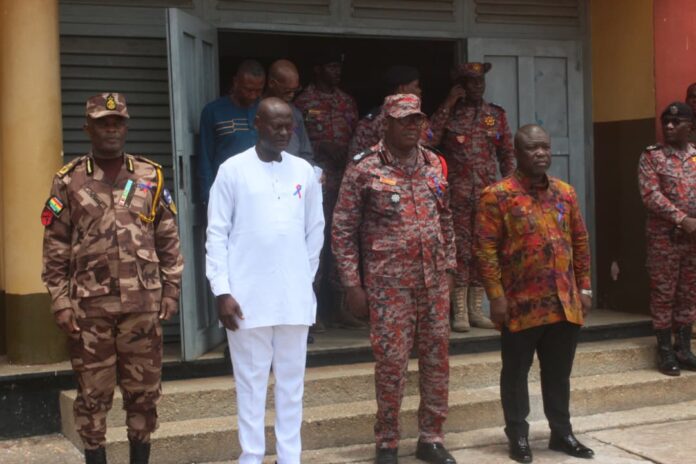

The Volta Regional Minister, James Gunu, has strongly condemned attacks on firefighters and the destruction of firefighting equipment, describing such actions as unacceptable and a threat to public safety.
He made the statement during this year’s International Firefighters’ Day celebration held at the Volta Regional Fire Service Headquarters in Ho under the theme: “An Attack on Firefighters and Equipment is an Attack on Public Safety: End Assaults and Protect the Firefighter.”
Addressing officers, guests, and stakeholders, the Minister praised personnel of the Ghana National Fire Service for their dedication, courage, and sacrifices in protecting lives and property despite the numerous challenges they encounter in the line of duty.
“Today’s theme, ‘An Attack on Firefighters and Equipment is an Attack on Public Safety: End Assaults and Protect the Firefighter,’ is both timely and compelling. It is a strong reminder that when a firefighter is attacked, obstructed, or denied the space to work, the consequence is not borne by the firefighter alone. It is the entire community that is put at risk. When fire tenders are damaged, delayed, or denied access, it is public safety that suffers.
Let me, therefore, state without ambiguity: an assault on a firefighter is unacceptable. An attack on fire service personnel, vehicles, or equipment is a direct threat to life, security, and public order.
As a people, we must reject such conduct in all its forms. We must rather honour, respect, and support those who run toward danger when everyone else is running away from it,” the Minister stated.
According to him, firefighters play a crucial role in national development and public safety, stressing that “The Ghana National Fire Service plays a critical role not only in fire suppression but also in prevention, rescue operations, safety education, and emergency response.
Their contribution to public safety, urban management, institutional resilience, and disaster preparedness cannot be overstated. In an era of growing urbanisation, commercial expansion, road traffic incidents, domestic fire outbreaks, and industrial hazards, the work of the Fire Service has become even more essential.
As Regional Minister, I wish to assure the Ghana National Fire Service of my continued support and collaboration. We will continue to engage stakeholders, institutions, assemblies, and communities to promote public education on fire safety, ensure respect for emergency responders, and strengthen inter-agency cooperation in the region.
Public awareness, community discipline, and institutional coordination are indispensable if we are to reduce fire outbreaks and improve response outcomes.
I also wish to use this occasion to call on the general public to partner more closely with the Fire Service. Let us keep access routes clear. Let us avoid acts that hinder emergency response. Let us report fires promptly and responsibly. Let us desist from attacking personnel who have been trained and mandated to save lives. Above all, let us cultivate a culture of prevention in our homes, schools, offices, markets, and places of worship.
To the officers and personnel of the Ghana National Fire Service in the Volta Region, I say this: your sacrifices are seen, your service is valued, and your commitment is deeply appreciated. You are an indispensable pillar in our collective effort to build a safer and more resilient society.
On behalf of the people of the Volta Region, I commend you for your courage, discipline, and devotion to duty. May this celebration not only honour your service but also deepen public understanding of your role and strengthen our shared resolve to protect those who protect us,” James Gunu, Volta Regional Minister, said.
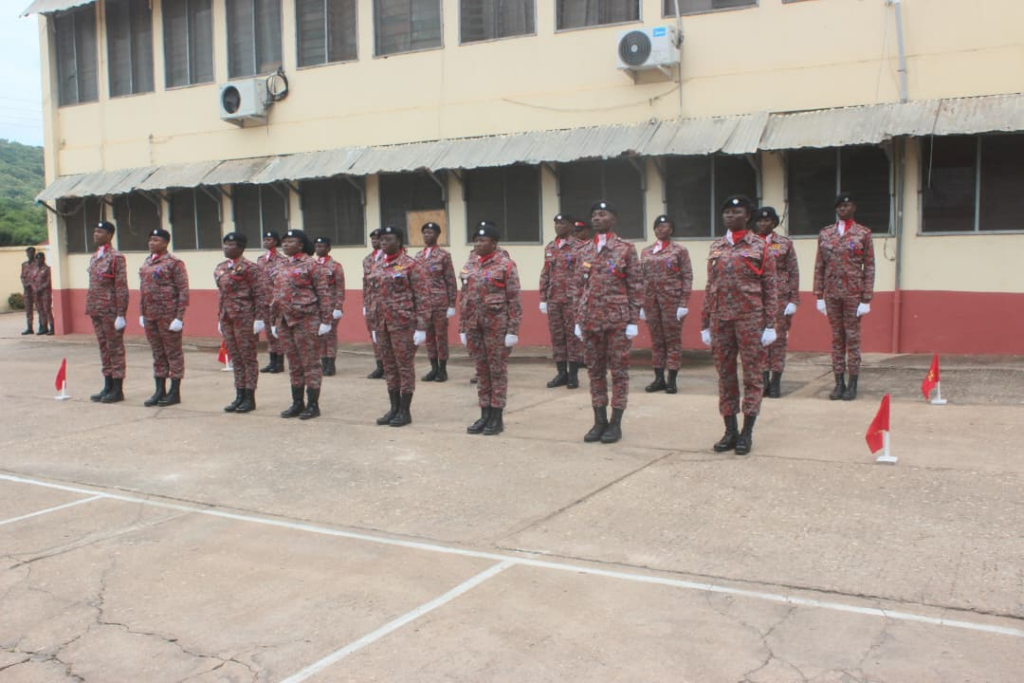
The celebration brought together officers of the Ghana National Fire Service, security personnel, traditional leaders, and members of the public to honour firefighters for their selfless service and contribution to national safety.
READ ALSO:
Nkwanta South BECE candidates lament limited study time amid conflict
OMJ Foundation boosts BECE prospects in Akuapem South with a transformative intervention project
