
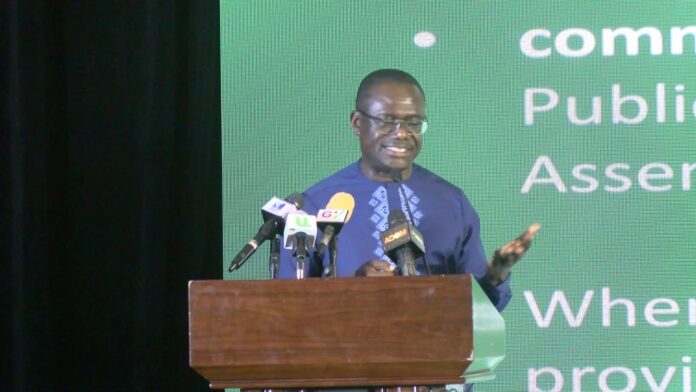

Stakeholders in Ghana’s sanitation sector have called for an urgent shift from landfill-dependent waste disposal systems to sustainable, engineered waste treatment infrastructure, warning that persistent funding gaps could undermine efforts to maintain cleanliness and environmental safety within the Greater Accra Metropolitan Area (GAMA).
The call was made during a high-level stakeholder dialogue on landfill and waste management held at the Kempinski Hotel Gold Coast City in Accra on Monday, June 8, 2026 on the theme “Alleviating Waste Disposal crisis in Greater Accra.”
The meeting brought together government officials, Metropolitan, Municipal and District Chief Executives (MMDCEs), sanitation experts and private sector operators.
Delivering the keynote address, the Minister for Local Government, Chieftaincy and Religious Affairs Ahmed Ibrahim, noted that rapid urbanisation and population growth continue to place enormous pressure on existing waste infrastructure. He revealed that Ghana currently generates approximately 4,400 tonnes of solid waste daily, translating into about 1.6 million tonnes annually, with an average collection rate of 80 percent.
The Minister warned that daily waste generation was projected to rise significantly over the next decade, making investment in modern treatment facilities an urgent national priority.
He emphasised that sustainable financing remained the biggest obstacle facing the sector. Ahmed Ibrahim acknowledged that waste management cannot be left solely to market forces, drawing comparisons with countries such as South Korea.
He disclosed that discussions are ongoing with the Ministry of Finance to secure dedicated funding to settle outstanding obligations owed to private waste management companies.
The Minister also challenged MMDCEs to take greater responsibility for sanitation outcomes, stressing that even the most sophisticated facilities cannot function effectively without adequate operational funding. He warned that delayed payments could trigger serious environmental and public health consequences.
The President of the Environmental Service Providers Association (ESPA) and Executive Chairman of the Jospong Group of Companies, Dr. Joseph Siaw Agyepong, described reliance on landfills as an outdated approach that has repeatedly failed.
According to him, all 17 landfills constructed across the country with support from international partners reached capacity within a decade. He stressed that modern systems should prioritize collection, transfer stations, recycling and composting, with landfills as a last resort.
The stakeholders also highlighted concerns over inadequate revenue mobilisation and tariff structures.
The President of ESPA further noted that although international benchmarks recommend household waste collection fees between $15 and $20 in lower-middle-income countries, operators in Ghana struggle with low recovery rates.
Despite challenges, participants pointed to Ghana’s growing reputation as a leader in environmental sanitation technology across Africa. The country now boasts of more than 50 waste treatment and composting facilities. Ghanaian firms are currently providing expertise in several African countries, including Kenya and Ethiopia.
Dr. Agyepong attributed this success to sustained investments in local expertise, revealing that sanitation service providers have supported the training of hundreds of highly qualified professionals.
The Vice Dean of the MMDCEs, Dr. Michael Mensah, assured stakeholders that local authorities remain committed to improving sanitation standards.
Research findings presented indicated that poor waste management costs Ghana more than GH¢6.2 billion annually through flood-related destruction, healthcare expenses and environmental degradation.
Participants concluded with a renewed commitment to strengthening collaboration between government, local authorities, and private service providers, emphasizing that policy discussions must translate into sustainable financing mechanisms capable of keeping Accra and the wider GAMA area clean.
