

Ghana’s recent economic crisis left deep scars on households, businesses, pensioners, workers, and young people across the country. Inflation surged, the cedi weakened sharply, confidence declined, and difficult policies such as the Domestic Debt Exchange Programme (DDEP) placed enormous strain on citizens.
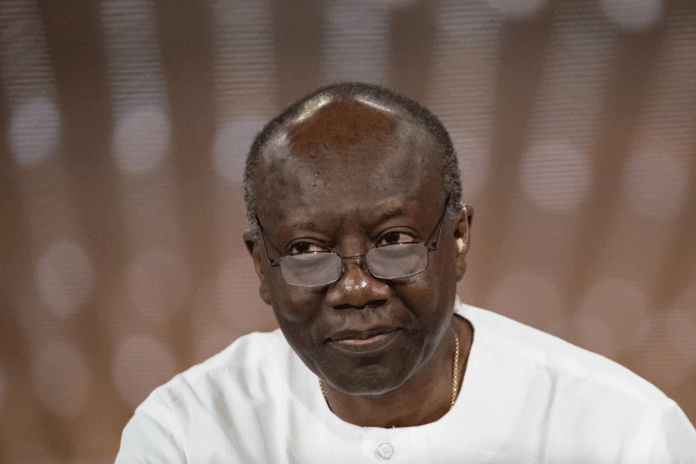
Understandably, strong emotions emerged around those who occupied leadership positions during this painful period, particularly former Finance Minister Ken Ofori-Atta.
However, any honest reflection on Ghana’s economic crisis must also acknowledge that these difficulties did not emerge in isolation, nor were they unique to Ghana alone.
The COVID-19 pandemic and the Russia-Ukraine war triggered one of the most severe global economic disruptions in modern history. Whether critics agree or not, this remains a fact. Both advanced and developing economies suffered enormously.
The United States experienced inflation levels not seen in decades; the United Kingdom faced severe cost-of-living pressures and political instability; Germany and other European economies struggled with energy shocks linked to disruptions in Russian gas supplies; while China itself suffered major slowdowns arising from lockdowns, weakened trade activity, and global supply-chain disruptions.
Governments across the world borrowed heavily simply to keep businesses alive, support households, stabilize banking systems, and prevent economic collapse.
For Ghana, a smaller import-dependent economy with longstanding structural vulnerabilities, weaker fiscal buffers, and high exposure to external financing, the effects were naturally even more severe.
This does not mean mistakes were not made, nor does it eliminate the need for accountability regarding policy decisions and economic management. However, it does challenge simplistic narratives that attempt to reduce one of the most turbulent global economic periods in recent history into the actions of a single individual.
Ghana’s economic pain was shaped not only by domestic decisions, but also by structural weaknesses within the economy and extraordinary global shocks that affected nations across the world.
Yet as the national conversation has evolved, an important question now confronts Ghana: are we still engaged in a sober discussion about accountability and economic management, or has the debate gradually transformed into something far more political, emotional, and media-driven?
Increasingly, public discourse surrounding Ken Ofori-Atta appears to extend beyond economics or law. It has become a broader national contest involving public anger, media amplification, competing historical narratives, and, in some instances, geopolitical speculation.
More shockingly, some of these narratives are being driven by personalities regarded as learned and influential, making the situation appear less like a search for accountability and more like a personal or politically charged pursuit.
Recent commentary reflects this evolution clearly.
Lawyer and media commentator Martin Kpebu, in discussing broader extradition-related matters,
suggested that “the verdict of the Ghanaian people” is that Ken Ofori-Atta must be brought back to
Ghana. The language is powerful because it projects public opinion as though guilt or culpability has already been conclusively established at a national level. Interestingly, this position comes from a lawyer of good standing, a profession ordinarily expected to uphold due process and the presumption of innocence.
Others have moved the discussion beyond accountability into geopolitical interpretation. Oliver Barker-Vormawor recently argued that if American authorities genuinely wished to return Ken Ofori-Atta to Ghana, they could have done so immediately following visa complications.
He speculated instead that the former minister may be serving as a form of geopolitical leverage against the current government, suggesting the matter is no longer merely legal or procedural but politically strategic.
Whether one agrees with these claims or not, they demonstrate something important: the Ken Ofori-Atta issue is increasingly being discussed not only as a legal or economic matter, but as a politically symbolic one onto which wider frustrations and anxieties are being projected.
At this stage, it is becoming increasingly difficult to determine what some of the ongoing attacks against Ken Ofori-Atta truly represent. What appears more evident, however, is that certain narratives are gradually being twisted and amplified in ways that seem deliberately calculated to fuel public dissatisfaction and deepen resentment toward him.
There is also a growing sense that aspects of his leadership, intentions, and even some of the difficult decisions taken during one of the most turbulent global economic periods in recent history are being selectively interpreted or misrepresented by some individuals and even respected civil society voices.
While criticism and accountability remain legitimate and necessary in any democracy, there is a difference between fair scrutiny and the deliberate construction of a singular public villain for a complex national crisis.
History often has a way of revisiting emotionally charged national moments with greater balance and perspective. For that reason, many of the current narratives surrounding Ken Ofori-Atta may ultimately face a far more measured judgment with time than the intensity of today’s public atmosphere suggests.
At the same time, fierce disagreements remain over the true causes of Ghana’s economic collapse and the fairness of assigning responsibility, particularly if Ghana genuinely seeks to prevent a recurrence and better restructure the economy for long-term national benefit.
Policy commentator Franklin Cudjoe recently argued that Ghana’s current economic recovery under the Mahama administration demonstrates that the previous crisis was largely self-inflicted through “waste, mismanagement and plunder.”
In his view, the current government inherited a broken IMF programme and has since restored confidence, stabilised inflation, strengthened the cedi, rebuilt reserves, and repaired the macroeconomy.
Yet responses to his commentary revealed that there is far from unanimous agreement on this interpretation of events.
Critics argued that debt reduction figures were being oversimplified, that DDEP was fundamentally tied to IMF conditionalities rather than merely discretionary political choices, and that global shocks such as COVID-19, tightening international financial conditions, and the Russia-Ukraine war played far greater roles than some narratives now acknowledge.
Others argued that delayed political consensus around IMF engagement and difficult reforms may itself have worsened the eventual pain Ghana experienced.
This disagreement matters because it reveals that Ghana’s economic crisis remains contested terrain intellectually, politically, and historically. There is no universally accepted interpretation of what happened, when the crisis truly began, who bears primary responsibility, or what could realistically have been avoided.
That complexity matters.
Democratic societies must be able to investigate allegations, examine policy failures, and hold public officials accountable. However, accountability in constitutional democracies must remain evidence-based, institutionally grounded, and insulated from emotionally manufactured verdicts. Public anger, no matter how understandable, cannot become a substitute for due process in any shape or form.
This principle becomes even more important when public narratives move from criticism into presumptions of collective guilt.
Some social media commentary increasingly presents Ken Ofori-Atta not merely as a former
finance minister whose policies are under scrutiny, but as the singular embodiment of Ghana’s economic suffering. Such framing risks oversimplifying a crisis that involved global shocks, longstanding structural vulnerabilities, debt pressures accumulated over many years, and difficult policy decisions made under extraordinary circumstances.
None of this means public criticism is invalid. Citizens have every right to question decisions surrounding DDEP, IMF negotiations, debt accumulation, expenditure choices, and economic management during one of the most difficult periods in Ghana’s history. Those debates are legitimate and necessary in any functioning democracy.
But there is an equally important obligation to preserve fairness, proportionality, and institutional integrity within national discourse.
Ken Ofori-Atta did not emerge from obscurity into public office. Long before entering government, he had established a significant professional and financial career, built international networks, and participated in major investment and economic initiatives.
During his time in office, supporters point to achievements such as banking sector stabilisation, efforts to maintain macroeconomic credibility during COVID-19, energy-sector financing interventions, and attempts to sustain investor confidence under extraordinary global pressure.
Critics dispute aspects of these achievements or argue that later failures overshadow them. Both perspectives continue to exist within the national debate.
That is precisely why caution is necessary.
When political transitions occur during periods of economic pain, there is always a temptation to compress complex national crises into simplified morality narratives involving heroes, villains, and symbolic punishment. Yet history often judges such periods more carefully than the emotions of the moment allow.
Ultimately, Ghana’s democracy will not be judged merely by whether powerful individuals are investigated. It will be judged by whether those investigations, discussions, and public narratives remain fair, evidence-based, constitutionally grounded, and free from the pressure of emotionally manufactured verdicts.
In moments of national frustration, democracies are tested not only by their willingness to pursue accountability, but by their ability to preserve fairness while doing so.
