

The Ghana Health Service (GHS) says it has stepped up surveillance and preparedness measures following reports of Hantavirus infections detected on a cruise ship currently docked in Cape Verde.
In a statement issued on May 8, 2026, the Ministry of Health and GHS said the outbreak on the vessel, as of May 7, includes eight suspected cases, five confirmed infections, and three deaths.
The ship reportedly carried crew members mainly from the Philippines, with passengers from several countries including the United States, parts of Europe, South America, Australia, and Asia.
Health authorities noted that the World Health Organization (WHO) and the United States Centers for Disease Control and Prevention (CDC), after assessing the situation, have indicated that the global public health risk remains low. However, they have urged countries to strengthen surveillance and preparedness systems.
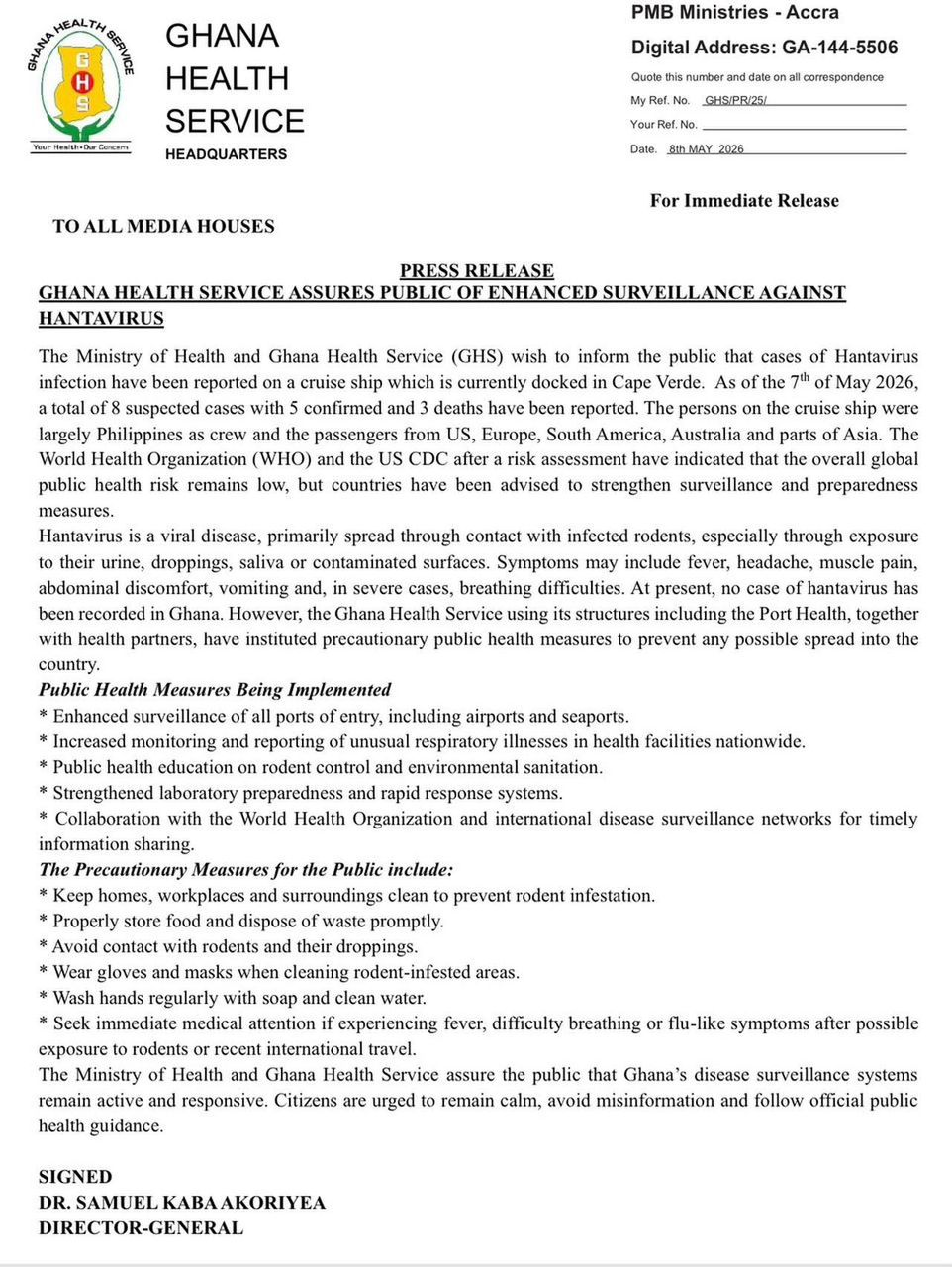
GHS explained that Hantavirus is mainly transmitted through contact with infected rodents or exposure to their droppings, urine, saliva, or contaminated surfaces. It added that symptoms can include fever, headache, muscle pain, abdominal pain, vomiting, and in severe cases, difficulty in breathing.
The Service stressed that no case has been recorded in Ghana so far. However, it said precautionary measures have been activated through its Port Health Division and other public health systems to reduce any possible risk of importation.
As part of the response, enhanced screening and surveillance have been introduced at all ports of entry, including airports and seaports. Health facilities across the country have also been directed to step up monitoring and reporting of any unusual respiratory illnesses.
The GHS further said it is strengthening laboratory systems and rapid response capacity while intensifying public education on sanitation and rodent control.
It also confirmed ongoing collaboration with international partners, including the WHO and global disease surveillance networks, to ensure timely information sharing.
Members of the public have been advised to maintain good hygiene, keep their surroundings clean, store food properly, dispose of waste safely, and avoid contact with rodents or their droppings. The Service also urged people to use protective gear when cleaning potentially contaminated areas and to seek medical attention immediately if they develop symptoms such as fever or breathing difficulties, especially after travel or possible exposure.
The Ministry of Health and GHS have assured the public that Ghana’s disease surveillance systems remain active and capable of responding to any potential threat, urging citizens to stay calm and rely on verified health updates.
