
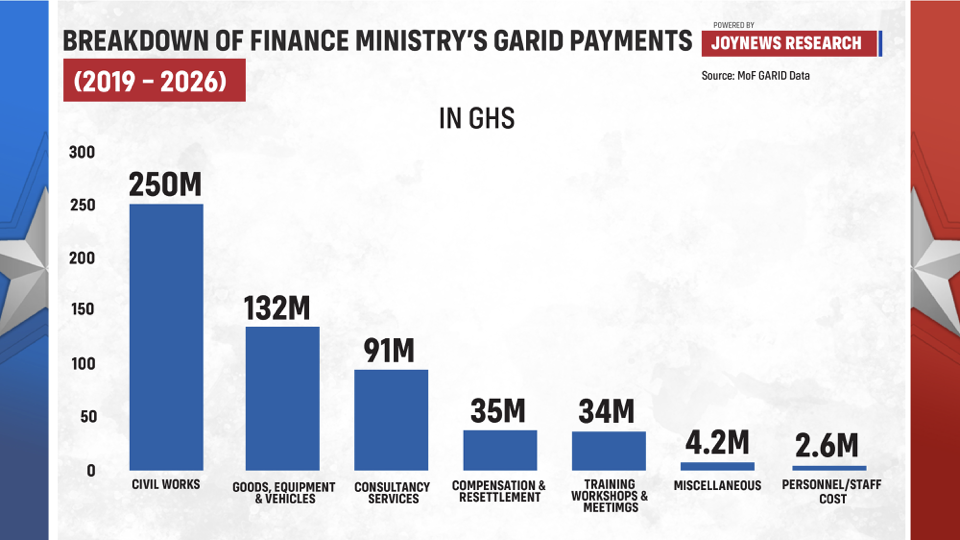
More than ¢34 million of funds allocated to the Greater Accra Resilient and Integrated Development (GARID) Project was spent on training programmes, workshops, meetings and related expenses between 2019 and 2026, according to expenditure records submitted by the Ministry of Finance.
The expenditure records show spending across a broad range of capacity building and administrative activities, including workshops, stakeholder engagements, training programmes, transport allowances, refreshments, accommodation and meeting logistics.
The expenditure data has come under renewed scrutiny following the World Bank’s decision in May 2026 to downgrade implementation of the $350 million GARID Project to “Moderately Unsatisfactory.”
In its implementation update, the World Bank attributed much of the slowdown in the project to fiscal controls introduced by the Ministry of Finance in 2025. According to the Bank, funding ceilings, delayed commitment authorisations and restrictions on project disbursements slowed contractor payments and delayed the execution of several civil works.
Officials at the Ministry of Finance, however, have privately offered a different explanation.
According to people familiar with the ministry’s position, the fiscal controls were introduced after the new administration reviewed historical project expenditure and concluded that a significant share of project resources had been directed towards consultancies, training activities and administrative expenses rather than physical infrastructure.
The expenditure records provide some context for that position.
They show that more than ¢34 million was spent on training programmes, workshops and meetings over the life of the project.
The records include expenditure on stakeholder consultations, capacity building programmes, technical workshops, review meetings, transport allowances, refreshments, accommodation and other meeting related costs.
The GARID Project was approved by the World Bank to strengthen flood risk management, improve solid waste management and enhance urban resilience across the Greater Accra Metropolitan Area through investments in drainage infrastructure, flood mitigation works, solid waste management and community upgrading.
Capacity building and institutional strengthening form part of the project’s design, meaning some expenditure on training and workshops is expected under the financing arrangements.
The expenditure records alone therefore do not establish whether the spending was inappropriate or inconsistent with the project’s financing agreement.
However, the scale of spending on training and administrative activities relative to the delays in implementing major civil works is likely to fuel further debate over how project resources were prioritised during the implementation period.
The issue has become particularly significant because it sits at the centre of the disagreement between the World Bank and the Ministry of Finance.
While the World Bank argues that the ministry’s fiscal controls contributed to implementation delays, the Ministry of Finance maintains that the controls were necessary to review expenditure patterns and redirect resources towards the project’s core infrastructure objectives.
Also read: