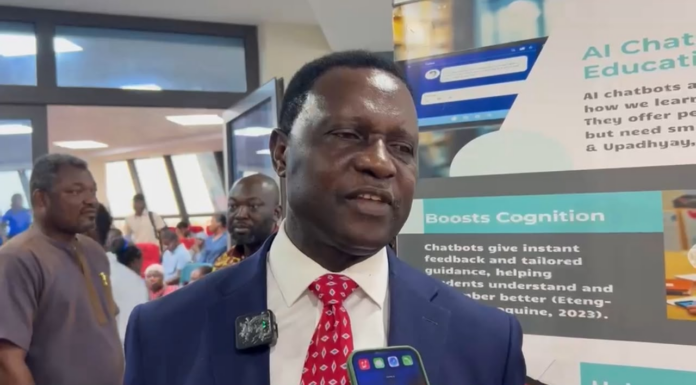

Former Minister for Education, Dr Yaw Osei Adutwum, has called on the government to prioritise investment in Artificial Intelligence (AI), Science, Technology, Engineering and Mathematics (STEM), and robotics education to drive Ghana’s transformation agenda.
Dr Adutwum said the country’s educational advancement and economic competitiveness depend largely on sustained investment in technology-driven learning, improved infrastructure and innovation, particularly at the Kwame Nkrumah University of Science and Technology (KNUST).
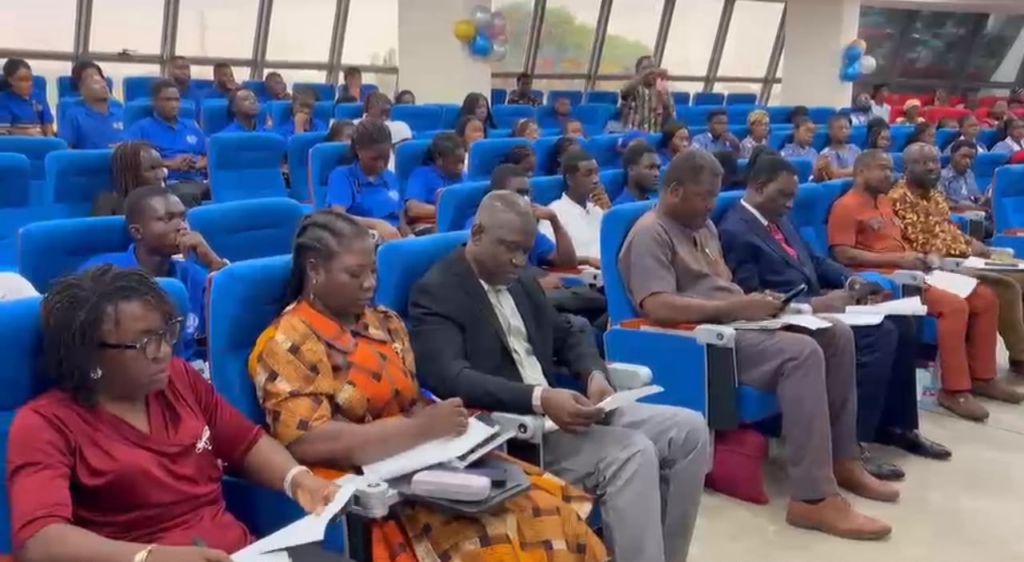
He made the call at the Faculty of Educational Studies Students’ Association (FESSA) Summit at KNUST, held on the theme: “The Future-Ready Educator: AI Integration, Digital Pedagogy, and Educational Excellence.”
According to him, KNUST’s efforts in integrating AI into education, especially in biomedical sciences, have the potential to position Ghana among Africa’s leading innovation hubs.
“If the government wants to reset the country as it has indicated, then education must be one of its priorities,” he said, stressing that Ghana could achieve the development levels of advanced economies by placing greater emphasis on AI, STEM and robotics.
Dr Adutwum urged the government to continue with STEM reforms introduced during his tenure as Education Minister, arguing that long-term development requires consistency in education policies.
“With this STEM education, and for the sake of the country and our future, looking at what Singapore and South Korea did, it is an opportunity for the government now to continue the work and make sure that STEM education becomes a centrepiece of education transformation in Ghana,” he stated.
During his tenure, government introduced several STEM-focused initiatives, including the establishment of STEM Senior High Schools and Centres, robotics programmes, curriculum reforms under the Standards-Based Curriculum, and increased investment in digital learning and teacher training.
Dr Adutwum maintained that these interventions are beginning to produce results and should receive continued support to achieve their full potential.
Meanwhile, Senior Lecturer and Postgraduate Coordinator at the Department of Teacher Education at KNUST, Dr Patrick Swanzy, appealed to government to provide the needed infrastructure to support AI integration in teacher education.
He said the creation of AI laboratories and the inclusion of AI in teacher training curricula were essential to preparing educators for the future.
“We need AI laboratories to train teachers on digital pedagogy and get facilities to train them on the field,” Dr Swanzy said.
He added that without trained teachers and the necessary infrastructure, integrating AI into classrooms would remain a challenge.
President of FESSA, Prince Adu Amoateng, also appealed for government support, particularly in providing equipment and resources needed to sustain STEM-related programmes.
He said students were excited about the programmes but lacked the tools required for effective practical learning.
The FESSA summit brought together academics, policymakers, student teachers and education stakeholders to discuss strategies for preparing future educators for an increasingly digital world.
Stakeholders at the event agreed that sustained investment in AI infrastructure, teacher training and STEM education would be critical to transforming Ghana’s education sector and positioning the country as a leader in technology-driven learning in Africa.
More details emerge on fatal accident near Konongo
NADeF, Kenyasi No. 1 Traditional Council break ground for GH¢19.95 million…