

When the Bank of Ghana holds its policy rate at 14%, it may appear to be a distant, technical decision—one that belongs in the realm of economists, central bankers, and financial analysts. Yet beyond boardrooms and policy briefings, the effects are far more personal. For thousands of Ghanaians, particularly pensioners who depend on steady post-retirement income, the consequences are immediate, tangible, and often unsettling.
At the heart of this issue lies a simple mechanism. The policy rate set by the Bank of Ghana serves as the benchmark for interest rates across the economy. It shapes how much banks charge borrowers and, crucially, how much they reward savers. When the rate rises, borrowing becomes more expensive but savers—especially those with fixed deposits—benefit from higher returns. Conversely, when the rate stabilises at lower levels or declines, lending becomes more affordable, but returns on savings begin to shrink.
It is within this shift that a quiet financial strain begins to emerge—what can best be described as the pensioner’s dilemma.
A Quiet Crisis In Retirement
Consider the story of Mr. K. Addy, a retired professional who spent decades working, saving, and planning for his future. Like many disciplined Ghanaians of his generation, he built a retirement cushion of GHS 500,000, carefully invested in a fixed deposit account.
A few years ago, that decision delivered both comfort and dignity. With interest rates hovering around 18%, Mr. Addy earned approximately GHS 90,000 annually—about GHS 7,500 per month. This was not surplus income; it was his financial lifeline. Combined with his SSNIT pension, it paid for his medication, daily meals, utility bills, and basic comforts.
Today, that sense of security has eroded.
With prevailing rates now closer to 6%, the same investment yields only GHS 30,000 annually—roughly GHS 2,500 per month. In practical terms, his income has fallen by more than half. Yet the cost of living has moved in the opposite direction. Food prices remain elevated, healthcare costs persist, and utility bills have not eased.
For Mr. Addy and many like him, the question is no longer about prudent financial management but survival—whether the savings accumulated over a lifetime can still sustain the life they were meant to secure.
The Illusion Of Alternatives
Faced with shrinking returns, the logical response is to explore alternatives. But for pensioners, these options are rarely straightforward and often come with difficult trade-offs.
Treasury bills, once a dependable refuge, no longer offer significantly better returns. Yields have declined in line with broader interest rates, narrowing the advantage over traditional fixed deposits.
Some turn to foreign currencies, particularly the US dollar, hoping to preserve value against currency fluctuations. While this may offer a hedge over time, it does not generate consistent income. Exchange rate gains are unpredictable, and for retirees with immediate expenses, stability—not speculation—is paramount.
Others consider gold or similar assets. These may retain or even increase in value, but they do not provide regular cash flow. For someone who depends on monthly income, capital appreciation alone is insufficient.
Equities present another option. Over the long term, stocks can offer growth and dividend income. However, they come with volatility. Price swings can be sharp, and without financial expertise, the risk of losses is real. For retirees seeking predictability, this uncertainty can be deeply unsettling.
Even starting a business—often suggested as a solution—can be impractical. Many pensioners lack the physical energy, risk appetite, or current market insight required to sustain a venture. At that stage of life, the margin for error is simply too small.
With limited viable alternatives, many retirees are left confronting an uncomfortable reality: they must begin drawing down their principal. Over time, this erodes the very savings meant to guarantee long-term financial security.
Caught Between Stability And Risk
What makes the pensioner’s situation particularly challenging is the absence of an easy solution. Doing nothing results in declining income. Taking action introduces new layers of risk. It is a delicate balancing act that extends beyond numbers into daily wellbeing.
This is the essence of the dilemma: pensioners are trapped between low returns and higher uncertainty.
While central bank decisions are driven by broader macroeconomic objectives—controlling inflation, supporting growth, and maintaining currency stability—the impact is uneven. Borrowers and businesses often benefit from lower rates through cheaper credit access. Savers, especially retirees dependent on fixed income, absorb a quieter but significant cost.
A Question For Policy And Innovation
This disparity raises an urgent question: how can financial systems better protect those who rely on savings for survival?
As Ghana’s financial landscape evolves, there is a growing need for tailored solutions—financial products designed specifically for retirees. Instruments that balance safety with reasonable, predictable income could help bridge the widening gap between falling interest rates and rising living costs.
Equally important is broader policy conversation. Ensuring economic stability should not come at the expense of those least equipped to adapt. Pensioners represent a vulnerable but often overlooked segment of the population, whose financial wellbeing deserves deliberate attention.
Lessons For The Future
Beyond its immediate impact, the current environment offers sobering lessons for younger generations. Retirement planning can no longer depend solely on interest income from savings. The unpredictability of rates underscores the importance of diversification.
Building multiple income streams early—through rental properties, business ventures, or other productive investments—can provide resilience. Such strategies reduce reliance on a single source of income and help cushion against economic shifts.
The Human Side Of Monetary Policy
Ultimately, the story of falling interest rates is not just about percentages and policy decisions. It is about people—individuals like Mr. Addy whose lives are shaped by forces far beyond their control.
For them, the pensioner’s dilemma is deeply personal. It is the difference between comfort and compromise, between security and uncertainty.
And as Ghana charts its economic path forward, that human dimension must remain at the centre of the conversation.
Short Profile – Oliver Tackie
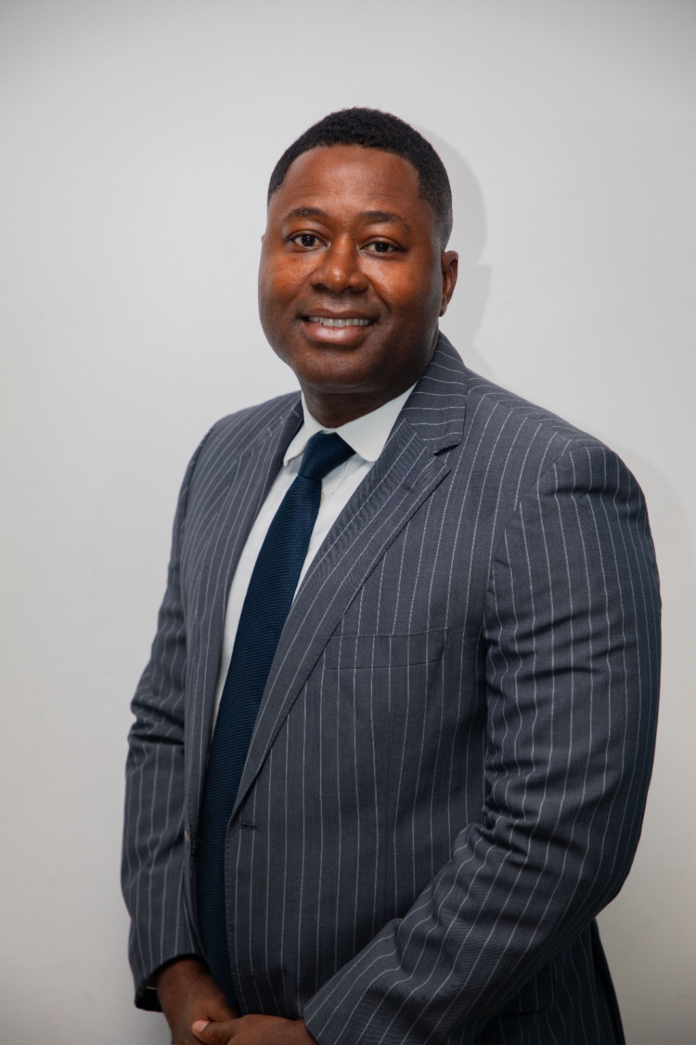
The writer, Oliver Tackie, is a seasoned banker with over nineteen years of experience in Ghana’s financial and banking sector. He is currently Sector Head, Government & Parastatals at Prudential Bank Ltd. His work spans financial institutions, investment analysis, private sector development, government and public sector engagement, and risk assessment across debt and equity financing structures. He is an award-winning chartered banker and chartered accountant, bringing a strong blend of technical expertise and strategic financial insight to his work.
