
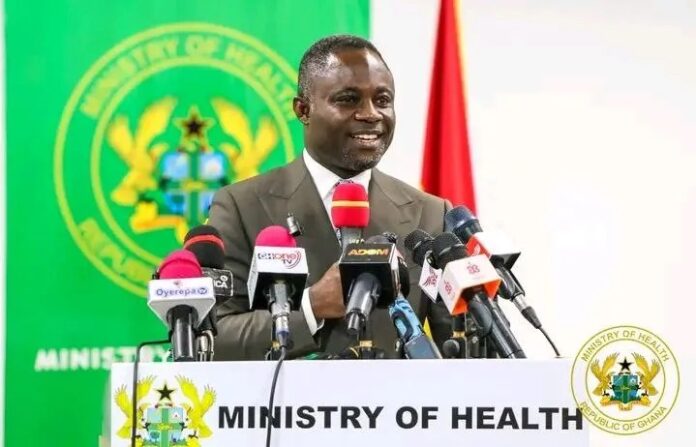

Public Health Fellow at the Centre for Democratic Governance (CDD), Dr. Kwame Sarpong-Asiedu, has described government’s decision to cancel a proposed health agreement with the United States as a prudent move in the interest of national security.
He argues that health data is highly sensitive and must be protected, as it contains critical information about citizens.
“Health data are national security data because it contains information about citizens and if a third party gets access to them, he or she can use it against the country,” he said.
Dr. Sarpong-Asiedu also drew comparisons with other countries, warning that Ghana could have faced unintended consequences if the agreement had gone through.
He cited Cuba as an example, saying the country is currently experiencing shortages partly due to restrictions affecting its access to essential materials.
“Cuba is suffering from this same issue as most of their pharmacies are bare because they are unable to get raw materials to produce their own drugs, and the country is also struggling to get fuel,” he explained.
Speaking on Nnawotwe Yi on Adom TV, he provided details of the proposed agreement, noting that it contained several conditions that raised concerns.
According to him, the deal would have granted the United States access to Ghana’s health data for 25 years. It also reportedly restricted Ghana from patenting drugs developed using the data and limited the ability of the Food and Drugs Authority to re-evaluate certain medicines already approved by the US Food and Drug Administration.
“Part of the deal said the US will have access to Ghana’s health data for 25 years, no right to patent any drugs produced from using the data, and also after the US Food and Drugs Authority had approved a specific drug, the Food and Drugs Authority in Ghana has no right to also look into such drugs again,” he stated.
Mr. Sarpong-Asiedu further argued that while the agreement was presented as bilateral, it appeared to heavily favour one side.
“In my opinion, it is not the case as the document seems to benefit just one side,” he said.
He noted that Ghana could have received about $109 million in support under the proposed arrangement, but praised Cabinet for what he described as due diligence in rejecting the deal.
“It is good Cabinet was due diligent and was not swayed away by the money,” he added.
Meanwhile, according to a Reuters report, Ghana pulled out of negotiations after disagreements over demands for access to sensitive national health data.
The deal formed part of the United States’ broader “America First Global Health Strategy,” aimed at reshaping foreign health assistance and encouraging partner countries to take on more responsibility in managing disease control programmes, including HIV/AIDS, malaria, tuberculosis, and polio.
Negotiations, which began in November 2025, reportedly stalled after Ghana objected to provisions it considered unacceptable regarding data sharing and control.
ALSO READ:
