
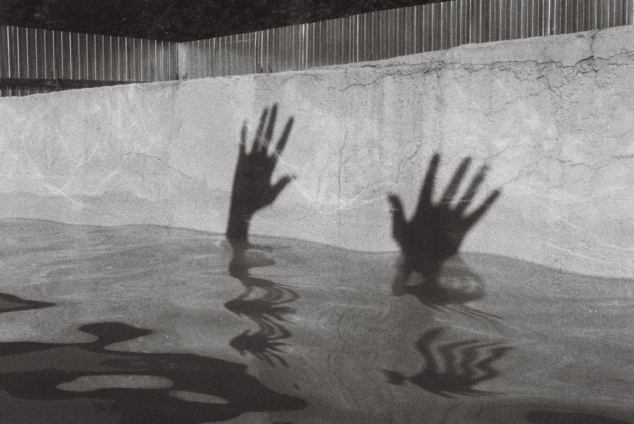

There is a peculiar kind of silence that follows a flood in Accra. It is not the silence of peace. It is the silence of exhaustion. The water recedes, but it leaves behind a city that must quickly pretend everything is normal again. Wooden beds dragged into the sun. Mattresses dripping like abandoned cloth.
Children scooping muddy water out of rooms that should have protected them. And somewhere in the distance, the hum of traffic resumes as if the city has collectively agreed to move on too quickly. But beneath that silence lies a truth the world is yet to fully confront: for many in Ghana, climate change is not a future threat; it is a daily negotiation with survival.
Globally, climate change is often discussed in statistics, rising temperatures, carbon targets, policy frameworks. It is a language of graphs and projections. But here in Accra, climate change speaks a different dialect.
It sounds like a mother calculating whether to sleep or stay awake when it rains. It looks like a trader rebuilding her stall for the third time in one season. It feels like a father watching his life savings float away in brown, unforgiving water.
These are not isolated incidents. Flooding has become a recurring chapter in the urban experience. Yet the stories rarely travel far enough. They remain local, almost invisible, overshadowed by larger global narratives that often overlook the human texture of climate vulnerability. And that is the gap we must confront.
Accra is expanding fast. New buildings rise. Communities stretch outward. Opportunity pulls people into the city with the promise of a better life. But beneath this growth lies a fragile truth: the city is not growing with climate resilience in mind.
Drainage systems are overwhelmed. Wetlands are disappearing. Informal settlements continue to expand in flood-prone areas, not out of ignorance but out of necessity. This is not just an environmental issue. It is an economic one. A social one. A governance challenge.
When it rains, it exposes everything: the inequality in urban planning, the absence of long-term climate adaptation, and the quiet resilience of people forced to adapt on their own. The result? A city where the poorest pay the highest price for a crisis they did not create.
There is a group of people in Accra called “The Invisible Workforce of Survival” who rarely appear in climate reports, yet they are on the frontlines of its impact: informal workers. They are the market women, the street vendors, the waste collectors, the transport operators — the engine of the city’s everyday economy.
When floods come, businesses collapse overnight. Goods are destroyed, and daily income disappears instantly. There are no insurance buffers. No structured recovery systems. Just resilience — raw, unfiltered, and often unsupported. And yet, these same individuals are also part of the solution.
Waste pickers, for example, play a critical role in managing the city’s plastic crisis, reducing the very blockages that worsen flooding. But their contribution is rarely recognized within formal climate strategies.
This is the paradox of Accra: those most affected are also those most actively adapting, without acknowledgment or support.
Let’s be honest: climate change is a story of inequality. Climate change is not experienced equally. The air-conditioned office feels different from the flooded compound house. The policy discussion room feels different from the roadside kiosk washed away overnight.
In Ghana, as in many parts of the world, climate vulnerability follows the lines of inequality. And this is where the global conversation often falls short. There is a tendency to speak about Africa as a single, uniform climate victim.
But the reality is more complex. Within cities like Accra, there are layers of vulnerability shaped by income, location, occupation, and access. If the global climate agenda is to be truly effective, it must move beyond broad narratives and begin to engage with these lived realities.
For too long, African climate stories have been told about us, not by us. Images of flooded streets circulate. Headlines emerge. But the deeper stories — the context, the nuance, the lived experience — are often filtered through external lenses. This is where a shift must happen.
Ghana does not just need climate solutions. It needs climate storytellers: voices that can translate lived experience into global understanding. Because storytelling is not just about awareness. It is about influence. It shapes policy. It attracts funding. It drives action. And most importantly, it humanizes a crisis that is too often reduced to numbers.
If there is one message the world must take from Accra, it is this: climate change is not waiting for policy alignment. It is already disrupting lives.
The conversations in global forums must begin to reflect the urgency on the ground — not just in theory, but in practice. That means investing in urban resilience in rapidly growing African cities, supporting community-led adaptation strategies, recognizing informal systems as part of the solution, and amplifying local voices in global climate discussions.
Because the solutions we need will not come from a single perspective. They will emerge from a collaboration between policy, community, and lived experience.
Despite everything, Accra does not surrender. It is a city that refuses to sink. It adapts. It rebuilds. It continues. There is strength in that resilience, but there is also a danger in romanticizing it. Because resilience should not be a permanent substitute for systemic change.
The people of Accra are not asking for sympathy. They are demanding visibility. They are demanding inclusion. They are demanding action.
The next time it rains in Accra, the world may not notice. There will be no breaking news. No global alert. But somewhere, a family will stay awake through the night. Somewhere, a business will be lost.
Somewhere, a child will learn far too early that survival is part of daily life.
And if the world is serious about climate change, then these are the stories it must begin to hear — not as distant realities, but as urgent calls to action.
The writer, Shadrach Assan, is the lead producer for Adom FM’s morning show, Dwaso Nsem.
