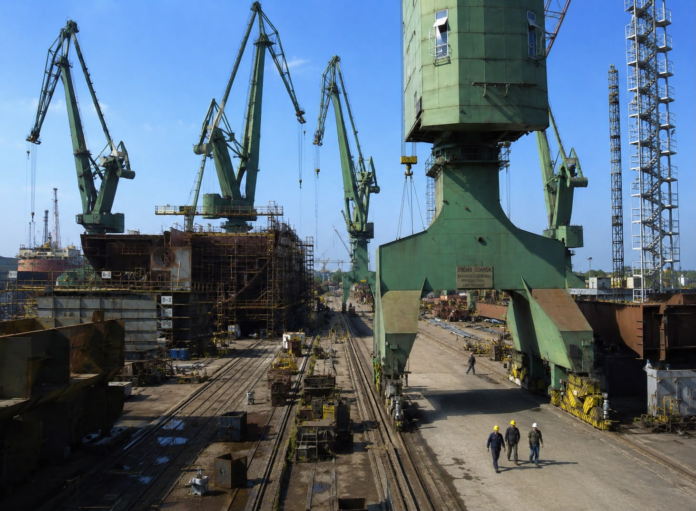

Walking through Gdańsk’s historic shipyards, history feels remarkably close. The towering cranes overlook a place where workers’ demands for freedom and independent trade unions helped reshape Poland’s political future and influence democratic change across Europe.
It is a reminder that history is often driven not by inevitability but by decisions made in moments of uncertainty.
That lesson extends far beyond one city.
Every generation inherits the consequences of choices made before it. Some decisions have expanded freedom, strengthened institutions and created new opportunities. Others have prolonged conflict, weakened economies and eroded public trust.
History does not simply unfold. More often, it reflects how societies respond to difficult choices. The same reality is visible whenever governments gather to confront global challenges.
Whether the agenda is security, economic recovery, climate policy or artificial intelligence, public attention naturally focuses on speeches, declarations and diplomatic symbolism. Yet the lasting significance of these meetings is determined only afterwards, when governments decide whether commitments translate into policies and whether agreements produce measurable results.
The distance between ambition and achievement is measured by decisions.
History offers compelling examples. Europe’s post-Second World War reconstruction rested on political choices that prioritised cooperation over renewed confrontation. Peaceful democratic movements across Central and Eastern Europe demonstrated that sustained civic action could transform political systems. More recently, the international response to Russia’s full-scale invasion of Ukraine has shown that decisions made in capitals around the world continue to shape security, economic resilience and the future of European cooperation.
None of these moments produced perfect outcomes, yet they showed that leadership is tested most when the path ahead is uncertain. Today’s challenges demand the same resolve.
Wars continue to displace communities and reshape international relations. Climate change is transforming economies and livelihoods. Artificial intelligence is advancing faster than many regulatory systems can keep pace with, while misinformation and political polarisation continue to erode confidence in democratic institutions.
Meeting these challenges requires more than expertise, financial resources or technological innovation. It requires leaders prepared to look beyond immediate political pressures and citizens willing to stay engaged long after the headlines fade.
Responsibility does not rest with governments alone. Businesses shape whether innovation serves the public good. Journalists strengthen accountability by pursuing verified facts with independence and fairness. Universities prepare future leaders to navigate an increasingly complex world. Citizens reinforce democracy through participation, informed debate and the simple act of voting.
History also offers a quieter warning. Decisions delayed can be as consequential as those made. Reforms postponed, institutions neglected and public trust allowed to erode rarely repair themselves. More often, the costs are passed on to future generations.
That is why Gdańsk continues to matter. It reminds us that history is not preserved only in monuments or museums. It lives in the consequences of the choices made by those who recognised that difficult decisions could change a nation’s direction.
The same will be true of our own time.
Years from now, today’s summits, negotiations and public debates will be remembered not only for the speeches they produced but also for the decisions they inspired—and for whether those decisions left societies more secure, more resilient and better prepared for the future.
Ultimately, the world is shaped by decisions.
ALSO READ:
South Africa: One Ghanaian shot dead during mass xenophobic protests
Accra Floods: Alajo resident halts body recovery over payment dispute with NADMO