
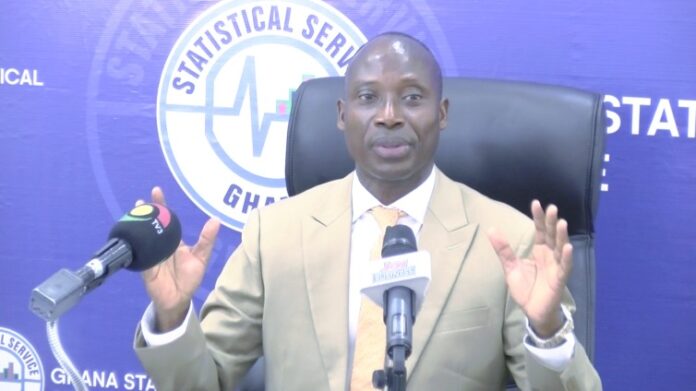

The latest district-level poverty estimates released by the Ghana Statistical Service (GSS) have revealed that six of Ghana’s poorest districts are all clustered within the North East Region — a finding that lays bare the deep and persistent inequality between the country’s north and south.
At the very bottom of the national ladder sits Nassuam District, where more than half the population — 51.6 percent — lived in poverty in 2025. Four other North East Region districts trail close behind, cementing the region’s grim distinction as the country’s most deprived.
Meanwhile, at the other end of the scale, Ayawaso North Municipal in Greater Accra recorded a poverty incidence of just 5.5 percent — a figure that feels like it belongs to a different country altogether.
The numbers do not lie: a child born in Nassuam faces a fundamentally different life from one born in Ayawaso North.
The GSS described the report as the most comprehensive district-level poverty analysis ever conducted in Ghana. The estimates were produced using internationally recognised small area estimation methods, drawing on data from the 2021 Population and Housing Census, household income and expenditure surveys conducted between 2022 and 2024, and the 2025 Labour Force Survey — measuring deprivation across 13 wellbeing indicators.
Yet amid the troubling findings, there is a flicker of hope. An overwhelming 250 out of Ghana’s 261 districts recorded reductions in multidimensional poverty between 2021 and 2025 — a sign that development efforts are bearing some fruit. Parts of the Upper West and Ashanti regions stood out, with some districts posting sharp declines in poverty levels over the period.
But accordint to the report progress has been uneven. Poverty remains heavily entrenched across the North East, Northern, Savannah, Oti, Upper East, Upper West, and Bono East regions — a belt of deprivation that has resisted decades of development interventions.
The Ghana Statistical Service is now calling for urgent and targeted action — sustained policy interventions, deliberate social investment, and tighter oversight of development spending — to ensure that Ghana’s growth story reaches every district, not just the prosperous ones.
