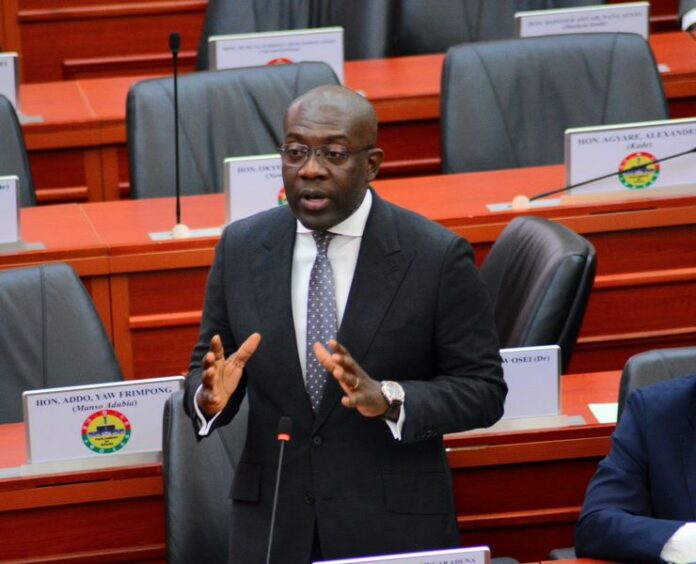

Ofoase-Ayirebi Member of Parliament Kojo Oppong Nkrumah is seeking a review of the decision by Justice Gabriel Scott Pwamang dismissing his application to halt the conduct of criminal trials by selected High Court judges during the legal vacation.
Mr Oppong Nkrumah is asking the Supreme Court to reverse the ruling delivered by Justice Pwamang, who sat as a Justice on Friday, August 21, 2026, and rejected the interlocutory injunction application.
The development marks the latest stage in Mr Oppong Nkrumah’s legal challenge to the Chief Justice’s administrative warrants authorising selected High Court judges to conduct criminal proceedings during the annual legal vacation, which runs from August 1 to September 30.
Challenge to vacation trials
Mr Oppong Nkrumah invoked the original jurisdiction of the Supreme Court earlier this month, challenging the decision by Chief Justice Paul Baffoe-Bonnie to permit selected judges to sit during the vacation to hear criminal cases.
His substantive case argues that the arrangement raises constitutional questions, including concerns over equality before the law and the proper exercise of administrative discretion.
He subsequently applied for an interlocutory injunction to suspend the operation of the warrants until the Supreme Court had determined the substantive constitutional challenge.
Justice Pwamang, however, dismissed the application, holding that Mr Oppong Nkrumah had not established a sufficiently strong case to warrant the interim relief.
The Court also rejected the argument that the arrangement was discriminatory, noting that the warrants authorised the affected judges to conduct cases pending before their respective courts.
“It is clear on the face of the warrant that the judges are supposed to conduct all cases pending in their courts,” the Court said.
Justice Pwamang further held that the fact that criminal trials were not ordinarily conducted during the legal vacation did not mean the administration of justice could not be advanced during that period.
Substantive case remains
The dismissal of the injunction application does not bring Mr Oppong Nkrumah’s broader constitutional challenge to an end.
The substantive case questioning the constitutionality of the Chief Justice’s warrants remains pending before the Supreme Court.
Mr Oppong Nkrumah has maintained that his objection is not to the trial of accused persons but to the decision to conduct full criminal trials during the legal vacation under the current arrangement.
His lawyer, Frank Davies, previously argued that the continuation of trials could affect accused persons’ rights to fair representation, particularly where lawyers may not be available during the vacation.
The legal challenge has also generated a public debate over the purpose of the annual legal vacation and the extent to which the Judiciary can deploy administrative measures to accelerate the determination of criminal cases.
The Chief Justice’s position, as reflected in the warrants and the arguments advanced on behalf of the respondents, is that the arrangement is intended to facilitate the speedy disposal of criminal matters.
The latest application by Mr Oppong Nkrumah will now put the Supreme Court’s earlier decision under renewed scrutiny, while the substantive constitutional questions remain to be determined.
READ ALSO:
Livestream: Parliament resumes sitting after Speaker’s recall
Bagbin cites communication error as he announces James Agalga as Majority Leader