
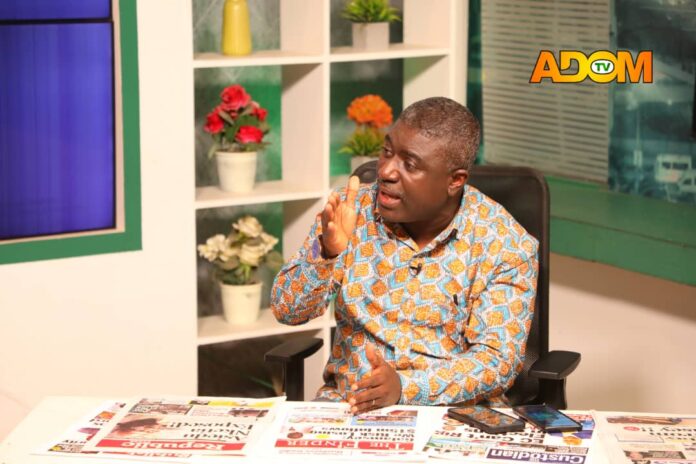

Minister of State in charge of Government Communications, Felix Kwakye Ofosu, has rejected claims that the government influenced the resignation of the Electoral Commission Deputy Chairperson in charge of Corporate Affairs, Dr Bossman Asare.
His comments come amid speculation in some quarters suggesting that Dr Asare’s exit from the Commission may have been driven by political pressure or interference from the current administration.
Mr Kwakye Ofosu insisted that the situation does not point to any external influence, stressing that the removal or resignation of Electoral Commission officials is governed by clear constitutional procedures that were not activated in this case.
He explained that any attempt to remove a commissioner from office must follow strict legal steps, adding that past cases have always been handled within those constitutional frameworks.
Speaking on Accra-based Citi FM, the Minister said Dr Asare personally initiated the process to leave office.
“First of all, there is no basis for giving any assurance because nothing of that sort has happened. The process for removing a member of the Commission is clearly spelt out by law. Dr Bossman Asare himself, of his own volition, wrote to the President indicating his desire to leave at the appointed date, and that is what happened,” he stated.
Mr Kwakye Ofosu further noted that discussions are ongoing to appoint a replacement for Dr. Asare, and that the process will strictly follow the constitutional and legal requirements governing appointments to the Electoral Commission.
Before the resignation, there was mounting pressure to remove EC Chairperson Jean Mensa and her two Deputies, Dr Asare, who was in charge of Corporate and Samuel Tettey, in charge of Operations, who has now proceeded on retirement following petitions seeking their removal.
The petitions, submitted by individuals and civil society groups, accused the EC Chair and her deputies of accountability and administrative lapses, while the complaints against the Special Prosecutor cited alleged incompetence and abuse of office.
President John Dramani Mahama referred the petitions to Chief Justice Paul Baffoe-Bonnie in line with constitutional provisions, in 30 days to determine whether a prima facie case exists. If established, a three-member committee would be empanelled to investigate and submit recommendations to the President.
However, in a statement issued on Wednesday, February 18, 2026, the Presidency Communications Office said that after reviewing the submissions, Chief Justice Baffoe-Bonnie informed the President in a letter dated January 26, 2026, that no prima facie case had been established.
Source: Adomonline.com
ALSO READ:
