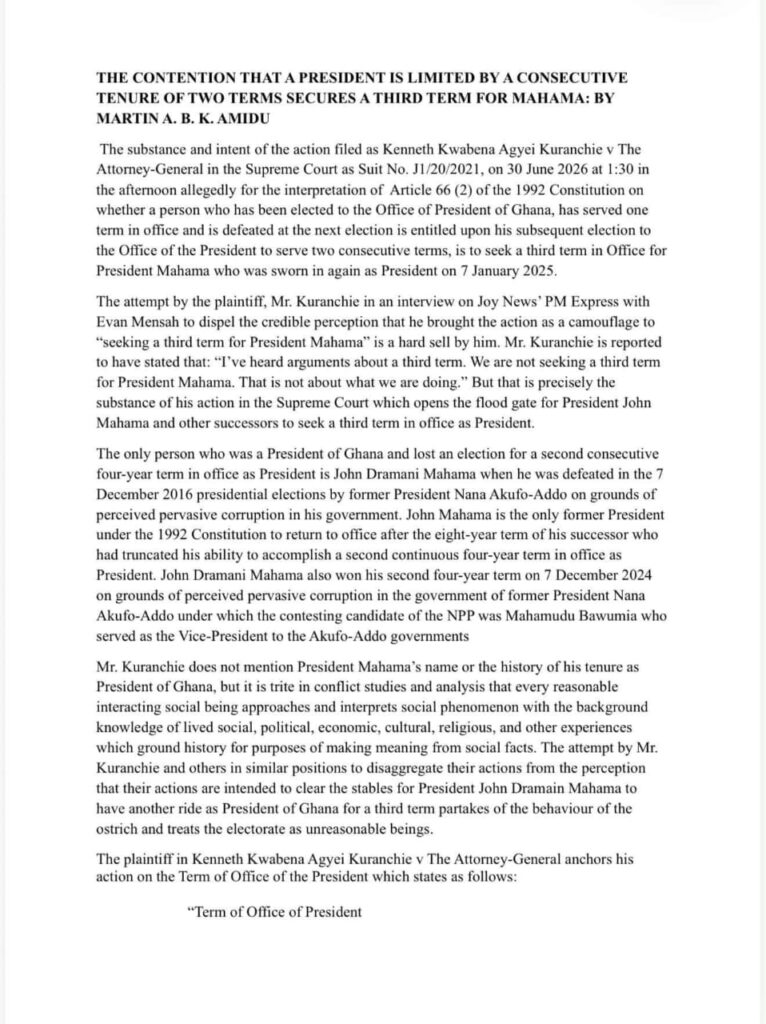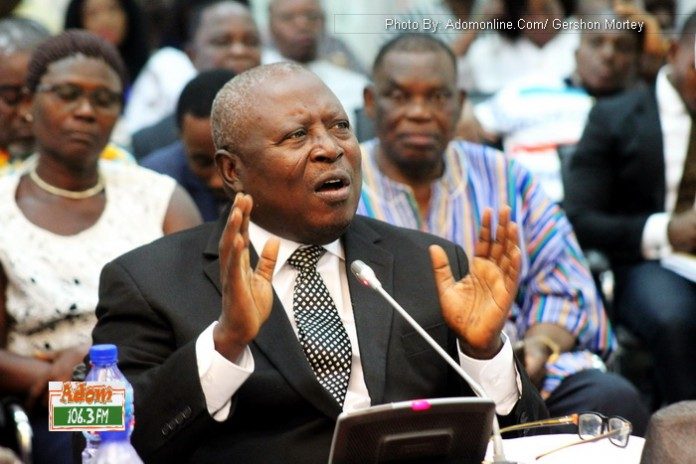

Former Attorney-General and Special Prosecutor, Martin Alamisi Burnes Kaiser Amidu, has argued that the constitutional interpretation case currently before the Supreme Court could effectively open the door for President John Dramani Mahama to seek a third term in office.
In a lengthy article titled “The Contention That a President Is Limited by a Consecutive Tenure of Two Terms Secures a Third Term for Mahama,” Mr Amidu contends that although the suit does not explicitly mention President Mahama, its practical effect would be to make him eligible to contest the 2028 presidential election.
The case, filed by private legal practitioner Kenneth Kwabena Agyei Kuranchie, seeks the Supreme Court’s interpretation of Article 66(2) of the 1992 Constitution, particularly whether a President who served one term, lost a subsequent election and later returned to office is entitled to serve two additional consecutive terms.
Mr Amidu rejected assertions by Mr Kuranchie that the case is not intended to secure a third presidential term for President Mahama, insisting that the legal action “opens the floodgate” for both the current President and future Presidents to seek additional terms beyond what has traditionally been understood under the Constitution.
According to him, President Mahama is the only former President under the Fourth Republic who lost a re-election bid and later returned to office after serving out of power, making him the direct beneficiary of any interpretation that resets the constitutional term limit after a break in service.
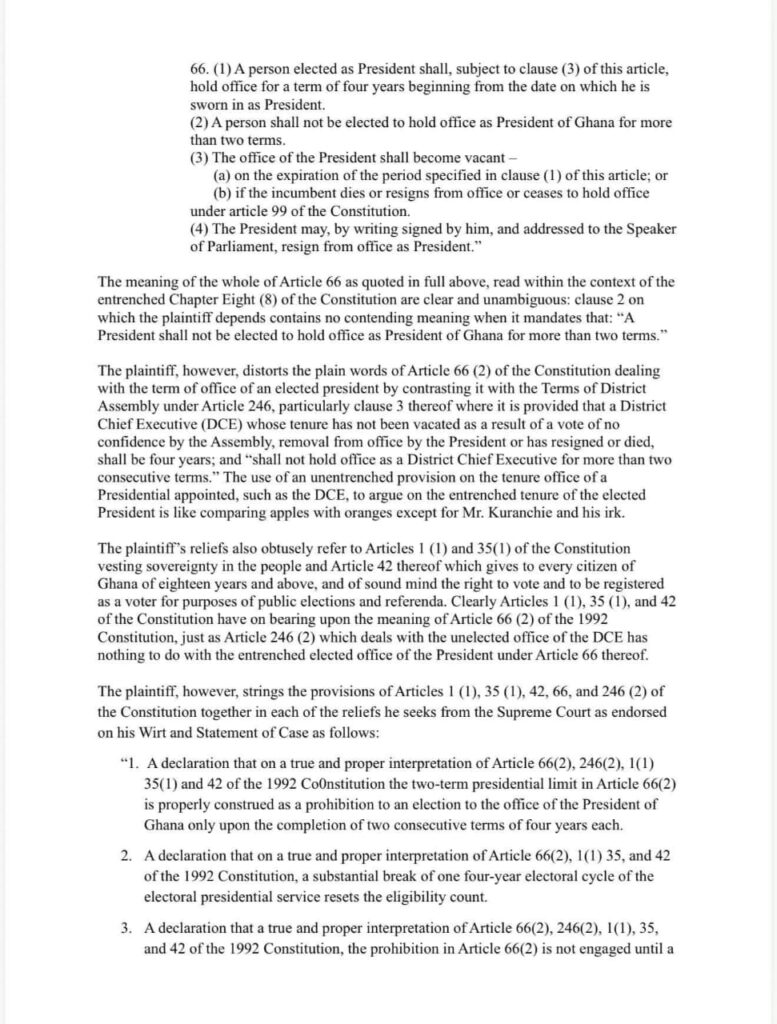
He argued that Article 66(2), which states that “a person shall not be elected to hold office as President of Ghana for more than two terms,” is clear and unambiguous and should not be interpreted to mean “two consecutive terms.”
Mr Amidu criticised the plaintiff’s reliance on Article 246 of the Constitution, which limits District Chief Executives to two consecutive terms, describing the comparison as legally flawed because DCEs are presidential appointees while the presidency is an entrenched elective office governed by separate constitutional provisions.
He further argued that Articles 1, 35 and 42 of the Constitution, which deal with the sovereignty of the people and voting rights, have no bearing on the interpretation of Article 66(2), despite being cited in the reliefs sought before the Supreme Court.
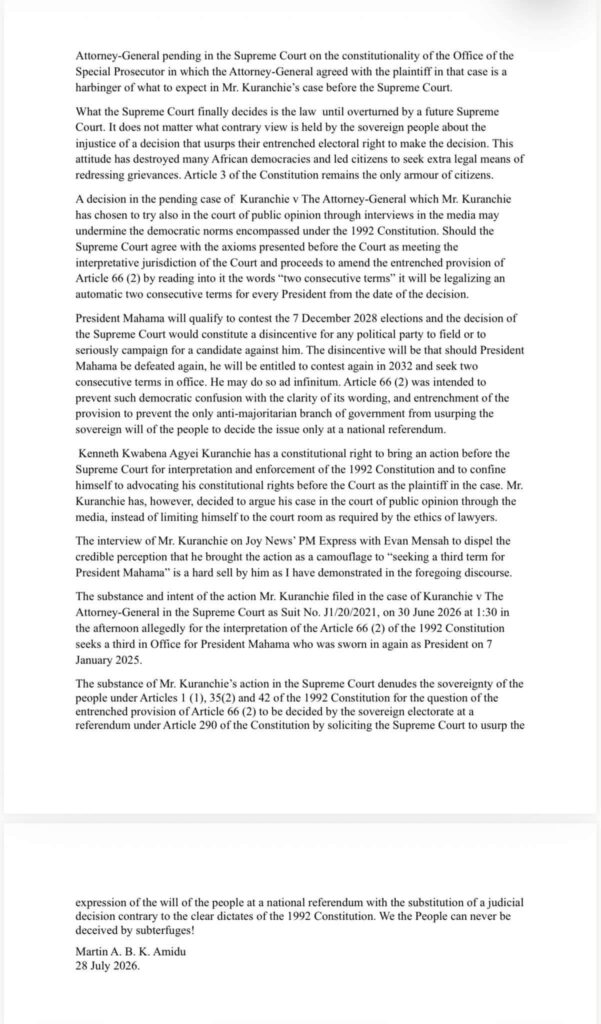
The former Attorney-General warned that if the Supreme Court were to interpret Article 66(2) as referring to two consecutive terms instead of two terms in total, it would fundamentally alter Ghana’s constitutional order without the approval of the people through a referendum.
According to him, such a decision would effectively allow any President who loses office and later regains power to restart the constitutional term count, creating the possibility of repeated returns to office.
Mr Amidu maintained that any amendment to the entrenched presidential term limit must be undertaken through the constitutional amendment process under Article 290 of the Constitution and approved by the Ghanaian electorate in a national referendum, rather than through judicial interpretation.
While acknowledging Mr Kuranchie’s constitutional right to seek an interpretation from the Supreme Court, he criticised the lawyer for discussing the case publicly through media interviews while the matter remains before the court.
Mr Amidu concluded that the suit, in both substance and effect, seeks to make President Mahama eligible to contest the 2028 presidential election and cautioned that any interpretation expanding presidential eligibility could have far-reaching implications for Ghana’s constitutional democracy.