
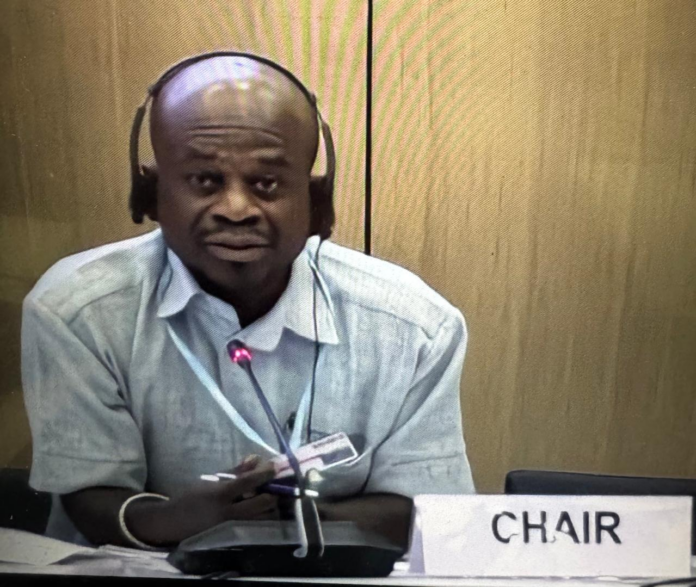

The African Group of Negotiators on Climate Change (AGN) has called for greater urgency, stronger political commitment, and renewed trust in the multilateral climate process as the 64th sessions of the UNFCCC Subsidiary Bodies (SB64) concluded in Bonn, Germany.
Speaking during the closing plenary, AGN Chair Nana Dr. Antwi-Boasiako Amoah expressed concern that some Parties appear to be postponing substantive climate ambition until the second Global Stocktake (GST) in 2028, warning that such delays are inconsistent with the realities facing more than 1.6 billion vulnerable people across Africa.
“For Africa, that is not an option. Antalya and Addis Ababa must deliver meaningful progress. Climate impacts are already affecting our people, our economies, and our development prospects. We must act now,” he stated.
Describing adaptation as Africa’s most important climate priority and the principal mechanism for strengthening resilience to worsening climate impacts, the AGN Chair stressed the need for discussions on the Global Goal on Adaptation (GGA) to remain transparent, inclusive, Party-driven, and grounded in genuine negotiations.
“If we are serious about implementation, then we must equally be serious about protecting the integrity, transparency, and Party-led nature of the negotiations that underpin it,” he said.
Climate finance remains the lifeblood of climate action and continues to dominate negotiations. Amid declining climate finance flows, the AGN expressed concern over uncertainty regarding future support and geopolitical tensions that are widening the climate finance gap for developing countries.
The AGN Chair therefore called for renewed commitment to the Climate Finance Work Programme and urged developed countries to demonstrate greater urgency in delivering climate finance commitments, including the agreed tripling of adaptation finance.
“Climate finance remains the foundation of trust in this process. Without adequate, predictable, and accessible support, implementation gaps will continue to grow,” Nana Dr. Amoah said, expressing disappointment that political considerations continue to delay the transition of the Adaptation Fund to receive proceeds from Article 6.4 carbon market activities, potentially limiting resources for adaptation.
On the Just Transition, he reiterated that Africa’s understanding begins with development, poverty eradication, industrialisation, energy access, and decent work.
“Progress on just transition is patchy. We are concerned about the limited progress on operationalising the Just Transition Mechanism. We have three separate mandates, and they must be treated in a balanced manner. Intersessional work should therefore focus on the Just Transition Mechanism to restore that balance. For Africa, just transition means development first. Africa cannot be left at the margins of the global transition.”
Looking ahead to COP31 in Antalya and subsequent discussions in Addis Ababa next year, the African Group emphasised that developing countries are already demonstrating ambition and commitment to climate action, but require adequate support to overcome implementation barriers.
“The world does not need promises deferred to 2028. It needs action now. Africa remains committed to constructive engagement and to advancing solutions that protect people, strengthen resilience and support sustainable development,” the AGN Chair added.
