
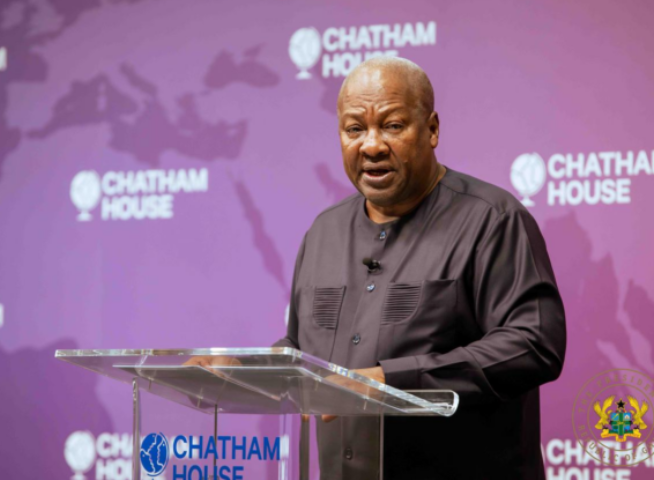

President John Dramani Mahama has called for greater international cooperation in the pursuit of reparatory justice, stressing that acknowledging the historical injustices of slavery must be followed by concrete and sustained action.
Speaking at the opening of the Next Steps Conference on Reparatory Justice in Accra on Thursday, June 18, President Mahama said the recent adoption of a United Nations resolution on slavery and its enduring legacy should serve as the foundation for deeper global engagement rather than the culmination of the process.
“The adoption of the resolution was never intended to mark the end of the journey,” he said.
“It was intended to provide the foundation for a more meaningful process of engagement, reflection and action.”
The President argued that efforts to achieve historical justice would be more effective if they embraced broader participation from nations, institutions and stakeholders across the world.
“The pursuit of historical justice is not strengthened by narrowing the circle of participation. It is strengthened by expanding it,” he stated.
He urged countries with differing historical, political and legal perspectives on reparations to remain committed to dialogue and collaboration, emphasizing that meaningful progress can only be achieved through engagement.
“It is strengthened when those who may approach these issues from different historical, political or legal perspectives nevertheless choose dialogue over silence and engagement over distance,” he said.
President Mahama noted that recognising historical injustices creates a collective responsibility to address their continuing effects.
“We are here because recognition creates responsibility, and because the enduring consequences of this history continue to demand thoughtful, coordinated and sustained international engagement,” he added.
Highlighting Ghana’s role in the global conversation on reparatory justice, the President pointed to the country’s former slave routes, castles and dungeons as enduring reminders of the transatlantic slave trade and its far-reaching consequences.
According to him, these historic sites serve as a link between Africa and communities across the Americas and other regions whose histories were shaped by the forced displacement of millions of Africans.
He observed that descendants of enslaved Africans now return to Ghana as leaders, scholars and citizens, underscoring the lasting global significance of the slave trade.
President Mahama also drew attention to the experiences of enslaved women and girls, arguing that their suffering has often been overlooked in historical accounts and should feature prominently in discussions on reparatory justice.
“Their suffering was often concealed from the official record, leaving them victims not only of the exploitation, but also of historical erasure,” he said.
The Next Steps Conference on Reparatory Justice has brought together heads of state, government officials, academics, civil society representatives and members of the African diaspora to discuss strategies for advancing reparations and addressing the long-term consequences of slavery and colonialism.
READ ALSO:
No outstanding arrears under ‘No Fee Stress’ policy – Education Minister
Senegal’s President Faye calls for concrete action on UN reparations resolution
