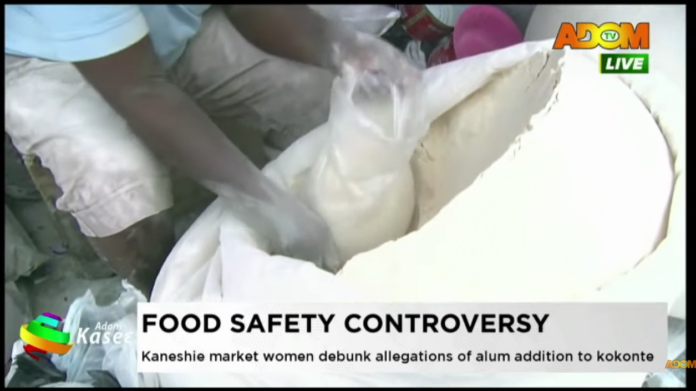

Kaneshie Market women have dismissed claims that alum is being added to konkonte to alter its colour, describing the allegations as false and urging consumers to rely on accurate information.
The women, who trade in the popular local staple at the Kaneshie Market, say the different colours observed in konkonte are not an indication that alum has been added to the product.
According to them, the colour of konkonte can vary naturally depending on several factors, particularly the season in which the cassava is harvested, processed and dried.
They explained that changes in weather and drying conditions during different seasons can influence the final appearance and colour of the konkonte.
The traders therefore appealed to consumers not to panic when they come across konkonte with different shades of colour, stressing that such variations can occur naturally during the drying process.
They maintained that differences in colour should not automatically be interpreted as evidence of adulteration.
The concerns follow claims circulating among some members of the public that alum is being used in the preparation of konkonte to produce a particular colour.
However, the Kaneshie Market women have rejected the claims and called for greater public education on the traditional methods used to process the staple.
They further urged consumers to verify information before drawing conclusions or sharing allegations that could create fear and uncertainty among the public.
According to the traders, unfounded claims could have serious consequences for people whose livelihoods depend on the production and sale of konkonte.
They appealed to relevant authorities and stakeholders to provide clear information to the public on the proper processing and handling of konkonte to help dispel misinformation.
The market women also encouraged consumers with concerns about the safety or quality of konkonte to seek clarification from appropriate food safety authorities rather than relying on unverified claims.
For the traders, educating the public with accurate information is essential to protecting consumers while also safeguarding the livelihoods of farmers, processors and traders who depend on the local staple.
The women maintained that the natural variation in the colour of konkonte should not be a cause for alarm and urged the public to approach such claims with caution.