

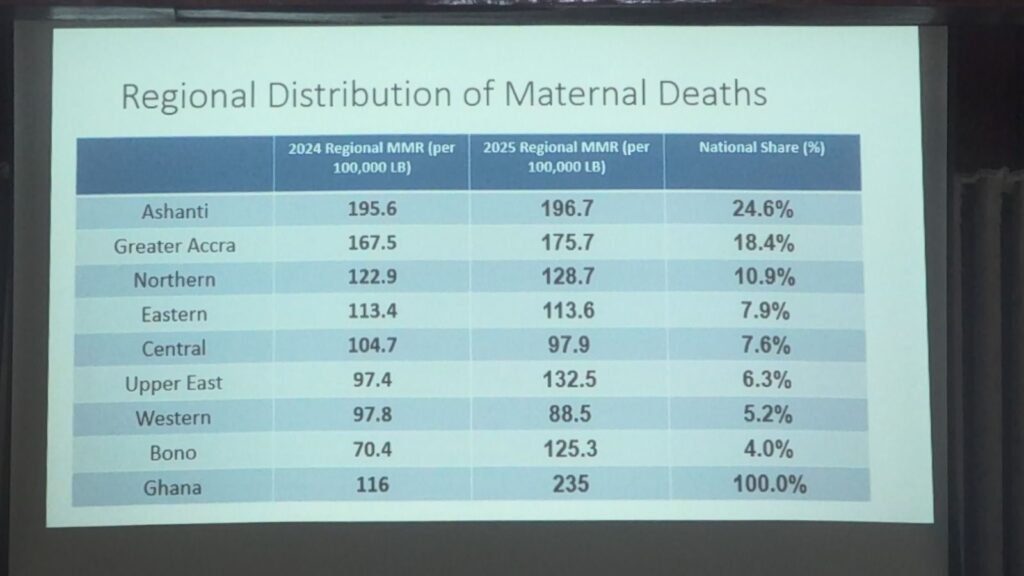
The Ashanti Region has recorded the highest maternal mortality rate in Ghana, with the region’s maternal mortality ratio increasing slightly from 195.6 deaths per 100,000 live births in 2024 to 196.7 deaths per 100,000 live births in 2025.
Data from the Ashanti Regional Health Directorate shows that the region accounted for 24.6 per cent of maternal deaths recorded nationwide in 2025, the highest share among the regions presented.
Greater Accra followed with a maternal mortality ratio of 175.7 deaths per 100,000 live births, up from 167.5 in 2024, while the Northern Region recorded 128.7 deaths per 100,000 live births, compared with 122.9 the previous year.
The Eastern Region recorded a marginal increase from 113.4 to 113.6, while the Central Region saw a decline from 104.7 to 97.9 deaths per 100,000 live births.
The Upper East Region recorded a significant increase, from 97.4 deaths per 100,000 live births in 2024 to 132.5 in 2025.
The Western Region, however, recorded an improvement, with its maternal mortality ratio falling from 97.8 to 88.5 deaths per 100,000 live births.
The Bono Region recorded the sharpest increase among the regions listed, rising from 70.4 deaths per 100,000 live births in 2024 to 125.3 in 2025.
Deputy Minister of Health, Dr Grace Ayensu Danquah, described Ghana’s maternal mortality situation as a major concern, particularly as the country works towards achieving the Sustainable Development Goals by 2030.
She said the national maternal mortality ratio currently stands at 235 deaths per 100,000 live births, significantly higher than the SDG target of 70 deaths per 100,000 live births.
“Our maternal mortality index is actually 235 per 100,000 live births. And you all know that for us to reach universal health coverage and to also get to the Sustainable Development Goals, the recommendation is 70 deaths per 100,000 live births,” she said.
Dr Danquah noted that Ghana has only four years to make significant progress towards the 2030 target.
“So if you’re at 235, that means you’re at least three times the required number. You and I also know that to get to 2030, we only have four years,” she added.
Health authorities have, however, cautioned against attributing the high maternal mortality figures in the Ashanti Region solely to the quality of care provided at health facilities.
They stressed the need for a broader assessment of the social, economic, geographical and healthcare factors that contribute to maternal deaths.
According to the authorities, identifying the multiple causes behind maternal deaths will be critical to designing targeted interventions and reducing preventable deaths among women during pregnancy and childbirth.
READ ALSO:
Ending double-track system will improve SHS students’ performance – Mahama
Death toll in Ofankor barrier crash hits 12, 22 remain hospitalised