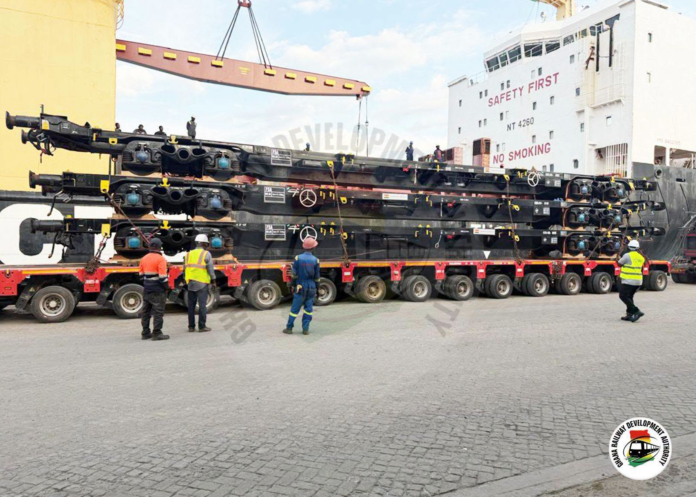

The Minority Transport Policy Committee of the New Patriotic Party (NPP) has welcomed government’s announcement on the acquisition of two diesel locomotives and twenty freight wagons but is demanding full disclosure on the deal.
The Committee acknowledged that any investment aimed at reviving Ghana’s railway sector, improving freight movement and reducing pressure on the country’s road network is a positive step that should be encouraged.
However, it argued that government has failed to provide key details necessary for a proper assessment of the acquisition, particularly regarding the age, condition and long-term viability of the equipment.
According to the Committee, available information suggests that the locomotives are refurbished British Rail Class 56 diesel-electric engines originally built between 1976 and 1983 and previously operated in the United Kingdom.
It described concerns that while refurbished rolling stock can still serve useful purposes, Ghana deserves clarity on their operational lifespan, maintenance requirements, refurbishment scope and total lifecycle cost.
The Committee further raised questions about the availability of spare parts and technical support, noting that the Class 56 locomotives have largely been phased out in many parts of the world, making long-term maintenance potentially expensive and challenging.
It is also demanding clarification on whether government has secured maintenance agreements, spare parts arrangements, and training programmes to build local technical capacity for sustaining the equipment.
The statement further questioned the preparedness of the Tema-Mpakadan railway corridor for freight operations, stressing the need for supporting infrastructure such as cargo handling equipment, cranes, reach stackers and container systems to ensure efficient intermodal transport.
According to the Committee, without these logistics systems in place, the commercial viability of the rail corridor could be significantly limited.
It also called for transparency on freight demand projections, off-take agreements and revenue forecasts to justify the investment, warning that rail systems cannot succeed without guaranteed cargo volumes from industry players.
The Committee compared the acquisition with previous diesel multiple units procured under the NPP administration, noting that those came with structured maintenance frameworks and technical support agreements to ensure sustainability.
It further questioned how government intends to finance broader railway expansion projects, including the Western Railway Line, given what it described as limited budgetary allocation to the sector.
The Minority is also seeking clarity on timelines for implementation, funding sources and how current investments align with government’s manifesto commitments on railway development.
While reiterating support for genuine efforts to modernise the railway sector, the Committee insisted that transparency, sustainability and commercial viability must guide all procurement decisions.
It concluded that Ghana’s railway revival should not be measured by the arrival of locomotives alone, but by the establishment of a functional, efficient and economically sustainable rail transport system.