
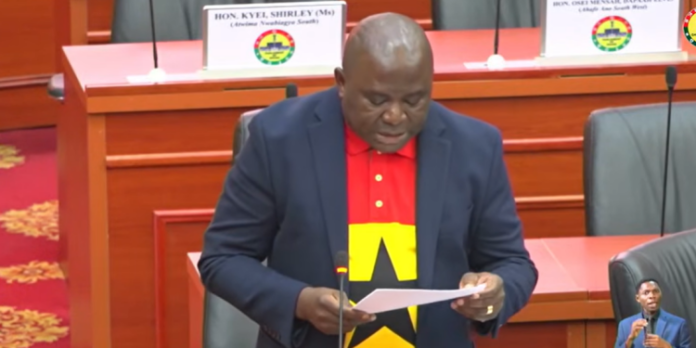

Former Deputy Minister of Health and Member of Parliament, Alexander Akwasi Acquah, has revealed that an estimated eight million Ghanaians are carriers of the sickle cell gene, raising concerns over the growing public health burden posed by the inherited blood disorder.
Speaking on the floor of Parliament on Thursday, June 18, as part of activities marking World Sickle Cell Day, Mr Acquah called for intensified public education, screening, and support services to help address the disease.
He described sickle cell disease as a devastating genetic condition that continues to affect the health and livelihoods of many individuals and families across the country.
“Sickle cell disease is a catastrophic genetic blood disorder that kills, maims, and impoverishes affected individuals and families,” he stated.
According to him, the high number of carriers in the population underscores the importance of awareness and early screening, particularly among couples and prospective parents.
“About eight million Ghanaians are carriers of an abnormal haemoglobin gene called the sickle cell gene. Here on the floor of Parliament, every fourth person may be a carrier with the potential of passing the gene to our unborn children,” he said.
Mr Acquah further disclosed that approximately two out of every 100 babies born in Ghana are diagnosed with sickle cell disease.
The legislator stressed the need for greater national attention to the condition, noting that early detection and proper management can significantly improve the quality of life of affected persons.
He called on government, healthcare institutions, civil society organisations, and the public to work together to strengthen education and screening programmes as part of efforts to reduce the prevalence and impact of the disease in Ghana.
Sickle cell disease is an inherited blood disorder that affects the shape and function of red blood cells, often leading to severe pain crises, chronic anaemia, increased susceptibility to infections, and other potentially life-threatening complications.
READ ALSO:
Mahama calls for broader global commitment to reparatory justice
Education Minister reveals Ghana needs up to 90,000 additional teachers
