
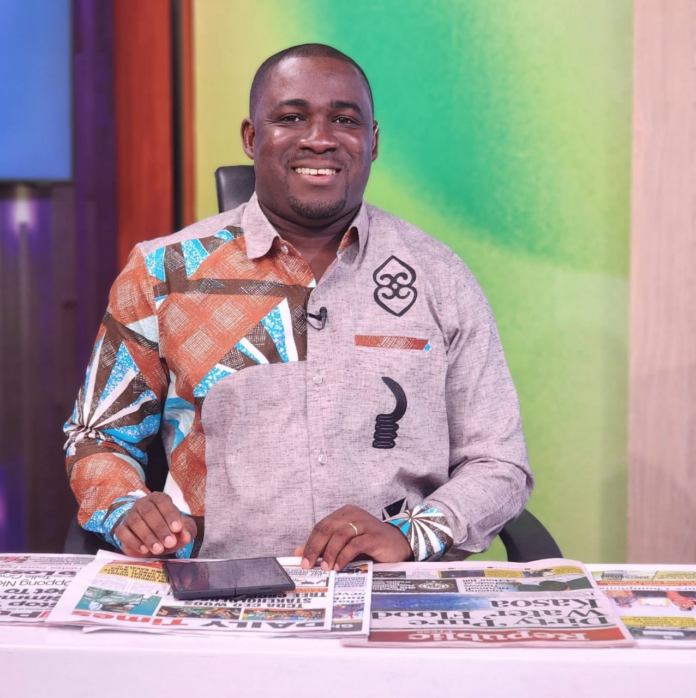

Popular media personality and host of Badwam on Adom TV, Akwasi Nsiah, has called for the licensing of journalists and bloggers in Ghana, arguing that professional regulation is necessary to promote accountability, credibility, and ethical standards within the country’s media landscape.
According to Mr. Nsiah, the growing influence of both traditional and digital media on public opinion makes it imperative for practitioners to be properly trained and held to professional standards.
Speaking on concerns over misinformation, fake news, and unverified online content, he noted that while society demands high professional standards from doctors, lawyers, engineers, and other professionals, the same level of scrutiny should be applied to individuals who inform and shape public discourse.
“A mistake by a licensed medical practitioner may tragically lead to the loss of a patient’s life, but irresponsible reporting or misinformation by a journalist or blogger can plunge an entire nation into confusion, panic, division and even chaos,” he stated.
Mr. Nsiah stressed that his proposal should not be interpreted as an attempt to suppress media freedom or silence dissenting voices. Rather, he explained that licensing would serve as a mechanism to ensure that those operating in the media space possess the necessary qualifications, ethical grounding, and understanding of professional standards required to disseminate information responsibly.
He emphasised that freedom of expression remains a fundamental pillar of democracy but argued that rights must be accompanied by responsibility.
“The objective is not to gag the media or restrict free speech. It is to ensure that individuals entrusted with microphones, cameras, websites, and social media platforms appreciate the consequences of their work and adhere to accepted ethical standards,” he said.
The veteran broadcaster further observed that the rapid growth of social media and citizen journalism has created opportunities for greater public participation in national conversations. However, he warned that the absence of adequate professional oversight has also contributed to the spread of false information, character assassination, sensationalism, and reports capable of undermining public confidence in institutions.
He suggested that a framework involving media associations, regulatory bodies, journalism training institutions, and other stakeholders could help establish minimum professional requirements for media practitioners while safeguarding constitutional freedoms.
According to him, responsible journalism remains one of the most important pillars of democratic governance, national development, and social cohesion.
“As Ghana’s media environment continues to evolve, there is an urgent need to promote professionalism, credibility, accuracy, and accountability. Protecting the integrity of journalism is not only in the interest of media practitioners but in the interest of every Ghanaian citizen,” he added.
