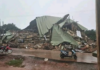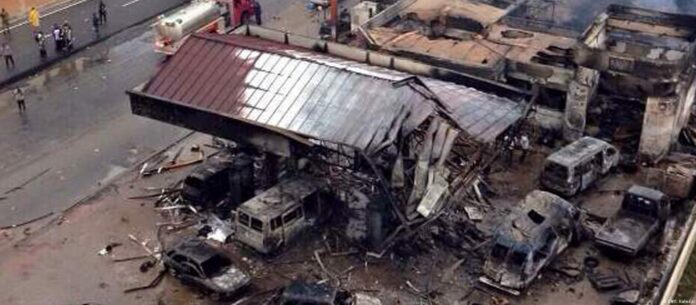

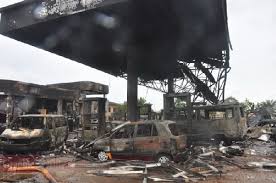
Exactly eleven years ago, more than 150 people lost their lives at a fuel station at Kwame Nkrumah Circle in Accra—not only due to flooding, but also a devastating fire that erupted when spilled fuel mixed with floodwaters and ignited, engulfing a crowd that had sought shelter from the rising waters.
It was June 3, 2015. Days of torrential rainfall had caused severe flooding across parts of Accra, and the GOIL fuel station near GCB Bank at the Circle, like many other locations that night, became a refuge for stranded commuters and residents.
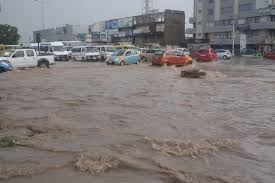
Flooding in the area was nothing new. Circle and several other parts of the city are often submerged whenever heavy rains fall. But that night was different.
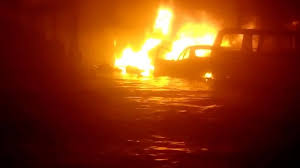
An explosion tore through the night, heard miles away, as the sky turned red, leaving those caught in it with no chance to escape. At least 159 people were killed, while hundreds more sustained life-altering injuries. In a matter of minutes, families were shattered.
Today, Ghana marks the 11th anniversary of that night. Survivors and relatives of victims are holding memorial events, tributes are being paid, and promises are once again being renewed.
But for many Ghanaians, the anniversary raises an uncomfortable question: what has actually changed?
The June 3 disaster was not simply a natural event. It was the result of years of neglect—choked drainage systems, unchecked development along waterways, poor waste management, and a near-total lack of emergency preparedness. In the aftermath, investigations were conducted, recommendations were made, and commitments were given.
Yet, every rainy season, the same scenes repeat themselves across Accra and other urban centres. Homes are flooded, roads turn into rivers, and families are displaced. The structural problems that made June 3 possible remain largely unresolved.
For the families who lost loved ones that night, the anniversary is not a policy discussion. It is a wound that has not fully healed. It is the memory of a child, a parent or a friend who left home that evening and never returned.
Eleven years on, their most basic demand remains unchanged: that no family should ever have to grieve the way they have grieved—and that the lessons of June 3 should be reflected not only in memorial speeches, but in Ghana’s drainage systems, planning regulations, and emergency response mechanisms.
ALSO READ:
Residents of Patang threaten demo, election boycott over poor roads
Government replaces illegal mining with cooperative scheme in Ellembelle