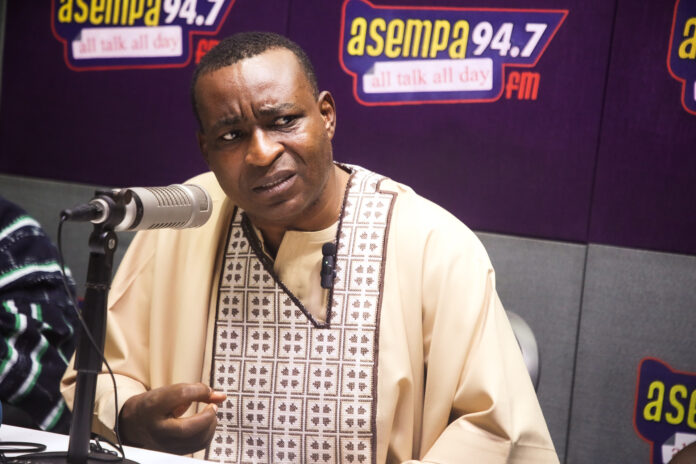

Ashanti Regional Chairman of the New Patriotic Party (NPP), Bernard Antwi-Boasiako, popularly known as Chairman Wontumi, and Akonta Mining Company Limited have appealed their convictions and sentences in the Samreboi illegal mining case.
The two appellants are asking the Court of Appeal to overturn the High Court’s decision and acquit them on all four counts.
The notice of appeal, filed on Tuesday, July 28, challenges the judgment delivered by Justice Audrey Kocuvie-Tay of the High Court’s Criminal Division 4 on July 20.
Represented by lawyer Samuel Atta Akyea, the appellants argue that the convictions were not supported by the evidence presented during the trial.
They contend that the trial judge misinterpreted key provisions of the Minerals and Mining Act, 2006 (Act 703), as amended, and failed to consider the combined effect of Sections 13(8) and 46 of the Act, which they say absolve them of any wrongdoing.
The appellants further argue that the trial judge exceeded her jurisdiction by determining constitutional issues that should have been referred to the Supreme Court.
According to them, questions surrounding the constitutionality of Sections 14(1), 59 and 99(2)(b) of the Minerals and Mining Act, in relation to Article 19(11) of the 1992 Constitution, ought to have been determined by the Supreme Court under Article 130 of the Constitution.
They also argue that the judge erred by refusing to suspend the delivery of her judgment and refer the constitutional matters to the apex court.
Another major ground of appeal relates to the court’s finding that Akonta Mining’s authorisation for prosecution witness Henry Okum (PW2) to carry out land reclamation works on the Samreboi concession amounted to an assignment or transfer of mineral rights requiring ministerial approval.
The appellants argue that allowing someone to undertake reclamation work does not amount to assigning or disposing of mineral rights. They maintain that the judge wrongly interpreted Section 14(1) of the Minerals and Mining Act by equating a licence to reclaim land with a transfer of mineral rights.
They further contend that PW2 acted only as a licensee on behalf of Akonta Mining and did not acquire any mining rights under the arrangement.
The appeal also challenges the trial court’s reliance on the testimony of PW2, whom the appellants describe as a self-confessed illegal miner and participant in the alleged offences. They argue that, as an alleged accomplice, his evidence required independent corroboration before it could be relied upon.
In addition, the appellants argue that the circumstantial evidence presented during the trial did not conclusively establish their guilt and that there were reasonable explanations consistent with their innocence.
They maintain that there was no evidence showing that Bernard Antwi-Boasiako intended to assign Akonta Mining’s mineral rights or deliberately facilitated an unlicensed mining operation, which were central to the charges against him.
The appeal further disputes the High Court’s finding that Wontumi was the de facto holder of the mineral rights, arguing that documentary evidence showed the concession belonged solely to Akonta Mining.
The appellants also contend that the trial judge had no legal basis to lift the company’s corporate veil and treat Akonta Mining and its director as one entity in a criminal trial.
They argue that the judge wrongly interpreted Section 59 of the Minerals and Mining Act as creating a criminal offence for mine support service providers operating without licences from the Minerals Commission, thereby filling gaps in the law through judicial interpretation.
The notice of appeal also alleges that the trial judge failed to fairly assess the defence’s evidence, overlooked material evidence favourable to the appellants and imposed sentences that were harsh and excessive.
Wontumi and Akonta Mining are therefore asking the Court of Appeal to set aside their convictions and sentences and enter verdicts acquitting and discharging them on all four counts.
On July 20, the High Court convicted Bernard Antwi-Boasiako and Akonta Mining Company Limited over illegal mining activities carried out on the company’s concession at Samreboi in the Western Region.
The court found that Wontumi unlawfully authorised mining activities on the concession, leading to his conviction for assigning mineral rights without the approval of the Minister responsible for Lands and Natural Resources and for deliberately facilitating an unlicensed mining operation.
Justice Audrey Kocuvie-Tay sentenced Wontumi to 20 years’ imprisonment with hard labour on each of the two counts on which he was convicted, with the sentences to run concurrently. He was also fined 10,000 penalty units on each count.
Akonta Mining Company Limited was fined 15,000 penalty units on each of the two counts for which it was convicted.
Also read: