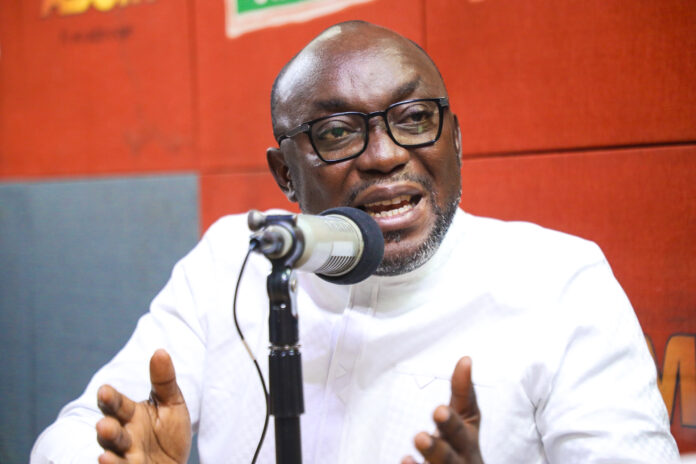

The Ranking Member on Parliament’s Health Committee, Dr. Kingsley Agyemang, has criticised the government for what he describes as poor spending in the health sector, arguing that the 2026 Mid-Year Budget Review reveals a significant gap between budget allocations and actual expenditure.
Speaking at a press conference on the Mid-Year Budget Review, the Abuakwa South MP said the government allocated about GH¢34.1 billion to the health sector in the 2026 Budget.
The allocation included GH¢22.8 billion in direct budgetary allocations and GH¢11.2 billion for the National Health Insurance Scheme (NHIS) and the Ghana Medical Trust Fund.
However, Dr. Agyemang said the Finance Minister’s mid-year review did not demonstrate that the allocated funds had translated into meaningful expenditure.
According to him, the Public Financial Management Act requires the government to present a comparison between budgeted allocations and actual expenditure across key areas, including compensation, goods and services, and capital expenditure.
He argued that the review failed to provide that level of detail, making it difficult for Parliament and the public to properly assess the government’s performance in the health sector.
The lawmaker cited the NHIS as an example, noting that although the government highlighted the uncapping of the National Health Insurance Levy as a major achievement, only about GH¢3.4 billion of the GH¢11.2 billion allocated to the NHIS and the Ghana Medical Trust Fund had been spent in the first half of the year.
According to him, this represents about 30 per cent of the total annual allocation.
Dr. Agyemang argued that removing the cap on the health levy would have little impact if the funds were not released to enable the National Health Insurance Authority (NHIA) to effectively carry out its mandate.
He maintained that the low level of expenditure raises concerns about the government’s commitment to adequately financing healthcare despite the promises made in the national budget.
The Ranking Member stressed that healthcare remains one of the country’s most essential sectors because every household depends on access to quality medical services.
He said budgetary commitments must be backed by timely and adequate spending to improve healthcare delivery and ensure Ghanaians receive the services they need.
Also read: