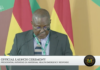

The United Nations Population Fund (UNFPA) has called for stronger incentives to encourage health professionals to remain in underserved and remote parts of Ghana, warning that failure to address the issue could slow the country’s progress in reducing maternal deaths.
Regional Director for West and Central Africa at UNFPA, Dr Sennen Hounton, said the concentration of medical professionals in major cities was weakening efforts to improve maternal healthcare in deprived communities.
Speaking in Accra on Monday, September 14, at the national launch of the Presidential Initiative on Maternal Health Emergency Response, Dr Hounton said many health workers were reluctant to accept postings outside the capital.
He noted that without additional motivation, professionals posted to remote areas would continue to seek opportunities to return to major cities such as Accra.
“It’s just so easier to stay in Accra than staying in Tamale,” he said, stressing the need to make postings to underserved areas more attractive.
Dr Hounton proposed the introduction of incentive packages for health workers who agree to serve in remote communities for extended periods.
He said such benefits could include additional allowances on top of regular salaries as well as opportunities for further education and professional development after completing their assignments.
“There must be incentive package for people we send to the remote area to stay there two, three, four years, five years. There must be something in return,” he stated.
According to him, existing civil service arrangements often do not provide sufficient motivation for health professionals to remain in deprived communities, resulting in workers looking for ways to return to urban centres.
He therefore urged governments across West and Central Africa to introduce formal bonding mechanisms that link service in difficult locations to tangible career and financial benefits.
“We are saying that we must, in all countries, have such bonding mechanism. I go there, but you give me, first, the salary you give me a top up as incentive. And secondly, maybe if I finish my tour of duty, I got a scholarship to do some certificate,” he said.
Dr Hounton said such measures would help countries retain skilled personnel in areas where their services are most needed and ultimately contribute to saving the lives of mothers and newborns.
READ ALSO:
Free Primary Healthcare programme gets over 24,000 pieces of medical equipment
Gov’t to give 20% incentives to health workers in undeserved areas