
The Chairman of the National Development Planning Commission (NDPC), Dr Nii Moi Thompson, has called for stronger accountability in Ghana’s efforts to reduce maternal deaths, describing preventable fatalities during pregnancy and childbirth as failures that require immediate action.
He said maternal survival should be treated as a key indicator of the effectiveness of the country’s healthcare system and its commitment to protecting women, families and future generations.
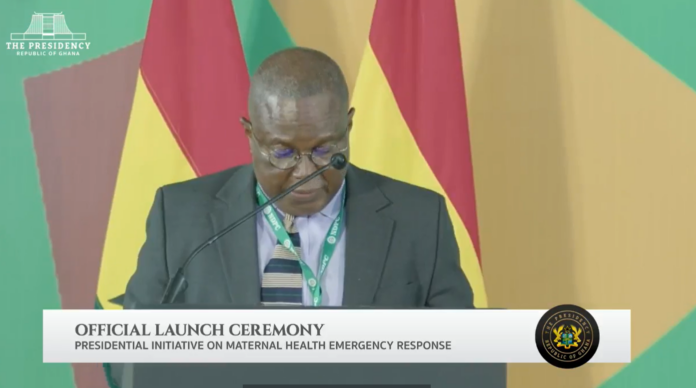
Dr Thompson made the call on Monday, September 14, 2026, at the national launch of the Presidential Initiative on Maternal Health Emergency Response (PRIMER).
He said Ghana must move beyond accepting maternal deaths as an unavoidable consequence of childbirth and instead build a system that guarantees pregnant women timely, respectful and quality care.
“It is to build a system in which every pregnant woman can expect timely, respectful and high-quality care and in which preventable maternal deaths are treated as failures that demand learning, correction, and immediate action,” he said.
According to the NDPC Chairman, PRIMER comes at a time when Ghana’s progress in reducing maternal mortality remains slow, requiring sustained political commitment, stronger coordination and clear accountability.
He said President John Dramani Mahama had drawn attention to the issue during the launch of Ghana’s 2025 Voluntary National Review Report on the implementation of the Sustainable Development Goals, describing the country’s stagnation in maternal health outcomes as unacceptable.
Dr Thompson stressed that maternal mortality was not solely a health-sector problem, arguing that factors such as transportation, public financing, infrastructure, education, social protection and household decision-making also influence maternal health outcomes.
“Maternal mortality cannot be reduced by the health sector alone,” he said.
He therefore called for a coordinated approach involving government institutions, health facilities, communities, civil society organisations, the private sector, traditional authorities and religious leaders.
Dr Thompson also urged leaders at all levels to take responsibility for maternal health outcomes, from central government through regional and district authorities to individual health facilities.
“Leadership must be demonstrated not only at the presidency or the Ministry of Health, but throughout government, in every region and district, within every health facility, and across all sectors whose decisions ultimately affect the health of women,” he stated.
He further encouraged traditional and religious leaders to help tackle misinformation, stigma and misconceptions that often prevent women from seeking timely medical attention.
He said communities must be equipped to identify pregnancy-related danger signs early and seek professional care promptly, while health facilities must have the capacity to respond effectively to emergencies.
Dr Thompson said the effectiveness of PRIMER would ultimately be measured by whether government commitments were backed by adequate funding, plans were implemented on time and institutions took responsibility for results.
He described maternal healthcare as an important component of Ghana’s human capital development, warning that avoidable maternal deaths have far-reaching consequences for families and the national economy.
“A country cannot realise its full human capital potential when women face avoidable risks in giving life, when families lose caregivers and income earners, and when children begin life without the care and security that their mothers provide,” he said.
The launch of PRIMER comes amid renewed calls for urgent action on Ghana’s maternal mortality situation, with the United Nations Population Fund (UNFPA) also describing preventable maternal deaths as a systems failure requiring stronger accountability.
Dr Thompson said PRIMER should therefore usher in a sustained and coordinated national effort to ensure that women no longer lose their lives from preventable causes during childbirth.
READ ALSO:
UNFPA calls for incentives to retain health workers in underserved communities
Free Primary Healthcare programme gets over 24,000 pieces of medical equipment