
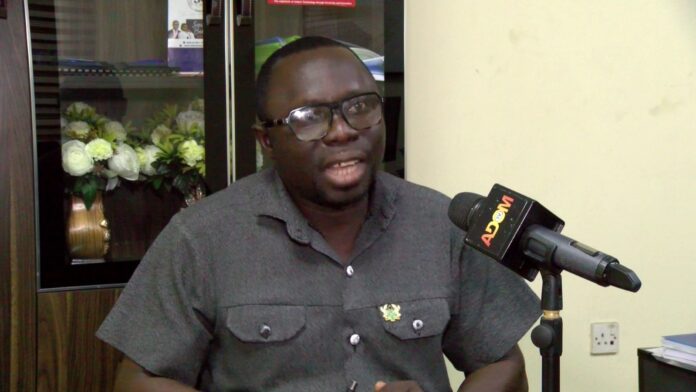

The President of the Institution of Engineering and Technology (IET) Wonder Davor, has called on Ghanaians to adopt sustainable environmental practices as a long-term solution to the persistent flooding that continues to affect many parts of the country during the rainy season.
Speaking to Adom News on the growing concern over annual floods, Mr. Davor attributed much of the problem to human activities such as poor waste disposal, indiscriminate construction on waterways, excessive concretisation of lands, and weak environmental planning.
According to him, although engineers design drainage systems using scientific formulas and environmental considerations, these systems often fail because human actions interfere with the natural flow of water.
“We still have drains within our communities, but people continue to dump rubbish into gutters. During heavy rains, these waste materials block the drainage systems and eventually lead to flooding,” he explained.
Mr. Davor noted that drainage designs are based on engineering calculations that consider factors such as rainfall intensity, catchment areas, and the coefficient of water runoff.
He explained that areas covered with concrete, tiles, or steel surfaces prevent rainwater from naturally soaking into the ground, causing excessive surface runoff that overwhelms drains.
“In the past, more green spaces allowed water to percolate into the soil before the excess flowed into drains. Today, many lands have been fully concreted, reducing water absorption and increasing the volume of runoff into gutters,” he stated.
He further expressed concern over the increasing practice of constructing buildings without proper drainage systems and the encroachment on waterways.
“When people build on waterways, where do we expect the water to go when it rains? Naturally, it will overflow into homes and communities because its path has been blocked,” he stressed.
Mr. Davor urged Metropolitan, Municipal and District Assemblies (MMDAs) to intensify efforts to desilt drains, especially during the rainy season, to ensure the free flow of water.
“The drains should have been desilted even before the rains began. Clear drainage systems will allow rainwater to pass through smoothly and reduce the risk of flooding,” he said.
He also called for stricter enforcement of building regulations to promote greener environments and sustainable urban planning. Referring to the Building Regulation LI 2465 of 2022, he noted that although developers are required to leave portions of their land undeveloped, there should be stronger emphasis on maintaining green spaces rather than covering every available area with concrete.
“We must go beyond simply leaving open spaces. A significant portion of the undeveloped land should be greened to allow water to infiltrate the soil. This will reduce pressure on drainage systems and help replenish underground water sources for future use,” he proposed.
Mr. Davor further advised the public to take precautionary measures during the rainy season, especially those living in flood-prone areas. He encouraged residents to seek assistance from the Ghana National Fire Service or the National Disaster Management Organisation (NADMO) whenever they feel threatened by rising floodwaters.
He also appealed to citizens to change their attitudes towards sanitation and environmental responsibility.
“The rubbish we throw into gutters eventually comes back to affect us. Flooding is not only a government problem; it is a collective responsibility. We all have a role to play in protecting our environment,” he said.
Mr. Davor concluded by encouraging property developers to engage qualified engineers before construction begins and to incorporate environmentally friendly practices into their building plans.
His remarks serve as a timely reminder that tackling flooding in Ghana will require not only infrastructure development but also sustainable living practices, responsible urban planning, and a collective commitment to protecting the environment.
ALSO READ:
