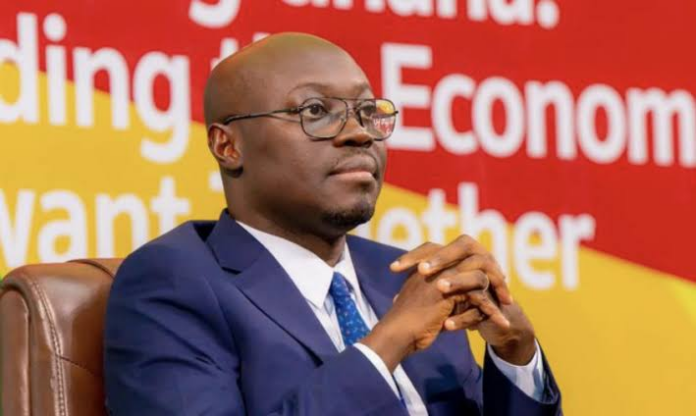

Development Economist Dr George Domfeh has challenged claims that the reduction in Ghana’s debt-to-GDP ratio is solely the result of the current government’s economic management, arguing that the country’s debt restructuring programme played a major role.
Speaking on Adom FM’s Dwaso Nsem programme, Dr Domfeh said the debt-to-GDP ratio had already started declining before the current administration took office, largely due to measures introduced under the previous government’s debt restructuring process.
His comments follow Finance Minister Dr Cassiel Ato Forson’s assurance that government is not in a hurry to return to the international capital market despite renewed investor interest.
Dr Forson, while presenting the 2026 Mid-Year Budget Review in Parliament on Thursday, July 23, said Ghana’s debt situation had improved significantly, with the debt-to-GDP ratio falling to 45 per cent and continuing to decline.
However, Dr Domfeh argued that the reduction was largely influenced by the debt restructuring agreement reached with creditors.
“When Nana Addo Dankwa Akufo-Addo was leaving office, Ghana’s debt-to-GDP ratio had dropped to 61.8 per cent in December 2024,” he said.
He explained that after the new administration assumed office, Ghana’s creditors met with government on January 29, 2025, as part of the debt restructuring process, leading to further reductions in the debt burden.
“About US$2.8 billion, which was part of the debt restructuring, contributed significantly to the reduction in the debt-to-GDP ratio. The restructuring moved the ratio from about 80 per cent to 51.8 per cent, and further adjustments helped bring it down to around 45 per cent,” he explained.
According to him, it would therefore be inaccurate to attribute the entire reduction to the current government’s policies.
“So, if you say it is because of the things you have done well that the debt-to-GDP ratio has reduced, then that is not entirely true,” he stated.
Dr Domfeh said although international credit rating agencies have acknowledged Ghana’s economic progress, the improvement has also been linked to the successful debt restructuring exercise.
“Let us pay attention and stop the propaganda and politics we attach to the economy,” he urged.
He said the Finance Minister could have simply stated that Ghana’s debt-to-GDP ratio had fallen to 45 per cent instead of comparing it to previous figures and suggesting that the reduction was solely due to the current government’s efforts.
“It would have been better for Ato Forson to say the debt-to-GDP ratio is at 45 per cent and leave it there, rather than saying it was 61 per cent and because of their management they have brought it down to 45 per cent. That is not entirely accurate,” he said.
Dr Domfeh further explained that the previous government’s debt restructuring efforts, particularly the Eurobond restructuring, created some fiscal space for the economy.
He said Ghana’s US$13.1 billion Eurobond debt was subjected to a restructuring process, which resulted in a significant reduction in the country’s repayment obligations.
“The creditors agreed to a haircut, which reduced part of the debt we owed. They also extended the maturity period of some debts because the economy was struggling, giving the country more time to repay,” he explained.
According to him, those measures contributed to improving Ghana’s fiscal position before the current government took over.
“Some of the fiscal space we are enjoying today is because of the work done under the previous government. So, if the Finance Minister says the reduction is only because of their fiscal prudence, then that is not the full picture,” Dr Domfeh added.
He, however, acknowledged the importance of maintaining economic discipline and ensuring that the gains from the debt restructuring are sustained.
ALSO READ: