
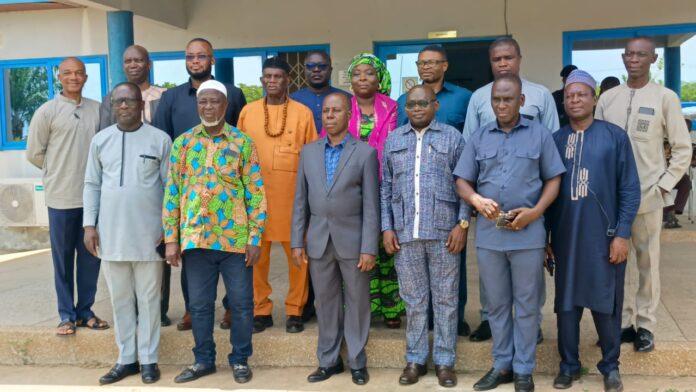

Regional Directors of Agriculture across Ghana’s sixteen regions have appealed for sustainable and predictable funding for Regional and District Departments of Agriculture under the country’s decentralised system of governance.
They warned that without consistent financial backing, particularly for extension services, many government agricultural policies may fail to achieve their intended outcomes.
The call was made at the Conference of Regional Directors of Agriculture Ghana (CORDAG), held in Dambai, the Oti Regional capital.
The two-day engagement, themed “Sustainable Funding for Regional Agricultural Departments and District Agricultural Departments in a Decentralised System of Government,” brought together key agricultural leaders to examine funding gaps and identify practical solutions to strengthen operations at the local level.
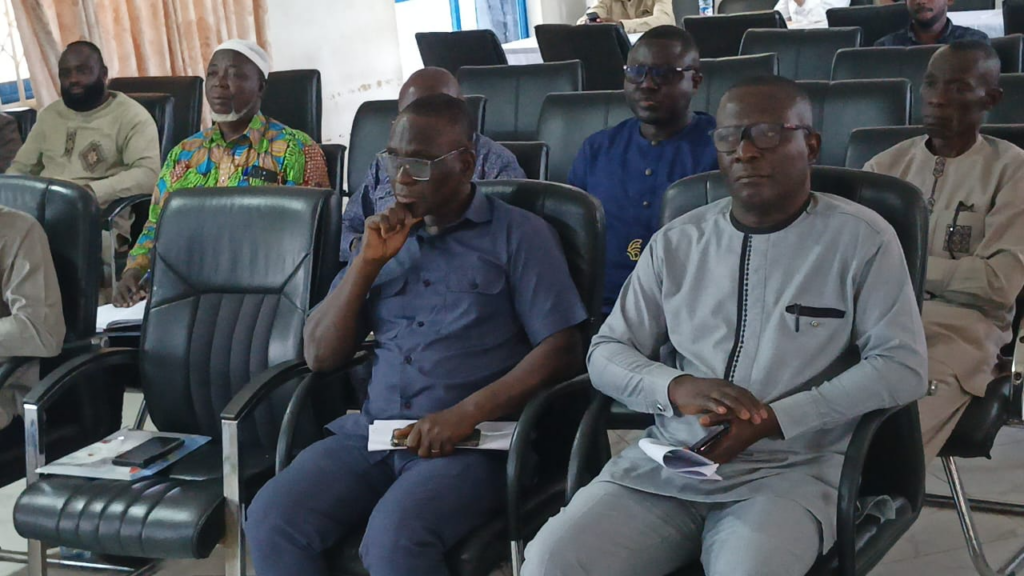
Speaking to Adom News, O’Brien Nyarko, the Oti Regional Director of Agriculture, explained that the workshop is organised twice each year as part of efforts to strengthen the capacity of regional and district directors.
He noted that the sessions are designed to equip participants with practical strategies for mobilising resources, improving operational efficiency, and delivering stronger results within their respective jurisdictions.
The Oti Regional Director emphasised that agricultural extension officers remain central to transforming farming outcomes, as they serve as the direct link between research, policy, and farmers.
Through extension services, farmers gain access to improved farming methods, updated market information, and guidance on climate-smart practices.
According to him, inadequate and unreliable funding continues to restrict extension work, limiting officers’ ability to reach farming communities consistently.
He stressed that without adequate financial support for extension activities, agricultural policies may not translate into measurable impact on farms.
The Northern Regional Director of Agriculture, Hawa Musah, reinforced these concerns with accounts from the field.
She explained that many extension officers are assigned to wide operational areas and multiple communities but often lack basic logistical support such as motorbikes and vehicles.
As a result, some officers are compelled to walk long distances or pay transport costs from their own salaries—an arrangement that is neither sustainable nor fair.
The Northern Regional Director added that the agriculture department often feels “marginalised” within the chain of actors that includes farmers, extension officers, district directors, and regional directors, particularly when it comes to priority setting and resource allocation.
She maintained that sustainable funding would significantly enhance productivity and ensure that government interventions achieve their intended goals.
At the event, the Oti Regional Minister, John Kwadwo Gyapong, underscored agriculture’s central role in Ghana’s economy, noting that it engages nearly 80 percent of the population either directly or indirectly.
He stressed that strengthening the sector requires collective responsibility and sustained commitment from all stakeholders, including government institutions, development partners, and local authorities.
John Gyapong also highlighted the Oti Region’s strong agricultural potential, describing it as uniquely endowed with three ecological zones—forest, transition, and savannah—offering a comparative advantage for diverse agricultural production.
He suggested that with the right investments and effective decentralised support systems, the region can expand its contribution to food security, employment, and economic growth.
READ ALSO:
Vakpo Chief linguist who jumped bail convicted
GFA ExCo member sets records straight on Carlos Queiroz’s stay in hotel [Audio]
