
When the National Democratic Congress (NDC) unveiled its 2024 manifesto under the theme “Building a Thriving Creative Arts and Tourism Industry,” it painted an ambitious vision for Ghana’s creative economy.
The party pledged to revive the Creative Arts Fund, establish a year-round cultural tourism brand through the Black Star Experience, support young digital creators, strengthen copyright enforcement and inject millions of cedis into the struggling sector.
Nearly two years into office, however, many industry players are questioning whether those promises are translating into action.
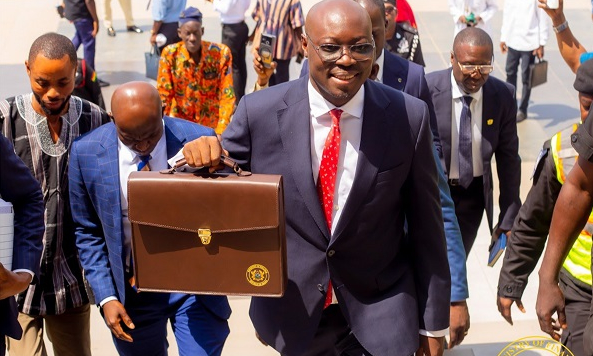
The concerns intensified after the presentation of the 2026 Mid-Year Budget Review by Finance Minister Dr Cassiel Ato Forson. While the statement highlighted progress in infrastructure, health, education, agriculture and other sectors, it made no mention of the promised GH¢40 million intervention for the creative arts industry.
The omission has raised eyebrows among stakeholders, many of whom had anticipated an update on the GH¢20 million Film Fund and the GH¢20 million Creative Arts Fund announced earlier by government.
For many within the industry, the silence has revived a familiar concern—that despite its growing contribution to employment, tourism and national identity, Ghana’s creative arts sector continues to receive limited financial attention.
Big promises for a creative economy
The NDC’s 2024 manifesto positioned the creative economy as a major driver of jobs, tourism and economic transformation.
Among its flagship proposals was the launch of the Black Star Experience, envisioned as Ghana’s premier culture, arts and tourism brand. The initiative was designed to feature year-round celebrations including Literacy Month, Pan African Month, Ghana Film Festival and Awards Month, Ghana Music World, Culinary Month, Fashion and Textiles Month, and festivals celebrating architecture, design and crafts.
The manifesto also promised to partner with the private sector to construct an ultra-modern recreation village equipped with auditoriums for films, concerts and other major events.
Other commitments included supporting digital content creators, reviving the Creative Arts Fund to finance start-ups and struggling creative enterprises, strengthening local content regulations and improving copyright and royalty collection systems.
For many artists, filmmakers, musicians and content creators, these promises offered hope that the sector would finally receive the policy attention and investment it had long demanded.
Early signs of commitment
Government’s first budget in March 2025 appeared to reinforce those commitments.
Presenting the 2025 Budget Statement and Economic Policy, Finance Minister Dr. Cassiel Ato Forson outlined several initiatives under the Ministry of Tourism, Culture and Creative Arts.
The budget reaffirmed the government’s commitment to expanding programmes such as National Chocolate Week and the Wear Ghana Festival while strengthening performing arts education through the National Theatre.
It also announced plans to launch the Black Star Experience in collaboration with the private sector, diplomatic missions and public institutions. The initiative was expected to feature street carnivals, film week celebrations, theatre productions and Pan-African cultural events aimed at positioning Ghana as the gateway to Africa for the global diaspora.
The Government further pledged to work with the National Film Authority and industry partners to provide support, resources, and incentives to stimulate growth in Ghana’s film industry.
The announcements were welcomed by industry players who expected implementation to gather momentum over the following year.
Missing from the mid-year review
Expectations were therefore high when Parliament considered the 2026 Mid-Year Budget Review.
Although the Finance Minister outlined progress across several sectors of the economy, the creative arts industry received no mention. There was no update on the promised Creative Arts Fund, the Film Fund or timelines for their implementation.
The omission has prompted questions about whether funding for the sector has been delayed, restructured or quietly shelved.
For many creatives, access to financing remains one of the industry’s biggest obstacles. Filmmakers, musicians, designers, actors and digital creators have repeatedly called for dedicated funding to help scale their businesses, improve production quality and compete internationally.
Without clear communication on the status of the promised funds, uncertainty continues to grow.
Ministry highlights policy achievements
Officials at the Ministry of Tourism, Culture and Creative Arts maintain that progress is being made through policy reforms and institutional development.
At a High-Level Stakeholder Consultative Meeting in Accra earlier this month, Tourism, Culture and Creative Arts Minister Abla Dzifa Gomashie outlined several achievements recorded since taking office.
She announced the launch of Ghana’s National Cultural Policy, describing it as a framework to preserve the country’s cultural heritage while supporting the growth of the creative economy.
The ministry also rolled out UNESCO’s 2030 Culture Indicators Programme to generate data that will guide cultural investment and policy decisions.
Working with the Ghana Statistical Service, the ministry has also begun developing Ghana’s first Tourism Satellite Account through the Ghana International Traveller Survey, an initiative expected to provide comprehensive data on tourism’s contribution to GDP, employment and national development.
Another milestone highlighted by the minister was UNESCO’s inscription of Highlife music and Highlife dance on its Representative List of the Intangible Cultural Heritage of Humanity, a recognition expected to strengthen Ghana’s global cultural profile.
Gomashie has also continued to court both local and foreign investors, assuring them that government remains committed to creating a business-friendly environment for tourism, hospitality, fashion and the creative industries.
A sector waiting for implementation
While stakeholders acknowledge these policy achievements, many argue that long-term reforms must be matched by direct financial investment.
Industry players say initiatives such as the Black Star Experience and the Creative Arts Fund have the potential to transform the sector by creating jobs, attracting tourism, supporting entrepreneurship and increasing Ghana’s cultural exports.
The absence of an update in the mid-year budget has therefore left many wondering when the promised financial support will materialise.
For a sector that has consistently demonstrated its economic and cultural value, from music and film to fashion, digital content creation and performing arts, the question remains whether the omission was merely a delay in implementation or another sign that the creative arts industry continues to struggle for priority in national economic planning.
Until government provides clarity on the GH¢40 million intervention, many creatives say they remain hopeful, but are still waiting for the promises made to become reality.
READ ALSO:
Societal pressure on northern women: Balancing culture, marriage, education and opportunity
The men defying the odds: Spotlighting the resilience and success of men in female-dominated…