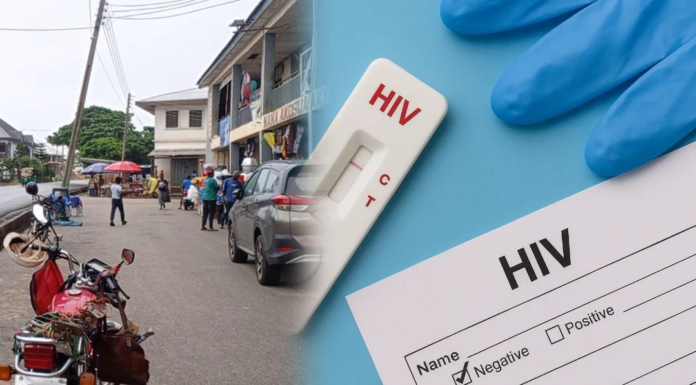

The Juaben Municipality recorded the highest rate of HIV infections in the Ashanti Region in 2025, according to the annual report of the Ghana AIDS Commission.
The Commission’s data shows that 2.82% of individuals in the area are living with the virus, placing Juaben ahead of other districts in the region.
Health officials say the figure reflects both the scale of transmission and the municipality’s role as a testing and treatment hub.
The Municipal AIDS Committee has attributed the high prevalence partly to the Juaben Government Hospital, which has become a major centre for HIV testing, counselling, and antiretroviral therapy (ART).
In an interview, the HIV and AIDS Focal Person for the Juaben Municipality, Abdel Wahab Mohammed, said the hospital functions as both a referral centre and a trusted facility for residents from surrounding districts and other regions who suspect exposure to the virus.
He said the concentration of services is one of the main factors contributing to the high number of recorded cases.
“Juaben is where people come when they have doubts about their HIV and AIDS status because our hospital provides confidential testing, and for those who test positive, we offer counselling and immediate access to antiretroviral therapy,” Mohammed explained.
“This suggests that the high case numbers are not driven by local infections alone. Instead, people from outside the municipality come for testing, which makes the statistics appear higher compared to districts with less centralised testing,” he added.
Mohammed said the data should serve as a call to action rather than a cause for alarm.
“We expected these results because we know the gaps on the ground. What matters now is using this information to strengthen outreach and ensure no one is left behind,” he said.
He added that given the existing challenges, he does not expect a decline in cases in the next report. However, the Municipal AIDS Committee is working to ensure the numbers do not exceed those recorded last year.
He identified stigma, limited youth-focused outreach, and gaps in early testing as persistent challenges contributing to the spread of the disease within the municipality.
To address the situation, the Committee is expanding community testing drives, intensifying education in schools and market centres, and working with civil society organisations to reduce stigma.
Meanwhile, residents reacted with dismay to the release of the report, saying the findings had caught them off guard.
Many described a sense of embarrassment within the Juaben community, noting that the publicity surrounding the report had made some residents reluctant to identify themselves as being from the area when travelling outside the municipality.
“I was surprised by the report because we’re ashamed. Even when a T-shirt with the inscription ‘Me firi Juaben’ came out during that period, I couldn’t buy one. I was afraid to wear it in other communities because people would point fingers at me,” a storekeeper said.
Others also said the report serves as a wake-up call to avoid activities that could expose them to HIV infection.
“As the health experts have revealed in the report, it’s up to us to advise ourselves. For me, I’ve shared this advice with all my family members. If you’re married, focus on your wife. But if you engage in casual sex, you have to protect yourself because contracting HIV comes with a lot of stigma and other consequences,” Shaibu Salifu, an electrician, stated.
Another resident added: “I wasn’t surprised by the report because people from other places come here for testing, counselling, and antiretroviral therapy (ART). The only thing left is to educate the public.”
The Ghana AIDS Commission has urged district assemblies, traditional authorities, and private sector partners to scale up support for prevention and treatment programmes.
ALSO READ:
Six-year-old girl drowns in uncovered septic tank at Gbetsile
WASSCE preparation disrupted as electricity pole falls, Tanyigbe SHS plunged into…