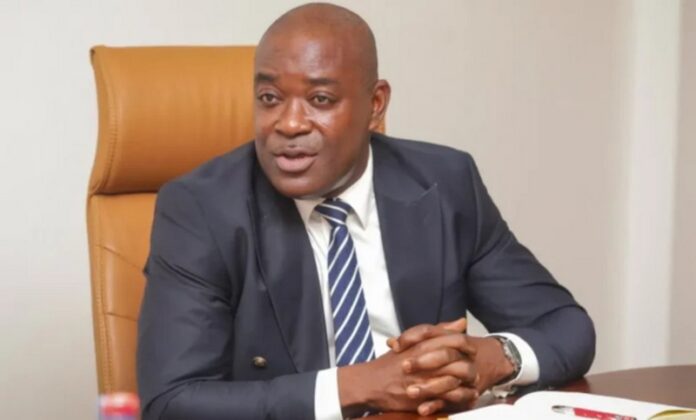

The Director-General of the Ghana Tertiary Education Commission (GTEC), Professor Ahmed Abdulai Jinapor, has called on Ghanaians to have confidence in the country’s tertiary education system and choose accredited local universities for their academic pursuits.
He emphasized that Ghanaian universities possess the expertise, infrastructure, and academic capacity to provide quality education that meets international standards.
Prof. Jinapor encouraged students and professionals to verify the credibility of institutions before enrolling in their programs.
He made these remarks during the investiture of Professor Denis Warlonyo Aheto as the Vice-Chancellor of the University of Cape Coast (UCC), where he represented the Minister of Education.
He emphasised that accredited tertiary institutions in the country continue to produce graduates with the skills and knowledge required to compete globally.
According to him, the call has become necessary amid growing concerns over individuals obtaining qualifications from institutions that lack proper recognition and quality assurance approval.
He explained that while GTEC respects the right of individuals to choose where they pursue their education, prospective students must conduct due diligence to avoid investing in programmes that may not meet accepted academic standards.
Prof. Jinapor highlighted that Ghana’s tertiary institutions are supported by qualified academics, modern facilities and programmes designed to equip students with relevant skills for the job market.
“Some of the universities and accredited private tertiary institutions offer world-class programmes that are recognised both locally and internationally. There is no substitute for the quality, rigour and accomplishments that come from Ghanaian tertiary education institutions,” he said.
He added that GTEC remains committed to safeguarding the integrity of the country’s tertiary education sector through effective regulation, accreditation and quality assurance measures.
The GTEC Director-General noted that the Commission had recently published a list of institutions whose qualifications were not recognised due to concerns over compliance with quality assurance requirements.
He clarified that the move was not aimed at discouraging people from pursuing higher education but rather to protect students and professionals from enrolling in programmes that may not provide the expected value or recognition.
READ ALSO:
Aowin Municipal Assembly demolishes Enchi market to pave way for 24hr economy market
Why O’SHTS has been closed temporarily — Obuasi MCE explains