
Ghana’s trade surplus shrank by about 70.0% from US$4.3 billion in the first quarter of 2026 to US$1.3 billion in the second quarter of 2026.
This was captured by the quarterly trade statistics report by the Ghana Statistical Services.
According to the GSS, exports barely increased as it went down by 1.6%, while imports jumped by 47.5%. Therefore, the smaller surplus came almost entirely from buying more.
This put the total exports value of the country at GH₵108.5 billion (US$9.6 billion) and imports at GH₵94.7 billion (US$8.3 billion), bringing the total trade at US$17.9 billion.
The GSS explained that Ghana’s headline surplus in quarter 2, 2026, was due to strong prices for a few commodities, above all gold, sold to a small group of buyers, measured by quantity.
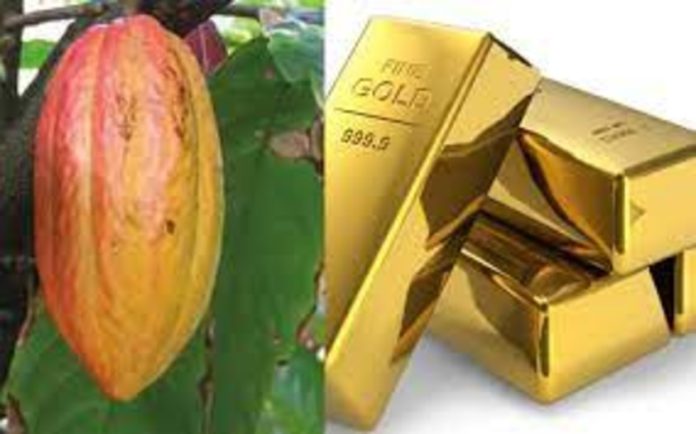
Ghana’s most diverse exports go to its West African neighbours, as the exports came largely from natural resources – gold, crude oil and cocoa.
In quarter 2, 2026, gold bullion earned GH₵78.4 billion, or 72.3% of all exports. This means close to three of every four cedis Ghana earned from exports came from gold. Crude petroleum was second at GH₵11.6 billion (10.7%). Gold earned almost seven times as much as crude oil.
Reasons
The data showed that import prices rose five times as fast as exports.
For instance, between quarter one and quarter two, import prices climbed 22.7%, led by fuel at 54.1%.
Export prices rose 4.0% over the same period compared with a year earlier. Import prices also rose 10.5%, the first annual increase after four quarters of decline. Export prices rose 13.9% over the year.
Gold bullion brought in GH₵78.4 billion, or 72.3% of exports, up from 57.7% in quarter one. The top five export products together made up 89.0% of all exports.
In terms of the import bill, minerals, fuel and oil made up of 30% of imports and gas oil (diesel) was the single largest import at GH₵12.2 billion.
Destinations
China remained the top supplier at GH₵20.4 billion, although its share fell from 29.7% to 21.5%. South Africa moved to second place at GH₵11.8 billion
The United Arab Emirates was the biggest buyer of Ghana’s exports. It bought GH₵32.7 billion of Ghanaian goods (30.2% of exports), more than double its quarter one purchases.
Together, the UAE and India took 46.4% of exports. The top five destinations took 76.2%, up from 65.7% in quarter one.
In Africa, South Africa was Ghana’s biggest buyer and supplier, as it took 56.5% of Ghana’s exports to Africa, almost all of it gold (99.8%).
The top five African destinations took 81.5% of Ghana’s exports to the continent.
Trade with West Africa reached a record US$1.33 billion, with a first deficit of US$0.25 billion.
Ghana’s top five exports to the region made up just 39.4% of sales against 89.0% to the world. Many were manufactured goods, such as baby napkins, tiles, plastics and steel products.
READ ALSO:
Diesel prices to remain below GH¢20 per litre in October’s first pricing window – NPA CEO