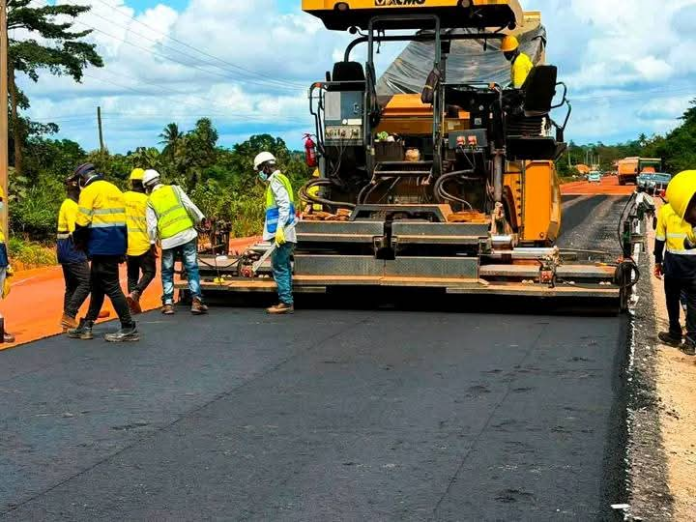

Ghana is facing a widening shortfall in funding for road maintenance, with available resources meeting just 37 per cent of estimated needs in 2024, the World Bank has disclosed.
This represents a decline from the 45 per cent coverage recorded between 2018 and 2021, raising concerns about the deteriorating condition of the country’s road network and the long-term value of investments in road infrastructure.
The World Bank made the disclosure in its latest Ghana Economic Update, titled Reset for Growth – Sustaining Macroeconomic Recovery and Unlocking Transport for Transformation.
According to the report, Ghana’s trunk road network, valued at about US$10 billion, requires an estimated US$685 million annually for maintenance. This is equivalent to approximately 0.83 per cent of the country’s Gross Domestic Product (GDP).
However, funding available for road maintenance has consistently fallen short of the required amount, creating a structural challenge for the sector.
The World Bank attributed part of the decline in maintenance financing to the implementation of the Earmarked Funds Capping and Realignment Act, which contributed to the reduction in the proportion of road maintenance needs being financed to 37 per cent in 2024.
The report also identified weaknesses in the transfer of Road Fund revenues as another major concern.
Between 2016 and 2020, only 58 per cent of revenues accrued from road user charges were transferred to approved road maintenance budgets, with the remainder redirected to other areas of the national budget.
Similarly, Road Fund revenues covered just 45 per cent of actual maintenance requirements between 2018 and 2021, well below the government’s target of 65 per cent.
The situation worsened in 2022 and 2023, when only between 50 and 60 per cent of budgeted Road Fund allocations were released. By the end of 2024, accumulated arrears had reached GH¢5.75 billion.
The World Bank warned that delaying road maintenance carries significant financial consequences, as roads allowed to deteriorate substantially become far more expensive to restore.
It noted that rehabilitating roads after they have fallen into poor condition could cost between five and seven times more than carrying out preventive maintenance.
The funding constraints have already affected the overall condition of Ghana’s road network.
By the end of 2025, the country’s estimated 94,000-kilometre road network had only 47 per cent of roads classified as being in good condition. Another 32 per cent were considered fair, while 21 per cent were in poor condition.
The condition of trunk roads was particularly concerning, with only 35 per cent rated as good.
Earlier assessments also showed that 64 per cent of urban roads and 65 per cent of feeder roads were either in fair or poor condition.
The figures fall short of the government’s 2021–2025 target of ensuring that 60 per cent of Ghana’s roads were in good condition.
Beyond transportation challenges, the World Bank said inadequate road maintenance has wider economic and social implications, particularly for poorer communities.
Poor road conditions can restrict access to markets, increase transportation costs and raise farm-gate prices, with the effects becoming more severe during the rainy season.
Feeder roads remain particularly important to agricultural communities because they provide vital links between production areas and markets. However, routine maintenance on such roads has achieved an average performance of only 45 per cent, against a target of 65 per cent.
The World Bank also warned that inadequate maintenance could undermine the economic benefits expected from major road investments.
It cited Ghana’s Second Transport Rehabilitation Project as an example, noting that the project’s economic rate of return dropped from 38 per cent at appraisal to 16 per cent at completion.
According to the report, inadequate maintenance was among the key factors contributing to the significant decline in the project’s economic returns.
READ ALSO:
Youth Employment Agency records GH¢110.45m surplus after 2024 deficit