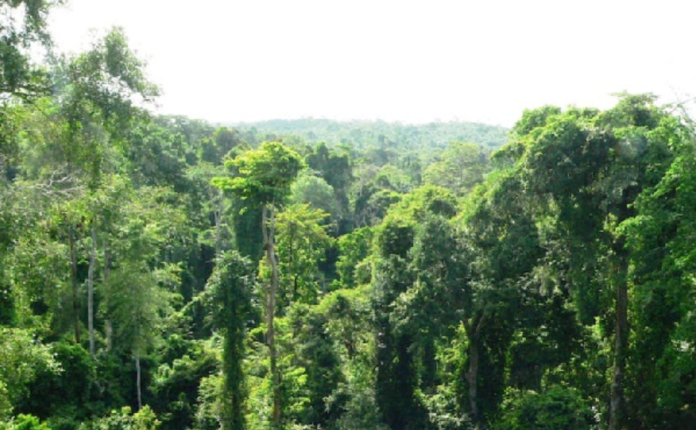

The Ghana Institute of Foresters (GIF) has welcomed the government’s decision to reverse the declassification of the Achimota Forest Reserve in the Greater Accra Region.
The erstwhile Akufo-Addo administration, through Executive Instrument (EI) 144 issued on April 19, 2022, designated portions of the urban forest as no longer being part of the forest reserve.
The move was met with strong opposition from environmental groups, including the Ghana Institute of Foresters, which warned of the adverse consequences the decision could have on urban ecosystems.
On July 16, 2026, the Minister for Lands and Natural Resources, Emmanuel Armah Kofi Buah, announced that Cabinet had restored the Achimota Forest Reserve to its full protected status under the 1927 declaration, effectively nullifying the legal changes introduced in 2022 that removed approximately 361.5 acres from the southern portion of the reserve.
The GIF described the reversal as a “bold and timely” decision that aligns with its longstanding call for the withdrawal of the Executive Instrument in the interest of sustainability, biodiversity conservation and climate resilience.
In a statement signed by its President, Dr. Abukari Nantogmah Attah Esq., the institute highlighted the critical role of the forest reserve in protecting Accra against the impacts of climate change.
“The restoration of the Achimota Forest Reserve comes at a particularly significant time when Ghana continues to experience increasingly frequent flooding and extreme weather events, especially within Accra and other rapidly urbanising communities,” the statement said.
It added that, “Beyond storing carbon and moderating local temperatures, urban forests purify polluted air, reduce urban heat, regulate stormwater runoff, recharge groundwater, provide habitats for biodiversity, and significantly reduce the severity of flooding by absorbing and retaining large volumes of rainwater.”
The institute is also advocating similar protection for other ecologically important urban forests and wetlands, reminding the government of the disappearance of the once-prominent Kumasi Forest Reserve due to unplanned urban expansion.
Among the reserves it wants protected are the Dede Forest Reserve in the Eastern Region, Kabakaba Forest Reserve in the Volta Region, Wa Town Plantation Forest, Tamale Waterworks Forest Reserve, Tamale Fuelwood Plantation Forest, Tamale GES Plantation Forest Reserve, Winneba Waterworks Forest Reserve, and Gua Koo Forest at Pokuase.
The GIF believes the reversal presents an opportunity for Ghana to strengthen its legal framework governing the reservation and de-reservation of forest reserves.
It is calling on the government and Parliament to review existing legislation to ensure that any future reservation or de-reservation of a forest reserve is subject to parliamentary approval, comprehensive environmental and social impact assessments, broad stakeholder and public consultation, scientific and technical evaluation, and full compliance with the constitutional principles of sustainable development and intergenerational equity.
Citing globally recognised conservation and tourism landmarks such as New York’s Central Park, the foresters expressed confidence that, with proper planning and sustained investment, the Achimota Forest could become one of Africa’s premier urban ecological parks, providing environmental, educational, recreational and economic benefits for future generations.