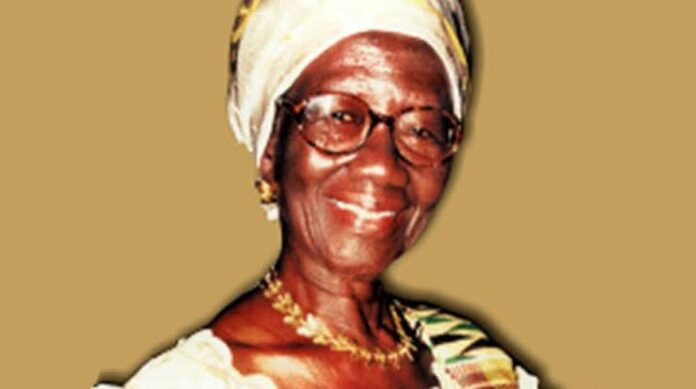

A teenage girl received a small monetary gift of 50 cents from her aunt and decided to start a business instead of spending it. She bought some oranges and turned them into marmalade, then she went door to door with a basin of her homemade product, hoping someone would buy a jar.
She made a 100% profit from her sales and never looked back. This was the humble beginning of a major empire which was soon to be built.
That girl was Esther Afua Ocloo, born Esther Afua Nkulenu on 18 April 1919 in Peki-Dzake in the Volta Region, to a blacksmith father and a potter and farmer mother.
Her family could not afford to send her to what was considered a good school at the time, but her aunt, Josephine Nkulenu, stepped in and sponsored her education at Achimota College.
It was the 50 cents her aunt gave her after she graduated that she turned into her first batch of marmalade, sold on the streets of Accra from 1941.
By the time she stood before the congregation at Kaneshie Presbyterian Church in Accra decades later for a Ladies’ Day sermon, she was no longer selling from a basin.
She was the founder of Nkulenu Industries, one of Ghana’s first food processing companies, producing orange marmalade and squash, canned jams and fruit juices, tomato paste, palm soup base, and Ga and Fanti kenkey.
She built her business, partly on training she had gone abroad to acquire. Ocloo had travelled to England, studying food science and preservation techniques at Bristol University between 1949 and 1951, and returning again in 1956 to develop recipes for commercial canning.
She ran a training programme for young women, accommodating them in her own house and teaching them every side of the business. She became the first president of the Federation of Ghana Industries (now the Association of Ghana Industries) after Kwame Nkrumah’s encouragement.
In an old documentary video of Esther Ocloo, she tells members of the Women’s Fellowship of the Kaneshie Presbyterian Church that none of her achievements came from physical strength. It came from something else entirely.
“God hasn’t deprived us of that physical power which men use to threaten us at times. He has endowed us with that spiritual power. We are very sensitive to the spirit, more than men.”
Together with her husband, Stephen Ocloo, she built her factory and the family home that housed it within ten weeks, on land that had been forest, while the youngest of their four children was still a nine-month-old baby. She said her husband, a businessman himself, had known who he was marrying long before the wedding and so had no other option than to support her.
“So before my husband married me, he knew all about me and he knew what he was bargaining for. So he can’t say he doesn’t like it, because I was in business before we got married.”
But building that empire cost her something she really craved for, time with her children. She spoke of coming home in the evenings to find her baby already asleep, fed on a bottle by someone else, with no chance to hold or comfort the child herself.
“Every woman likes to caress her baby but all that you have to sacrifice at times. And especially the girl, I would have liked the girl to be at home with me, you know, because the way my mother handled me, you know, has made me what I am now.”
Ocloo was tough on the young women she trained and housed. She wanted them fighting for their place in a man’s world, but she also wanted them to stop treating their bodies as an excuse.
“I think our women will have to pull their weight a bit more. The thing is, we women, we have this monthly sickness and all that but you shouldn’t put your mind on such things. Anytime you know, it’s your period, then you pull your face, you walk so clumsily. And as soon as they start expecting baby, it’s all, you know, that sort of lazy movement. Tomorrow they come to work next tomorrow they wouldn’t come,” she told the interviewer.
“Most of us were brought up by illiterate women, you know, like my mother, so whenever they come out first, everything is very new to them. So it takes a bit of time to get the best out of them but generally the girls should be more hard working than they are doing now. That’s my personal feeling.”
Beyond her business, Esther Ocloo tried politics too, running for a seat in Parliament in 1969, but she lost the election. It did not end her ambitions.
She went on to co-found Women’s World Banking and receive the Africa Prize for Leadership for her work championing small-scale entrepreneurship, becoming one of the most recognised names in African entrepreneurship, an inspiration cited decades later by Google, which marked what would have been her 98th birthday with a doodle honouring her.
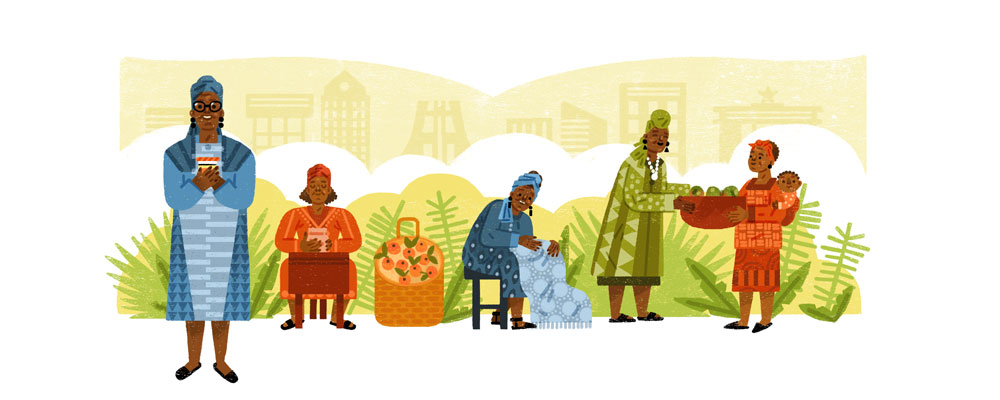
Esther Ocloo died on 8 February 2002, at the age of 82. Nkulenu Industries is still in business today, its marmalade and kenkey among the products it exports worldwide, and the Esther Ocloo Foundation continues work in her name, training and mentoring women entrepreneurs.
The same instinct that once had her boarding trainees in her own house, decades before anyone called it a foundation.