
When Spain appointed Luis de la Fuente as their senior national team coach, it was not a gamble. It was the culmination of a long-term vision.
Having coached Spain’s U-19s, U-21s and Olympic team, De la Fuente knew the country’s best young talents inside out. He had developed many of the players before they reached the senior squad, making the transition seamless.
It raises an interesting question for Ghanaian football: Could Sellas Tetteh have followed the same path?
There is a strong case that he could have.
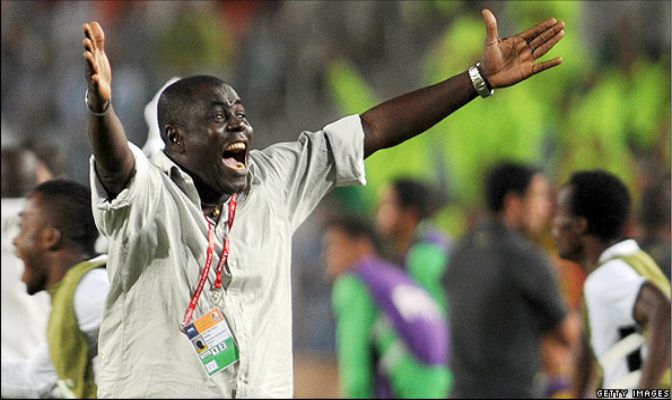
Long before Ghana began searching for experienced foreign managers, Sellas Tetteh had already proven himself as one of the country’s finest developers of young talent. His greatest achievement came in 2009, when he led the Black Satellites to the FIFA U-20 World Cup title—the first and still only African nation to lift the trophy. Earlier that year, Ghana had also won the African U-20 Championship under his leadership.
Those triumphs were not built on luck. They were the result of a coach who understood youth development, player psychology and tournament football. More importantly, many of the players he nurtured went on to represent the Black Stars.
That is precisely the model Spain embraced.
Rather than viewing youth football as separate from the senior team, the Spanish federation created a pathway where players and coaches developed together. De la Fuente’s promotion ensured continuity in style, philosophy and player management. By the time he took charge of the senior side, many internationals already trusted his methods because they had worked with him for years.
Ghana, however, has rarely followed that blueprint.
Instead, coaching appointments have often reflected short-term thinking, with frequent managerial changes disrupting long-term planning. Youth coaches have delivered success at international tournaments but have seldom been entrusted with building the senior national team over an extended period.
Sellas Tetteh’s career reflects that missed opportunity. While he remained respected for his achievements with youth teams, Ghana never fully invested in a long-term pathway that could have seen him shape the Black Stars in the same way De la Fuente transformed Spain.
Of course, there is no guarantee the outcome would have been identical. Senior international football presents different pressures and expectations. But the principle remains compelling: coaches who understand a nation’s talent pipeline often provide stability that constant managerial changes cannot.
As football continues to evolve, federations are increasingly recognising the value of continuity. Spain’s success under Luis de la Fuente is one example. For Ghana, Sellas Tetteh may represent the path that was never fully explored.
Perhaps the biggest lesson is not about one coach. It is about building a football structure where success at youth level is seen as the beginning of a coaching journey—not the end of it.