

Political transitions have a way of reshaping institutional norms in ways that outlast the individuals who initiate them.
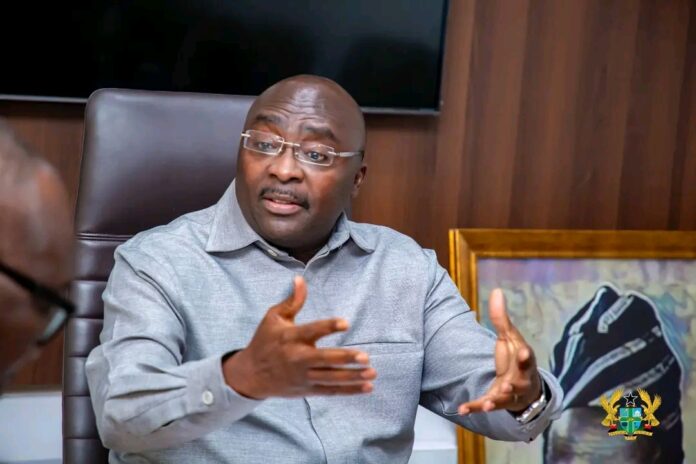
If Dr. Mahamudu Bawumia’s 23-sector policy committee framework achieves its stated ambitions, governance experts say it may do precisely that, permanently altering the expectations Ghanaian voters and analysts hold for political parties when they are not in power.
Several leading political scientists, economists, and governance scholars consulted by this portal were united in their assessment: the Bawumia model represents a structural innovation with the potential to become the new baseline for credible opposition politics in Ghana and, by extension, across West Africa.
Opposition parties in sub-Saharan Africa have typically operated in one of two modes: paralysis or pure opposition theatre said one professor of comparative politics.
What Bawumia is introducing is a third mode, constructively, research-based, programmatic engagement. If it works, it will be very hard for future opposition parties to justify doing less.
The transformation, experts note, will not be instantaneous. The committees must deliver substantive, high-quality output. Their findings must be genuinely independent and intellectually honest.
The NPP leadership must demonstrate the willingness to be challenged by its own research, including, where necessary, abandoning previously held positions in the face of contrary evidence.
“The real test of the framework is not whether it produces policy papers,” said one public policy researcher. “It is whether the NPP leadership actually reads them, takes them seriously, and allows them to change minds. That is where most political think tanks ultimately fail.”
On the opposition dynamics specifically, experts are watching to see how the NDC government responds to what will soon become a constant stream of detailed, technically grounded alternative proposals. If the committees function as designed, the government will face the unusual pressure of defending its programmes not against point-scoring politicians, but against fully worked-out rival policies.
“That changes the terms of political competition entirely,” one analyst observed. “You can’t dismiss a costed, evidence-based policy paper the way you can dismiss a campaign speech.”
Beyond the 2028 horizon, the broader implication of the Bawumia model, if adopted across Ghana’s political spectrum, is a measurable improvement in the quality of policy debate and, ultimately, in the quality of governance the country can expect, whichever party holds power.
“Democracies are strengthened by strong oppositions,” one governance expert concluded. “And strong oppositions are built on serious policy work. Ghana is watching an example of what that looks like. The question is whether it becomes the norm.”
If it does, analysts agree, the architect of that norm will be Dr. Mahamudu Bawumia, and the legacy of this moment will extend far beyond any single election result.
