
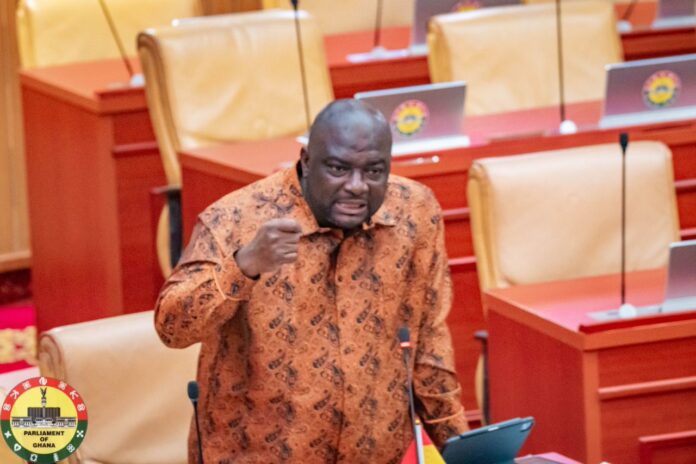

The Member of Parliament for Mpraeso, Davis Opoku Ansah, has argued that Article 88(4) of the 1992 Constitution clearly empowers the Office of the Special Prosecutor (OSP) to prosecute corruption-related offences without requiring case-by-case authorisation from the Attorney-General.
In a post on Facebook on Thursday, April 16, he maintained that the constitutional provision was deliberately designed to enhance efficiency in prosecutions and prevent bottlenecks in the justice system.
“Article 88(4) of the 1992 Constitution is not ambiguous. It states that prosecutions may be conducted by the Attorney-General or any other person authorised by him in accordance with any law,” he noted.
He further argued that Parliament acted within its constitutional remit when it established the Office of the Special Prosecutor through Act 959, which he described as the statutory framework envisioned under Article 88(4).
“That Act is the very law contemplated by Article 88(4). It provides a standing, institutional framework for prosecutorial authority,” he stated.
Mr Opoku Ansah also raised concerns over recent judicial interpretations involving conflicting High Court positions on OSP prosecutions, warning that such inconsistencies risk undermining the fight against corruption.
“What we are witnessing is deeply troubling. It risks creating a precedent where corruption cases are stalled through procedural manoeuvres,” he cautioned.
He concluded that the OSP remains lawfully empowered to operate within its mandate unless otherwise determined by the Supreme Court.
“The law must not become a shield for impunity. Until the Supreme Court rules otherwise, the OSP remains fully empowered to prosecute within its mandate,” he added.
