
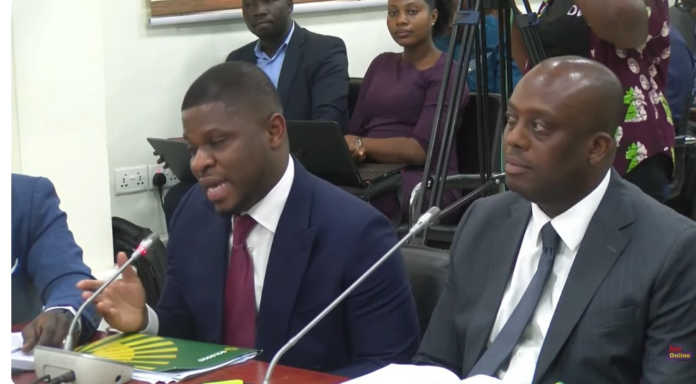

The Chief Executive Officer of the Ghana Gold Board (GoldBod), Sammy Gyamfi, says the institution is on course to meet or exceed its 2025 gold purchase and export targets while significantly increasing foreign exchange earnings.
He said the Board was making progress in fulfilling its mandate to generate foreign exchange, strengthen Ghana’s national reserves and regulate the gold trading industry.
Mr Gyamfi made the remarks when he appeared before Parliament’s Public Accounts Committee on Tuesday, October 13, 2026.
He explained that GoldBod was also stepping up efforts to retain more economic value from Ghana’s gold resources by ensuring that a greater proportion of the gold it purchases is refined locally before export.
“This year we are on track to at least meet and possibly exceed our 2025 gold purchase and export targets, as well as substantially exceeding our foreign exchange generation targets for the year 2025, which was 10.8 billion United States dollars,” he said.
According to him, between 80 and 90 per cent of the gold purchased and exported by GoldBod is now refined in Ghana, a shift from previous practices under which much of the gold was exported without local refining.
“I’m happy to report to this honourable committee that, as we speak, about 80 to 90 per cent of the gold we purchase and export is refined here locally,” he said.
Mr Gyamfi said the increased reliance on local refineries was creating jobs, particularly for young people, while ensuring that refining fees that would otherwise be paid abroad remained within the Ghanaian economy.
He noted that the refineries operated around the clock, providing employment opportunities for Ghanaians and contributing to domestic economic activity.
“That means jobs for the unemployed youth because these refineries are operating 24/7, employing Ghanaians, and the refining fees which would have ended up in export destinations are being retained in our economy,” he said.
The GoldBod CEO further disclosed that silver generated as a by-product of gold refining was also being retained locally, providing an additional source of foreign exchange and raw materials for Ghana’s fabrication industry.
He said the retention of silver and other valuable by-products was helping to strengthen local industrial activity and maximise the economic benefits derived from the country’s mineral resources.
GoldBod was established to regulate and promote Ghana’s gold trading sector, particularly the purchase and export of gold from the small-scale mining industry. Its mandate also includes boosting foreign exchange generation and ensuring that the country derives greater value from its gold resources.