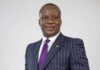
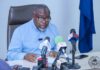
Professor of Finance at the University of Ghana Business School and Economist, Professor Godfred Bokpin, has cautioned that Ghana’s decision to join the BRICS economic bloc should not be seen as a substitute for the domestic reforms needed to transform the country’s economy.
He said that while joining BRICS could provide Ghana with new economic opportunities and strengthen its engagement with emerging global economies, membership alone would not automatically improve the country’s economic fortunes.
Speaking on the Joy FM Super Morning Show on Thursday, October 8, during a discussion on Ghana’s quest to join BRICS, Prof Bokpin said the country must continue to focus on managing its economy competitively regardless of its international affiliations.
“I think we should just bear in mind that BRICS is still evolving, even within the original founding members, in terms of the framework, where exactly this is heading towards, and all of that. And so there are quite a lot of nuances that would have to be ironed out of that,” he said.
He said that Ghana should not expect BRICS membership to deliver an immediate economic transformation.
“But it is good to also say that merely joining BRICS necessarily does not transform your economy overnight, or even over a 15-year period,” Prof Bokpin said.
“It is not a substitute for what you have to do in managing your own economy competitively, and all of that.”
Despite the caution, Prof Bokpin said he supported the government’s intention to join the bloc, arguing that the global economic balance was shifting and Ghana needed to position itself accordingly.
“If I look at it from an economic perspective, it’s a good move that the government plans to join BRICS. That is where the world is heading towards, and that is a fact,” he said.
He pointed to the growing economic influence of BRICS, saying the combined economic output of its member countries had become significant enough to rival or exceed that of traditional Western-led economic groupings.
“If you look at the commanding position of BRICS within the global economy today, the combined GDP of BRICS, especially across the 11 founding members, and then also the 10 partner countries today, actually exceeds the GDP of the G7 that we used to know,” he said.
According to Prof Bokpin, the bloc now accounts for a substantial share of the global economy and its members have strong growth prospects.
“It accounts for almost 40 percent of the global GDP. The BRICS member countries have higher growth potential today than literally any other economic bloc you can think about,” he said.
Prof Bokpin said long-term economic projections also pointed to a growing role for BRICS countries in the global economy.
He noted that China was projected to remain the world’s largest economy by 2050, while the United States was expected to rank second.
“It may interest you to know that by 2050, three out of the top five big economies globally will all be BRICS members,” he said.
“Three out of the top five by 2050.”
He said the projected shift in the global economic order also helped explain some of the growing tensions between the United States and China.
“In fact, by 2050, China will be number one, and the U.S. will be number two in terms of the global economic order,” Prof Bokpin said.
“You can understand this also gives you a perspective as to the tension between the U.S. and China and all of that. It’s all playing out carefully within the global geopolitics, and how the global order, some want it to be rewritten in a certain way, and all of that.”
Looking further ahead, Prof Bokpin said economic projections for 2075 showed an even stronger presence of BRICS countries among the world’s largest economies.
He said four of the five largest economies by then were projected to be BRICS members.
“And that said, it’s also important to look at the world economic projections. By 2075, the top five economies in the world measured in USD, actually there will only be one that will not be a BRICS member,” he said.
“So four out of the top five big economies by 2075, four of them will be BRICS members.”
He also highlighted Nigeria’s projected position among the world’s largest economies, saying the country’s growth could be driven by its private sector and major entrepreneurs.
“In fact, the projection is that by 2075, Nigeria will be in the top five. And this may surprise a lot of people,” he said.
Prof Bokpin, however, cautioned against treating such projections as certainties.
“I’m not asking people to put on faith to believe in this,” he said, explaining that the projection was based partly on the potential of Nigeria’s large entrepreneurs and the transformation of its private sector.
He said that the country’s economic transformation would not depend solely on government but could also be driven by major Nigerian entrepreneurs.
“The understanding is that if you look at what Nigeria is doing, the transformation is going to come from big Nigerian entrepreneurs, billionaires, who have decided, and it’s not just Aliko Dangote,” he said.
Prof Bokpin said Ghana was already experiencing the growing influence of emerging economies through its expanding economic relationship with China, even without being a member of BRICS.
He said Ghana needed to recognise the changing patterns of global trade and position itself accordingly.
“So if you put all of that together, and we have no joint business, actually, but today, China has literally taken over our markets, whether you like it or not, right?” he said.
“So the traffic today is within the Ghana-China corridor as compared to our traditional import-oriented countries and all of that. So we need to just look at all of that.”
He said these developments provided an economic basis for Ghana to consider closer engagement with BRICS, although other considerations would also have to be examined.
“So in terms of where the world is moving towards and all of that, it will look to me that it’s a good decision. Of course, I’m looking at it purely from an economics perspective,” Prof Bokpin said.
“There may be geopolitical, there may be other considerations that would also have to come to the table and all of that.”
Prof Bokpin, however, cautioned that Ghana should not expect BRICS membership to resolve its economic challenges.
“So specifically for Ghana, I think that merely joining BRICS would not necessarily transform our economy,” he said.