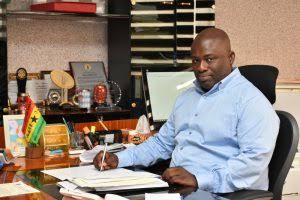

A US federal jury in Brooklyn has convicted a former Goldman Sachs investment banker and one-time Managing Director of the Tema Oil Refinery, Kwaku Asante Berko, on all counts in a foreign bribery and money laundering case tied to a Ghanaian power plant project.
Berko, 52, a dual US-Ghana citizen, was found guilty of conspiring to violate the Foreign Corrupt Practices Act, violating the Act itself, and conspiring to launder money. The verdict came after a nine-day trial before US District Judge Diane Gujarati. He faces up to 30 years in prison at sentencing and remains in custody until then.
Prosecutors said Berko and his associates paid Ghanaian government officials more than $1 million in bribes about a decade ago to secure approval for the development and financing of a power plant expected to generate hundreds of millions of dollars in profits.
How the scheme unfolded
According to trial evidence, Berko took charge of the deal in December 2014 while serving as an executive director in Goldman Sachs’ investment banking division. His task was to broker an agreement between Ghana and Aksa Enerji Uretim A.S., a Turkish energy firm and Goldman client, for the plant’s construction, at a time when Ghana faced a severe energy crisis.
To win the bid for Aksa, Berko and his co-conspirators allegedly paid off officials at multiple levels of government. In April 2015, they discussed a $1 million payment to Ghana’s power minister, who controlled key approvals, and $250,000 to his senior adviser. Officials also received bribes during an all-expenses-paid trip to Turkey to inspect equipment for the plant.
Ghana’s parliament ratified the deal in July 2015. The following month, the conspirators discussed a further $250,000 in payments, including $46,000 that Berko himself allegedly paid to members of parliament. Prosecutors said one recipient described awaiting the money as waiting for “holy rain.”
Berko concealed the scheme from Goldman’s compliance team and used a personal email account, rather than his work address, to coordinate the payments, instructing his associates to do the same, prosecutors said. The bribes were reportedly funnelled through shell companies, fake invoices, and cash withdrawals, laundered via both US and foreign bank accounts. Goldman later pulled out of the deal over corruption concerns.
International cooperation secured the arrest
US Attorney Joseph Nocella Jr. credited the UK government, INTERPOL’s UK bureau, the US Embassy in London, and the US Marshals Service with helping secure Berko’s arrest and extradition. Nocella said the case reflected the office’s push against corruption, while the Justice Department’s Tysen Duva said the conviction sent a message to those who undermine fair competition by bribing foreign officials.
The prosecution was led by the Eastern District of New York’s Business and Securities Fraud Section and the Justice Department’s Fraud Section.